REVIEW · LONDON
London: National Gallery Guided Tour with Priority Entrance
Book on GetYourGuide →Operated by BEST TOURS LONDON LTD · Bookable on GetYourGuide
Great art gets easier with a guide.
This National Gallery priority tour is a smart, time-saving way to understand what you’re seeing, not just stare at it. I especially like the small-group format (up to 10 people) and the way the guide explains technique and symbolism as you move through key masterpieces. One thing to consider: the tour is not set up for guests with mobility impairments, and you’ll be on your feet for the full 2 hours.
You’ll meet at the Sainsbury Wing entrance (after security) with a guide holding a yellow flag, then skip some waiting with express security. You also need to arrive on time, because starting late isn’t an option once the tour begins.
This is ideal if you’re new to the museum, short on time, or the kind of person who wants the background details that turn a painting into a story. Guides have been praised for being able to answer questions and point out details that are easy to miss on your own, which is exactly what you want from a guided highlights tour.
In This Review
- Key things to know before you go
- Why this National Gallery tour feels like the best use of 2 hours
- Walking in: the Sainsbury Wing meeting point and quick orientation
- Priority entrance: does it really matter?
- Renaissance stops: seeing da Vinci and Michelangelo with the right questions
- Industrial-era energy: Turner’s Rain, Steam and Speed explained in plain terms
- Impressionism room: Monet’s quiet light and Seurat’s built-from-math color
- Van Gogh finale: swirling emotion you can actually see
- What the guide actually does in those 2 hours
- Who should book this tour (and who might want something else)
- Price and value: is $21 fair for London art time?
- Quick practical tips for a smoother tour day
- Should you book the National Gallery priority entrance tour?
- FAQ
- How long is the National Gallery guided tour?
- What size is the group?
- Where do I meet the guide, exactly?
- How do I get my tickets?
- Are there restrictions on photography?
- Is the tour suitable for people with mobility impairments?
Key things to know before you go
- Priority entrance through express security helps you get inside faster
- Small group of up to 10 keeps the pace human and questions welcome
- A chronological route covers Renaissance → Industrial-era → Impressionism → Van Gogh
- Expect art talk focused on technique and symbolism, not just dates
- You’ll see major works like The Virgin of the Rocks, The Entombment, and Rain, Steam and Speed
- No flash photography, so plan to look closely the old-fashioned way
Why this National Gallery tour feels like the best use of 2 hours
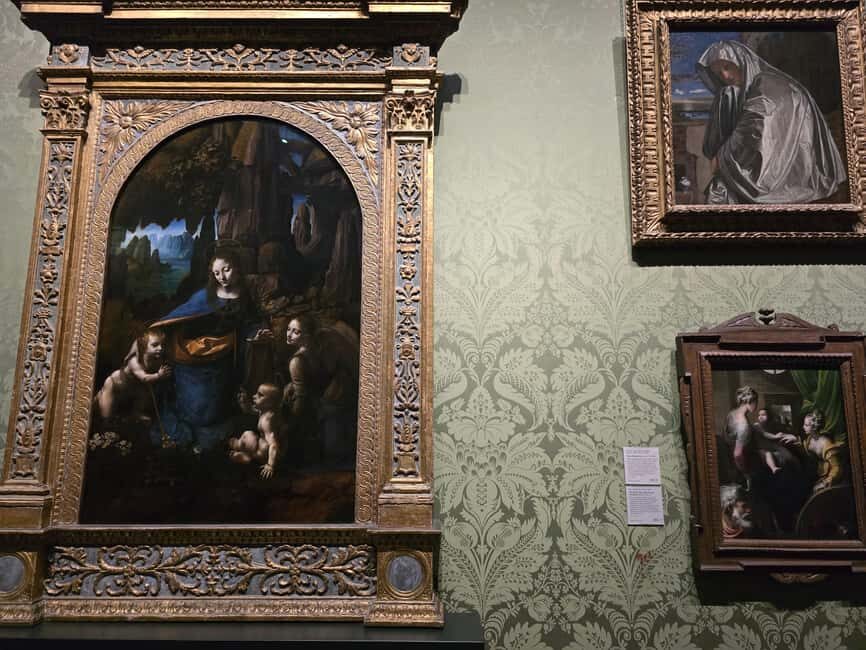
The National Gallery is huge. If you go in cold, it’s easy to spend the first hour just orienting yourself and walking the long way around. This guided tour is built to prevent that. In about two hours, you get a sequence of works that map out changing styles across centuries, with an expert-led explanation attached to each stop.
My favorite part is the match between the guide’s talk and what you’re actually looking at. A good painting explanation doesn’t just tell you what the subject is. It helps you notice how the artist built the image—light, facial expression, brushwork, composition, all the small choices that make the painting feel alive. That’s what this tour is aiming for, and it’s also what makes it worth paying for when you’d otherwise be wandering.
There’s also practical value here. With priority entrance, you’re not just paying for words. You’re buying time. That matters in London, where security lines can feel like a mini quest.
You can also read our reviews of more guided tours in London



Walking in: the Sainsbury Wing meeting point and quick orientation
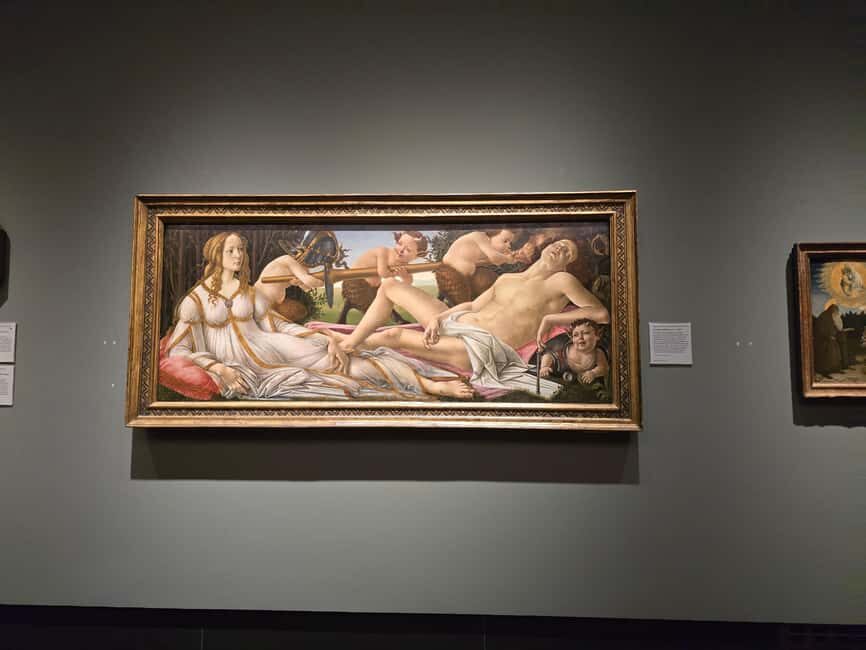
Your first job is to find the guide after security. Enter via the Sainsbury Wing. The meeting point is after security, on the right-hand side by the glass wall. The guide should be there 5–10 minutes early, holding a yellow flag.
If that sounds fussy, it’s actually helpful. Once you know where to stand, you don’t lose energy trying to guess which group is yours. Also, the tour starts on time and you won’t be able to join later. So give yourself a cushion and plan to arrive about 15 minutes early for security.
What to bring is simple: comfortable shoes. You’re moving from one highlight to the next, and the time window is tight. This is not the kind of tour where you can linger slowly in every room.
Priority entrance: does it really matter?
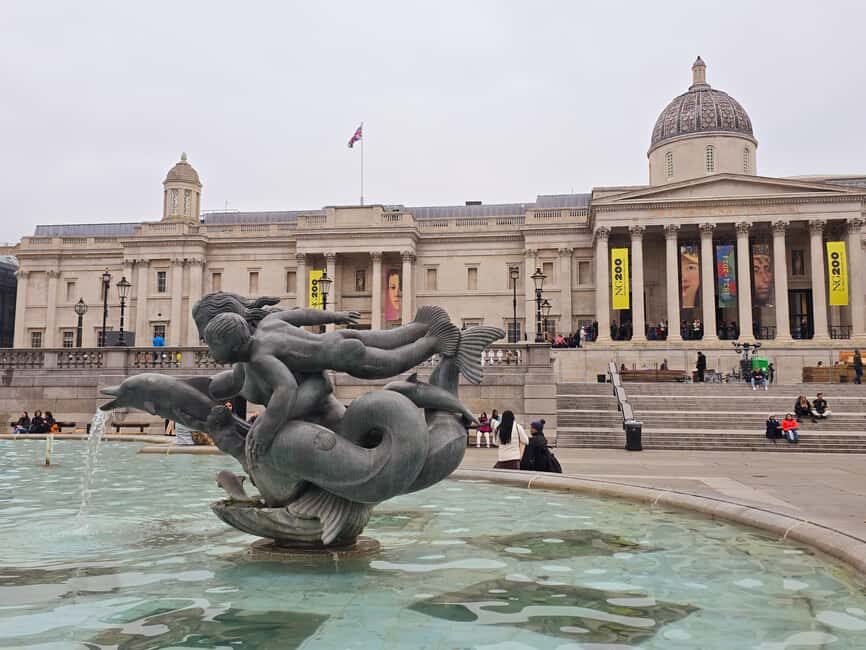
For a museum visit, priority entrance can be a small perk—or the difference between a good day and a rushed one. Here, it matters because the tour itself is only 2 hours. If you spend that same amount of time waiting in lines, you lose most of what you bought.
This tour includes priority tickets and lets you use an express-style security check. The result is straightforward: you spend your limited time inside the gallery, not outside counting minutes.
Just remember: priority entrance doesn’t mean instant entry without security. It means you should reach the art faster than you would on your own.
Renaissance stops: seeing da Vinci and Michelangelo with the right questions
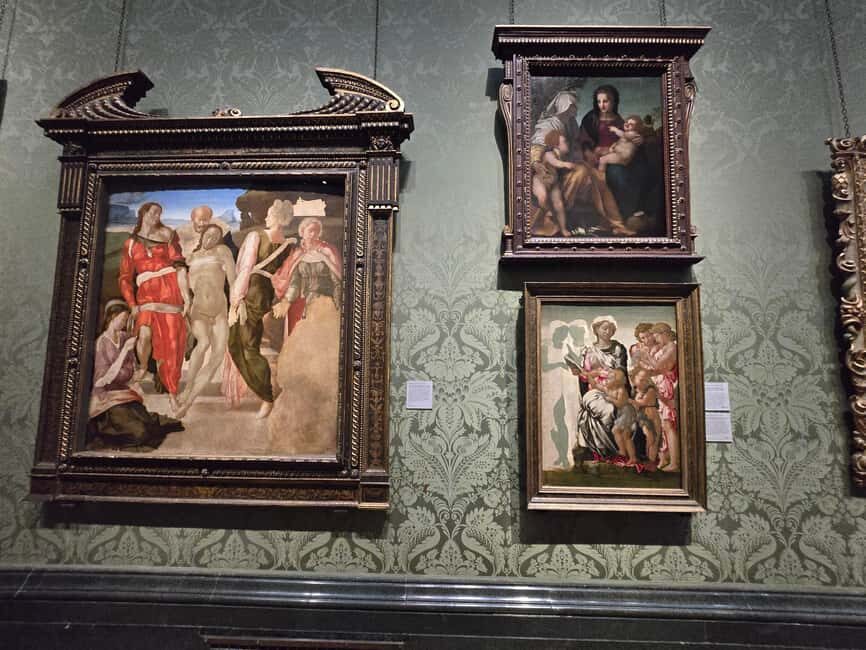
The Renaissance section is where the tour earns its keep. Instead of treating big names like museum trophies, the guide connects them to the choices artists made to make people and religious scenes feel real.
One of the most talked-about highlights is Leonardo da Vinci’s The Virgin of the Rocks. This is the kind of painting that tempts you to stare at faces and hands and wonder why the mood feels slightly mysterious. The guide’s job is to help you read that mood—what the expressions suggest, how the composition guides your eyes, and how symbolic meaning can ride on realism.
Next comes Michelangelo’s The Entombment, described in the tour as his only surviving easel painting. That alone is a reason to stand in front of it longer than you planned. But the bigger benefit is context: the tour uses this work to show how Renaissance artists changed how human figures and religious subjects were portrayed, pushing realism while still keeping a sense of drama and sacred weight.
Two practical tips here:
- Don’t rush your eyes. Give yourself 30–60 seconds per work to actually spot the details the guide points out.
- Ask questions early if you’re unsure. Once the tour moves on, it’s tough to circle back.
If you’re new to Renaissance art, this section will feel like a crash course that still respects the pace of looking. If you already love the period, you’ll likely appreciate how the guide ties technique to meaning instead of treating it as trivia.
Industrial-era energy: Turner’s Rain, Steam and Speed explained in plain terms
From the Renaissance, the tour shifts into the 18th and 19th centuries, where art starts reflecting modern power—machines, motion, and the feeling of speed.
The featured work here is J.M.W. Turner’s Rain, Steam and Speed. The title alone sets expectations: weather, steam, and momentum. But the tour frames it in terms of what the Industrial Revolution changed about daily life and perception.
Turner’s style can be intimidating if you expect everything to be crisp and literal. The value of having a guide is that you learn how to look for structure in the chaos. When forms blur or light dominates, it’s not random. It’s an artistic strategy to show sensation—how the world feels when speed and industry are reshaping it.
What you’ll likely take away is simple: Turner isn’t just painting a scene. He’s painting the atmosphere of change.
You can also read our reviews of more museum experiences in London



Impressionism room: Monet’s quiet light and Seurat’s built-from-math color
Then you hit the Impressionist stretch, where the tour shifts from realism-as-likeness to realism-as-impression.
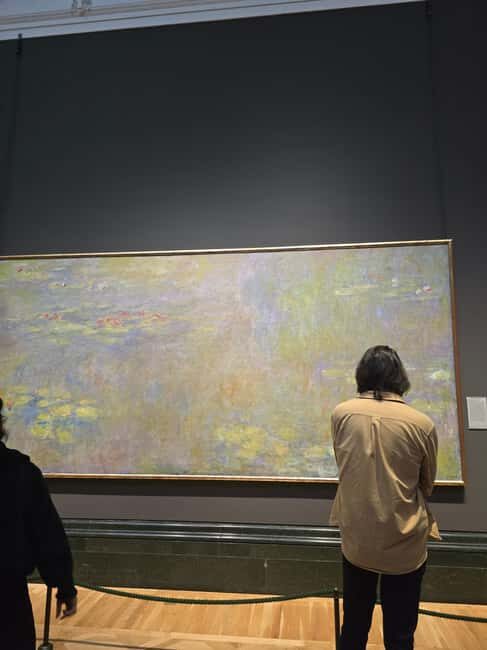
The featured work for Claude Monet is The Water-Lily Pond. Monet’s paintings often reward patience. You expect calm water and a garden-like scene, but the real story is in how light transforms the surface and how the paint handles distance and softness. With a guided stop, you don’t just see water. You start seeing brushwork as part of the meaning.
Next is Georges Seurat’s Bathers at Asnières, a major example of technique you can’t fully appreciate at arm’s length. The tour focuses on how the work broke conventional rules through bold color and innovative brushwork. Seurat is a great reminder that modern art isn’t only about new subjects—it’s also about new methods for building an image.
If you’ve ever felt like Impressionism is hard to “read,” this section helps. You learn what questions to ask:
- What is the artist trying to make you feel?
- What is the painting doing with light and color?
- How does the method (especially brushwork) create the final picture?
And if you’re going with someone who doesn’t usually love art museums, this part tends to land well. It’s colorful, readable, and clearly about human perception.
Van Gogh finale: swirling emotion you can actually see
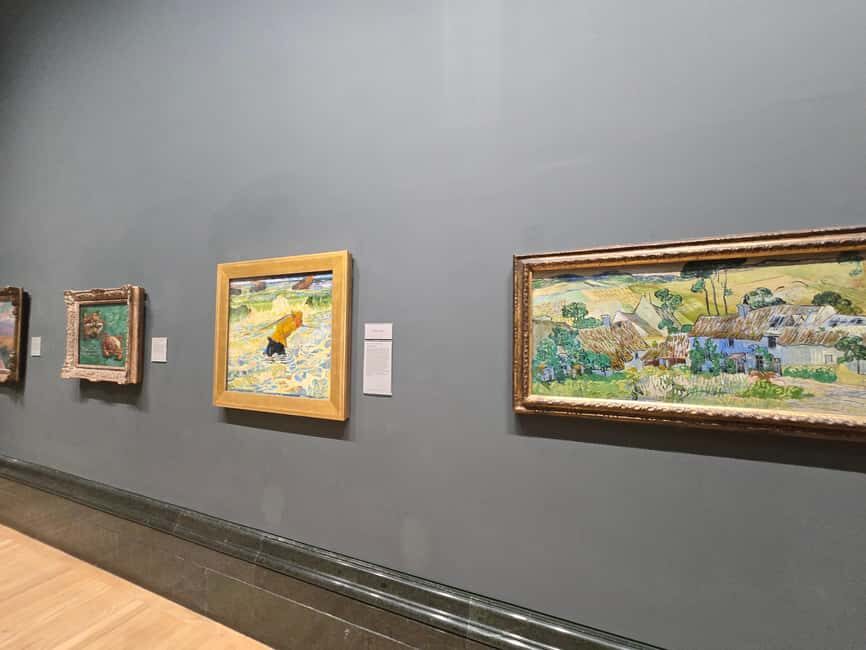
The last stop is Vincent van Gogh, where the tour takes the ideas of color and expression and turns them into something almost physical.
You’ll spend time with van Gogh’s expressive paintings and focus on how swirling, impassioned brushstrokes and vivid colors add new depth to everyday scenes. Even if you know van Gogh’s general reputation, a guided explanation helps you connect the emotion to craft—how the brushwork communicates intensity, not just style.
This finale is where the tour’s whole method becomes clear: it doesn’t treat art history like a list of dates. It teaches you a way to look. Renaissance for realism and meaning, Turner for sensation and modernity, Impressionism for perception and color, then van Gogh for emotion made visible.
What the guide actually does in those 2 hours
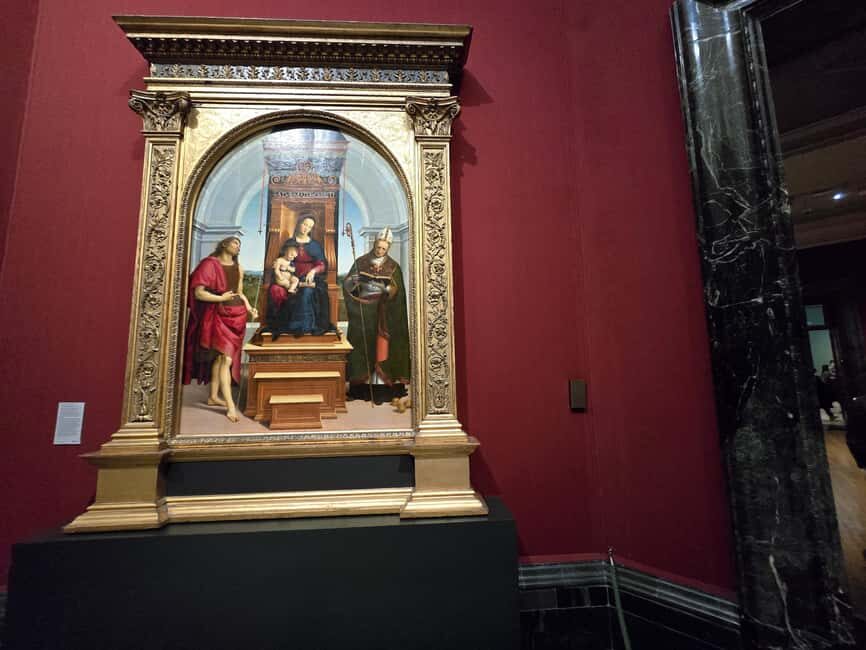
A lot of tours say you’ll get art history. This one is built for practical listening. The guide helps you understand:
- what the painting shows
- why it looks the way it does
- what symbols or stories might be involved
- how technique shapes the emotional effect
From guide names that have led this tour—Tara, Antonio, Giovanni, and Tony—there’s a consistent theme: people rate the guides highly for turning a 2-hour highlight tour into a real learning experience. They’re also praised for answering questions and pointing out hidden details and moods, including encouraging kids to share their own interpretations when the group includes younger visitors.
You don’t need to be an art nerd to benefit. The structure is simple: walk to a key work, pause long enough to look, get the context, then look again with a new set of eyes.
Who should book this tour (and who might want something else)
Book this if:
- you want a high-value introduction to the National Gallery in a short time
- you like seeing the “how” behind the “what”
- you’re traveling with mixed interests and want the art to feel approachable
- you want a guide who encourages questions and different interpretations
You might skip it if:
- you need an option designed for mobility impairments
- you prefer unstructured wandering over guided pacing
- you’re the type who wants to spend a whole day absorbing every room slowly
Also, if you hate being rushed, note the tour starts on time and covers a tight selection. It’s focused, not leisurely.
Price and value: is $21 fair for London art time?
At about $21 per person for a 2-hour guided tour with priority entrance, the value is strong for three reasons.
First, London museum time is expensive in your schedule. Priority entry reduces the time you lose to security. Second, you’re paying for interpretation. Instead of reading a plaque and guessing, you get an expert-led explanation tied to what you’re staring at right now. Third, the group is limited to up to 10, which typically means more interaction than you’d get in a giant bus-group situation.
If you were planning to see the highlights anyway, this is the most efficient way to do it. You still get the pleasure of standing in front of the masterpieces—but with context that sticks.
Quick practical tips for a smoother tour day
- Wear comfortable shoes.
- Bring no flash photography. It’s not allowed.
- Arrive about 15 minutes early so security doesn’t stress you out.
- Meet at the Sainsbury Wing: after security, right side by the glass wall, yellow flag.
- Plan for the tour to start on time, so don’t show up half-dressed and hopeful.
Also, keep in mind that the tour is in English and is designed for a small group. That helps if you want clarity and the chance to ask follow-up questions.
Should you book the National Gallery priority entrance tour?
If you want the fastest path to meaningful art viewing, I’d book it. The biggest reason is not the name on the ticket. It’s the structure: priority entry plus a tight, chronological set of masterpieces, explained with technique and symbolism so you come away with more than a few photos.
One key decision point: check whether you’re comfortable with a walking-focused experience. If mobility is a concern, this is not the right fit based on the tour’s stated suitability.
If you’re on the fence, here’s my simple rule: if you can’t easily spend a whole day in the National Gallery, this tour is a smart buy. It turns a crowded museum visit into a clear, guided route through major works you’ll actually remember.
FAQ
How long is the National Gallery guided tour?
The tour lasts 2 hours.
What size is the group?
The group is limited to 10 participants.
Where do I meet the guide, exactly?
Enter via the Sainsbury Wing. The meeting point is after security, on the right-hand side by the glass wall. Your guide will be there 5–10 minutes early holding a yellow flag.
How do I get my tickets?
The entrance tickets are sent to you the day before the tour.
Are there restrictions on photography?
Flash photography is not allowed.
Is the tour suitable for people with mobility impairments?
This tour is not suitable for people with mobility impairments.