REVIEW · LONDON
Unveil the Rosetta Stone, Parthenon at British Museum
Book on GetYourGuide →Operated by CENTURION · Bookable on GetYourGuide
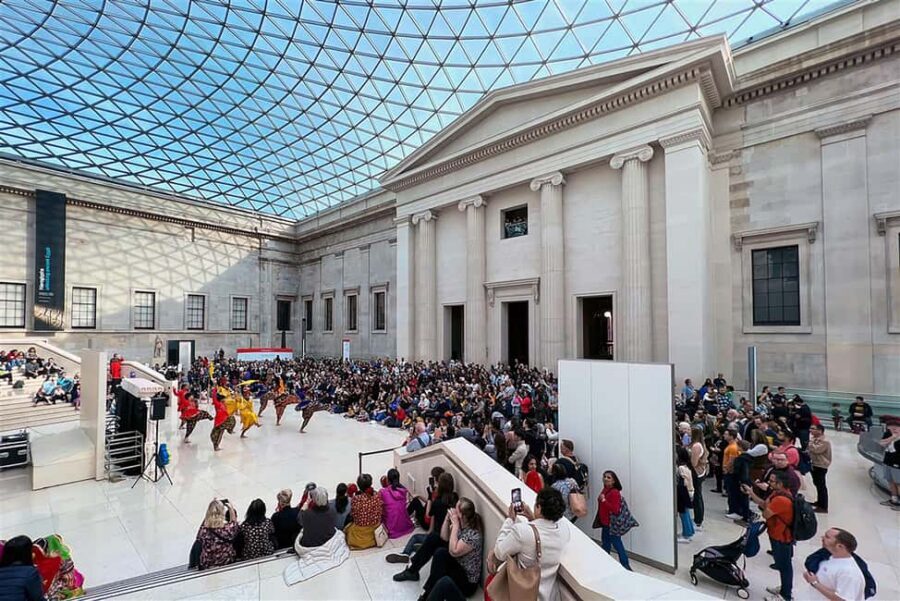
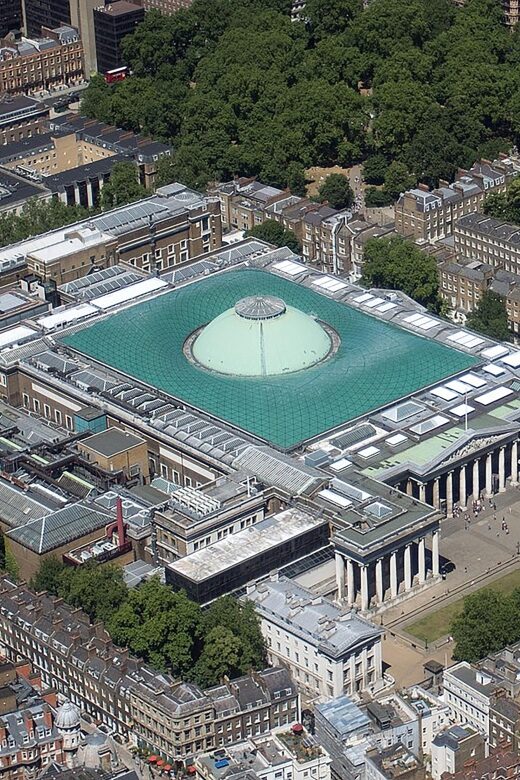
The British Museum can swallow a whole day. This 2-hour highlights tour keeps you focused on the big hitters, with an English-speaking guide who knows how to turn statues and inscriptions into stories you can follow. I especially like how the route starts in the Great Court, where you first see the glass roof designed by Norman Foster.
Two things I really liked: first, the explanation around the Rosetta Stone makes a famously tricky subject feel understandable fast. Second, the tour’s pacing and storytelling were the kind that kept kids and adults interested, and our guide Joe was upbeat and fun in that stand-up-the-line-and-learn way.
One consideration: it’s on foot and the museum is huge, so you’ll do a decent amount of walking in a short window, and it’s not suitable for wheelchair users.
In This Review
- Key things to know before you go
- Entering the British Museum’s Great Court Roof View
- Rosetta Stone: The map for Egyptian hieroglyphs
- Parthenon Sculptures at the British Museum: Beauty plus the hard question
- Egyptian mummies: What burial practices can teach you
- Sutton Hoo helmet: Anglo-Saxon craft with a sense of drama
- Khorsabad’s Winged Bulls: Assyrian guardians at the palace gate
- Price and time: Does $70.35 for 2 hours feel worth it?
- What the group style means for your day
- Who should book this British Museum highlights tour
- Should you book it?
- FAQ
- How long is the guided tour?
- Where do I meet the guide?
- What should I bring with me?
- Is hotel pickup or drop-off included?
- Are food and drinks included?
- What language is the tour guide?
- Is the tour private?
- Is the tour wheelchair accessible?
- What does the tour cover?
Key things to know before you go

- Great Court orientation: You start with the ceiling view and get oriented in the museum’s biggest public room.
- Rosetta Stone in plain language: You’ll get the key idea behind how it helped decipher Egyptian hieroglyphs.
- Parthenon sculptures with context: You’ll hear a balanced look at the Elgin Marbles debate and why repatriation matters.
- Egyptian mummies explained: You’ll connect burial practices to what you’re actually seeing in the galleries.
- Sutton Hoo helmet spotlight: You’ll learn what makes this 7th-century burial find so iconic.
- Assyrian Winged Bulls: These colossal guardian figures come with the story of what they guarded.
Entering the British Museum’s Great Court Roof View
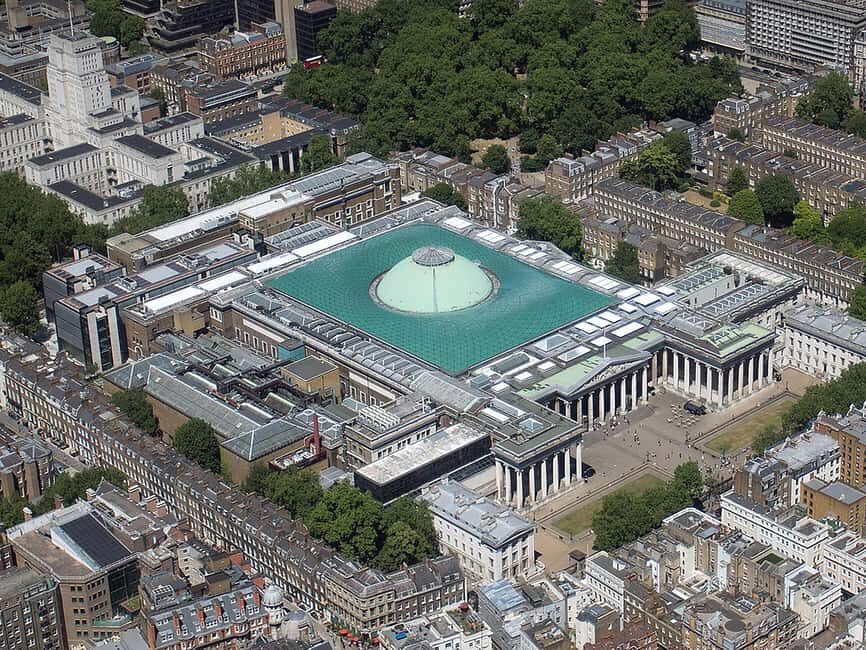
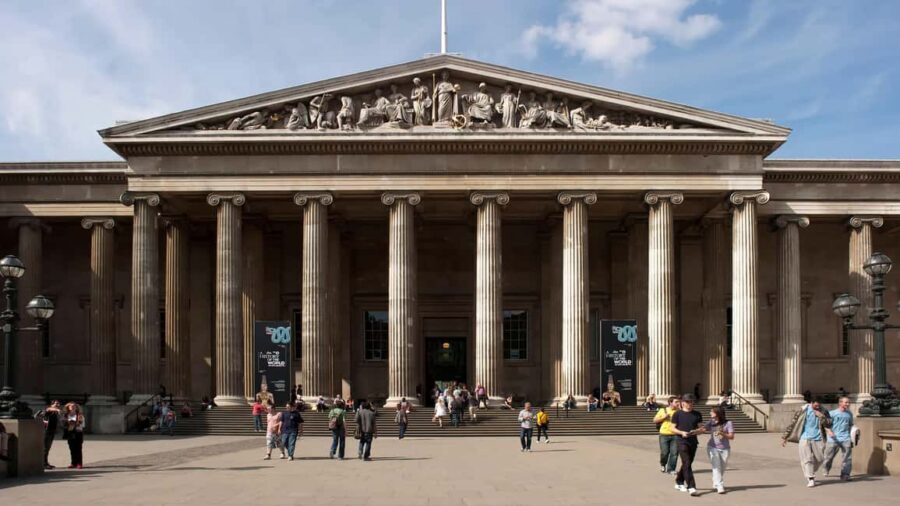
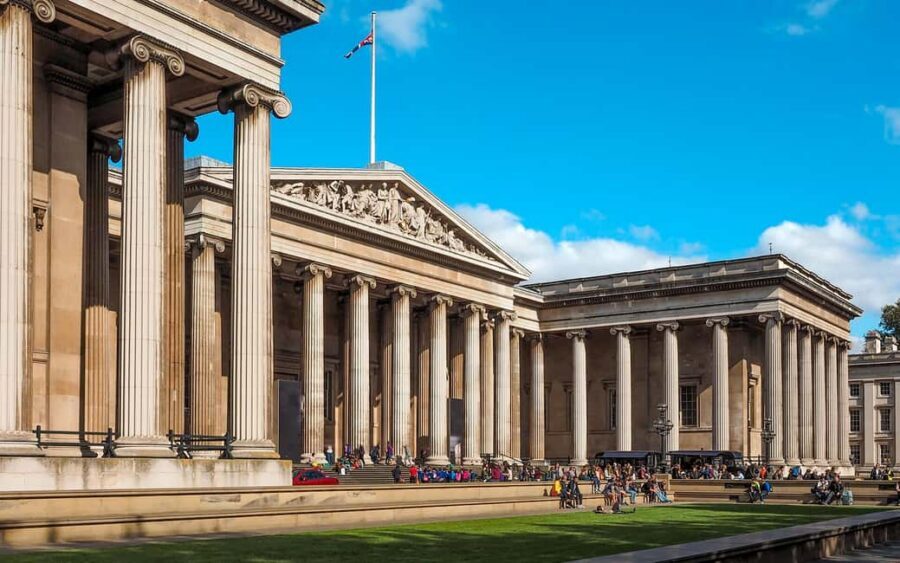
Your meeting point is at the main entrance, and you’ll go in after security checks. If you arrive about 15 minutes early, you give yourself time to get through without feeling rushed, which matters because the group moves quickly.
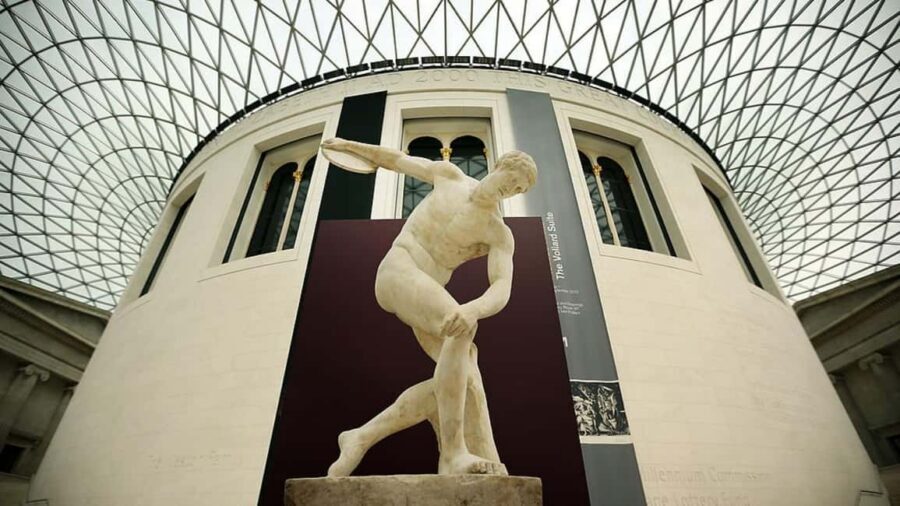
The tour begins with a view that most people miss if they rush straight to artifacts: the Great Court. The glass roof is designed by Norman Foster, and it creates this bright, open feeling even though you’re surrounded by galleries and stairways. It’s a smart way to start, because it helps you get your bearings before the tour turns into a sprint through time.
Expect comfortable-shoes advice because this is an on-foot route through multiple galleries. Even with a guide, you’re still moving between highlights, so plan to be on your feet for the full 2 hours.
You can also read our reviews of more museum experiences in London


Rosetta Stone: The map for Egyptian hieroglyphs
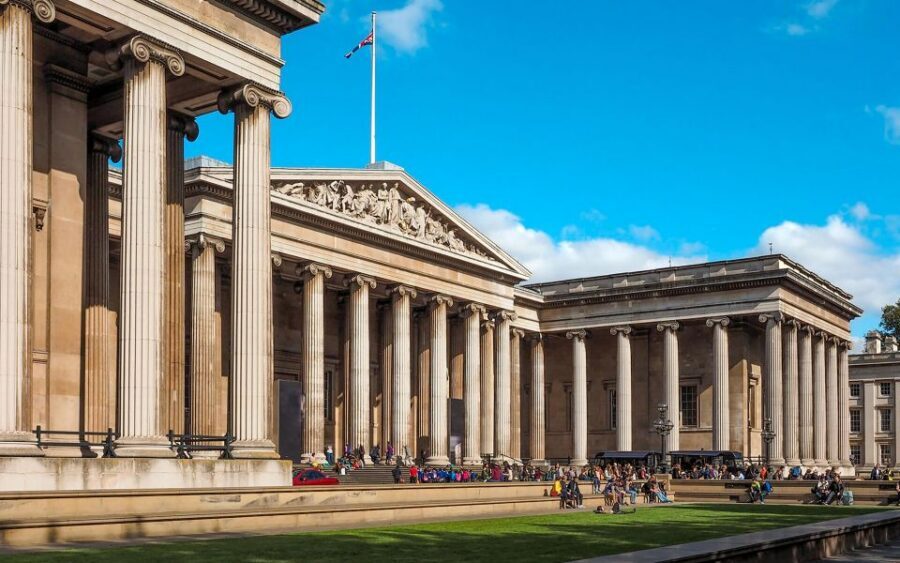
The first major artifact stop is the Rosetta Stone, and it’s treated like the centerpiece for a reason. You’re not just looking at a slab; you’re learning why this object mattered when it was discovered in 1799 and why it became the key to deciphering Egyptian hieroglyphs.
The way a good guide frames it makes a big difference. Instead of turning the text into something remote, you learn how the Rosetta Stone helped unlock meaning from Egyptian writing systems. That context makes the hieroglyphs feel less like a mystery wall and more like a solved puzzle with a human story behind it.
If you’ve ever stood in museums wishing someone would explain what you’re supposed to be reading, this stop is built for you. The object is famous, but the takeaway is practical: it shows how scholarship gets built from one breakthrough.
Parthenon Sculptures at the British Museum: Beauty plus the hard question
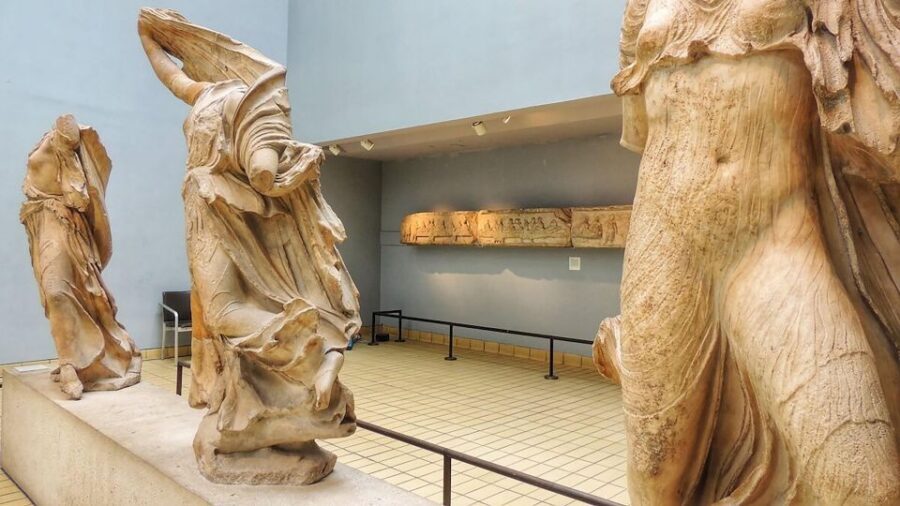
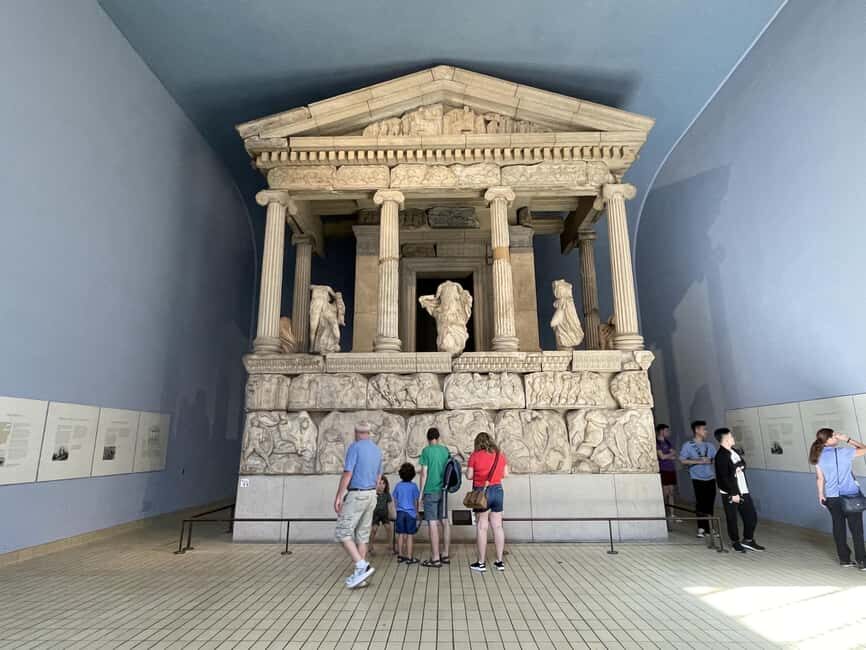
Next comes the Parthenon Sculptures—often called the Elgin Marbles. This stop can be emotionally charged, because the sculptures are visually stunning and the history around their removal from Athens is complicated.
Your guide offers a balanced perspective, including why Lord Elgin’s role comes up and why the current debate centers on cultural heritage and repatriation. The value here isn’t taking sides for you; it’s understanding what the dispute is actually about while you’re looking at the workmanship.
What I like about handling it this way is that it turns an awkward museum moment into a learning moment. You get to stand in front of ancient marble and also understand the modern ethics that surround it. That dual framing makes the sculptures more meaningful, even if you didn’t know anything about the story going in.
Egyptian mummies: What burial practices can teach you
After the Greek focus, the tour shifts to ancient Egypt through the Ancient Egyptian galleries. This part is built around mummies, and the guide connects what you see to burial practices and beliefs.
Mummies in museums can feel like you’re looking at a body without context. A guided approach changes that. You learn what burial meant to the ancient Egyptians, why objects and preparation mattered, and how the broader belief system shows up in funerary customs.
You don’t need to be an Egyptology nerd to enjoy this. If you’re curious about how people lived and what they feared, this stop helps you see death rituals as part of culture, not just a spooky headline.
A practical note: galleries can be busy, and lighting varies by room. If you want steady viewing time, keep close to the group and let the guide handle the pacing.
Sutton Hoo helmet: Anglo-Saxon craft with a sense of drama
The tour includes Sutton Hoo, tied to treasures from a 7th-century burial ship. This is one of those stops where the artifact’s power comes from both its design and its story—early medieval England, translated into objects you can actually stand in front of.
The star highlight is the Sutton Hoo helmet. You’ll learn what makes it iconic and how craftsmanship signals status, identity, and belief in a world long gone. It’s not just a helmet; it’s evidence of skill and power, and your guide helps connect the object to the larger scene of the burial find.
One reason I think this stop works well on a short tour is that it changes the emotional tone. After ancient civilizations tied to monumental empires and massive mythic themes, Sutton Hoo feels personal and immediate—like you’re seeing something made by real hands with a clear purpose.





Khorsabad’s Winged Bulls: Assyrian guardians at the palace gate
The final big visual punch comes from the Winged Bulls from Khorsabad. These are colossal guardian statues that once stood to protect the entrance to the palace of Assyrian king Sargon II.
Standing near these figures, you can feel the intention: intimidation, protection, and authority all at once. Your guide explains what they were guarding and why these royal images mattered. You’re looking at more than decoration; you’re looking at how empires announced control.
If you’ve seen “ancient” used as a vague label before, these bulls help bring specificity. You start to notice how power is communicated through scale, symmetry, and symbolism—and you understand it as deliberate design, not just an old artifact on a wall.
Price and time: Does $70.35 for 2 hours feel worth it?
At $70.35 per person for a 2-hour guided highlights tour, the value depends on your travel style. If you love wandering on your own and you’re comfortable reading museum labels for a long time, you might feel this is expensive for the time.
If, instead, you want your money to buy clarity, this is often a good deal. The tour covers several of the museum’s biggest “first-time must-sees”: the Rosetta Stone, Parthenon sculptures, Egyptian mummies, Sutton Hoo helmet, and the Khorsabad winged bulls. That’s a lot to pack into one route—especially in a museum as sprawling as the British Museum—so the guided selection is doing real work for you.
The experience also includes online support at the time of boarding, and you’re traveling with a live English guide. For many people, that’s the biggest cost savings of all: you spend less time figuring out where to go and more time understanding what you’re seeing.
One more timing note: you’ll want to check starting times before you book. If the time you pick isn’t available, you can be transferred to another time on the same day, and the example given is moving to the first available slot.
What the group style means for your day
This isn’t a private tour. It’s a group, which changes the vibe in a helpful way if you like structure. You get a plan, you get a guide’s voice to anchor you, and you don’t have to decide what’s “worth” your time in a museum that offers too many choices.
The good news is that a guide like Joe—upbeat, entertaining, and able to keep a son enthralled—signals that the tour isn’t just lecture-mode. It’s designed to keep people paying attention without sacrificing context.
Still, group pacing can mean shorter stop times for photos. If you’re the type who needs to stare at one sculpture for 20 minutes, plan to do deeper follow-up after the tour.
Who should book this British Museum highlights tour
You’ll probably love this if:
- You’re visiting for the first time and want a guided route through the museum’s biggest hits.
- You like explanations that connect an object to the larger story, not just facts on labels.
- You’re traveling with a mix of ages and you want the guide to keep everyone engaged.
You might skip it (or add extra unguided time) if:
- You prefer slow, self-directed museum time.
- You need wheelchair accessibility, since the tour is not suitable for wheelchair users.
- You want food included or hotel pickup, since neither is included.
This tour is at its best as a “high-impact orientation” experience. Think of it as the thing that teaches you what to look for so your later museum time feels smarter.
Should you book it?
Yes, if you want the British Museum’s most famous artifacts explained in a short, organized format. The biggest draw is the guide-led storytelling—especially when the Rosetta Stone, the Parthenon sculptures controversy, and the quieter human side of mummies and Sutton Hoo are all brought into one easy-to-follow route.
I’d book it when you have limited time in London or when you’d otherwise bounce between exhibits without learning the connections. If you’re planning a longer museum visit, this tour can be your starting point, giving you a strong framework for what you want to see again on your own.
FAQ
How long is the guided tour?
The tour duration is 2 hours.
Where do I meet the guide?
Meet your guide on the stairs at the main entrance of the British Museum, after security checks.
What should I bring with me?
Bring a passport or ID card.
Is hotel pickup or drop-off included?
No, pickup from your hotel is not included, and the activity ends back at the meeting point.
Are food and drinks included?
No, food and drinks are not included.
What language is the tour guide?
The live tour guide provides the tour in English.
Is the tour private?
No, the tour is not private.
Is the tour wheelchair accessible?
No, it is not suitable for wheelchair users.
What does the tour cover?
It includes the Rosetta Stone, Parthenon Sculptures, Egyptian mummies, the Sutton Hoo helmet, and the Winged Bulls from Khorsabad.