REVIEW · LONDON
Women in art – National Gallery
Book on GetYourGuide →Operated by BestTours · Bookable on GetYourGuide
Women’s stories start at London’s National Gallery. In this Women in Art guided visit, you’ll connect famous paintings to how women are represented, imagined, and remembered across centuries—without getting lost in art-school jargon.
I particularly like the way the tour guide keeps the discussion lively and answer-ready. In the best moments, art turns into something you can talk back to, and guide Katya is called out for making every stop feel clear and engaging.
One thing to plan for: it’s only 1.5 hours, so you won’t see the whole National Gallery—just a focused set of works.
In This Review
- Key things I’d circle on your planning list
- Why Women in Art at the National Gallery feels personal
- Your 90-minute private tour: how the time really works
- Meeting point in front of the National Gallery
- Leonardo’s Madonna of the Rocks: where femininity becomes meaning
- Michelangelo’s The Entombment: art, emotion, and representation
- Raphael’s St Catherine: symbolism you can actually talk through
- Rubens’ The Judgement of Paris: myths used for persuasion
- Van Gogh’s Sunflowers: the theme shifts, but the questions stay
- The guide experience: why Q&A feels easy here
- Price and value: $404.10 per group up to 6
- Who this tour suits best
- A realistic way to plan the rest of your day
- Should you book Women in Art at the National Gallery?
- FAQ
- Where does the tour start?
- How long is the guided tour?
- Is this a private tour or shared with strangers?
- What languages are available for the live guide?
- Is the experience wheelchair accessible?
- Which artworks are included in the highlights?
- What age group is it suitable for?
- How much does the tour cost?
- What is the cancellation policy?
- Do you need to provide a phone number for the guide?
Key things I’d circle on your planning list
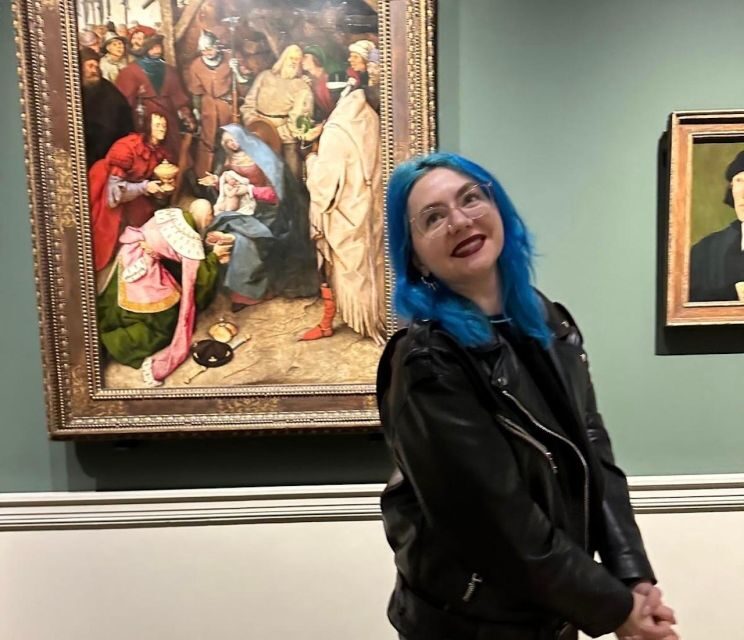
- Private group up to 6 means you’re not squeezed into a crowd or rushed through answers.
- English and Russian live guiding helps if you want the art explained in your comfort language.
- Five standout masterpieces anchor the tour: Leonardo, Michelangelo, Raphael, Rubens, and Van Gogh.
- Pacing stays respectful: the guide adjusts if your group moves slowly, but the tour still ends on time.
- Wheelchair accessible makes it easier to include more people in the group.
Why Women in Art at the National Gallery feels personal
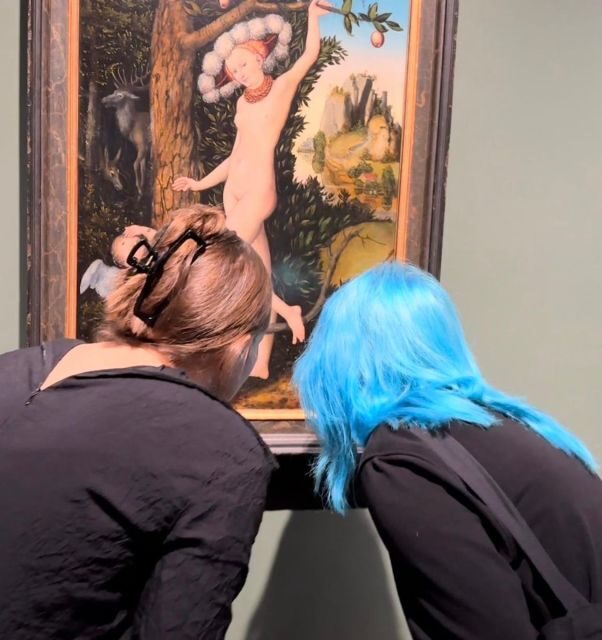
The National Gallery is packed with masterpieces. The trick with a good guided tour is choosing a lens that makes those works feel relevant, not just famous.
This tour uses one sharp theme: women’s roles in art, and how art shapes the way women are seen. You’ll look at well-known paintings, but the focus stays on influence, representation, and the stories that artworks carry forward. It’s not just about identifying who painted what; it’s about why certain images stuck—and what they communicate.
You can also read our reviews of more museum experiences in London


Your 90-minute private tour: how the time really works
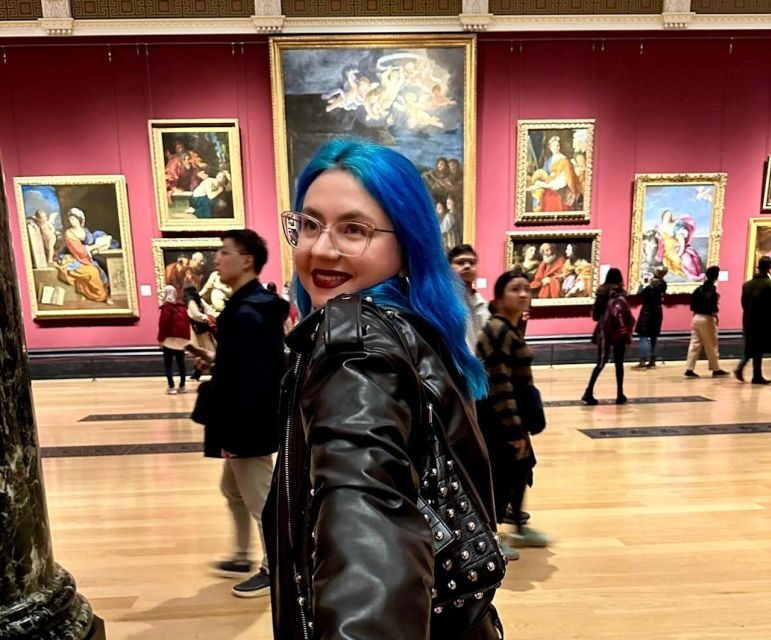
The tour runs about 1.5 hours and starts at available times. It’s designed to be tight and useful: you arrive, you meet your guide, and you leave with a strong sense of what you just learned.
Because it’s a private group, you get a calmer pace than you would in a typical big-group museum wander. You can ask questions and get explanations without waiting your turn. That matters in a museum, where a single artwork can reward careful attention.
If your group is enjoying a stop or moving slowly, the guide will adjust the route to keep things on track. Still, punctuality is crucial, and the tour aims to finish on time. I like that the approach respects both the guide and the rest of the schedule.
Meeting point in front of the National Gallery
You’ll start in front of the National Gallery, and the tour ends back at the same meeting point. That keeps things simple for navigation and reduces that annoying end-of-tour scramble.
This also helps if you’re pairing the tour with another museum plan. You can more easily plan your next step because you’re returning to the same place you began.
Leonardo’s Madonna of the Rocks: where femininity becomes meaning
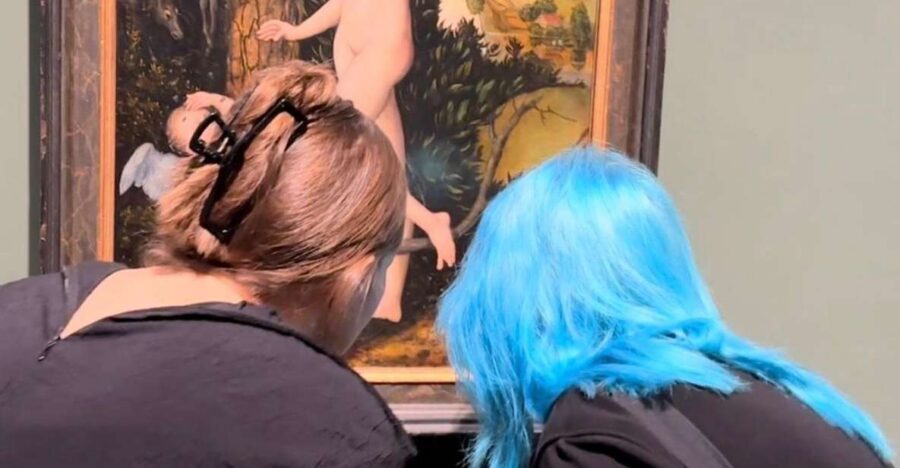
Leonardo da Vinci’s Madonna of the Rocks is one of the tour’s anchor works. The point of including it here is how women are used symbolically in art—how the image can feel “divine,” idealized, or meant to stand for something larger than a single moment.
In a guided setting, this kind of painting is a great place to start because it sets the tone for the entire theme. You’re not just looking; you’re learning how artists and viewers have historically framed women through visual storytelling.
Practical tip: give yourself permission to slow down at this first stop. If the guide asks you to notice how the painting communicates ideas, follow that lead. It’s the best way to get full value from the time you’ve paid for.
Michelangelo’s The Entombment: art, emotion, and representation
The next major landmark is Michelangelo’s The Entombment. This is the kind of work that often gets treated like a “must-see” checklist item—until someone explains what it’s doing emotionally and culturally.
For this tour, the painting functions as a bridge between belief, grief, and how women are positioned within those stories. You’ll come away thinking about how representation can carry heavy meaning, not just visual beauty.
A drawback to consider at this stage: if you’re the type who prefers light, casual museum visits, the themes around loss and portrayal may feel weighty. The payoff is that the tour doesn’t treat the topic like trivia.





Raphael’s St Catherine: symbolism you can actually talk through
Raphael’s St Catherine is included because it offers a different angle on women in art—less about one universal sacred role, more about the way women become symbols of ideas people wanted to believe in.
A good tour guide makes a big difference here. The strength of this experience is that you’re not left staring at details with no framework. Instead, you’re given context that helps you connect what you see to why it mattered.
What I’d do if you like “thinking while looking”: ask a question at this stop. Because the tour is private, you’re more likely to get a direct answer that improves how you interpret the next artwork.
Rubens’ The Judgement of Paris: myths used for persuasion
Rubens’ The Judgement of Paris brings the theme into myth and narrative. Myth is useful for this kind of discussion because it shows how women can be framed through stories that circulate in art for generations.
In plain terms, this stop helps you notice how women aren’t only subjects inside religious or moral images. They can also be positioned inside myth to send messages about choice, status, desire, or power—depending on how the artwork presents the story.
You’ll likely leave with a sharper sense of how “old stories” keep returning in new forms. That’s one of the reasons this tour is more than sightseeing: it connects art to patterns you can recognize.
Van Gogh’s Sunflowers: the theme shifts, but the questions stay
Van Gogh’s Sunflowers is a surprising and welcome inclusion after Renaissance and Baroque works. It shifts the mood while keeping you focused on representation and the way meaning forms around images.
In a tour that’s about women in art, including Van Gogh can feel like a reminder that the conversation doesn’t stop in the distant past. The guide’s job is to help you see what changes—style, tone, intent—while keeping the theme consistent.
If you’re a fan of modern emotional immediacy, this stop can be a satisfying release valve. If you prefer traditional museum pace, it still works because the guide steers you back to the central theme: how meaning gets carried by images tied to women’s representation.
The guide experience: why Q&A feels easy here
One of the most praised parts of the tour is the guide’s ability to keep things interesting and answer questions clearly. Katya is specifically highlighted for captivating listeners and delivering in-depth explanations that still feel fun to follow.
That combo—depth plus approachability—is exactly what you want when the topic is big. Women in art history can go broad fast, but a great guide helps you stay grounded in what you’re looking at right now.
The tour being live and private matters here. You’re not stuck with generic commentary. You can get the kind of clarity that turns a painting from background décor into something you understand.
Price and value: $404.10 per group up to 6
The price is $404.10 per group up to 6 for about 1.5 hours. On the surface, that can look high—until you treat it like what it is: a private guide cost spread across your group.
If you come as a couple, the per-person cost lands higher than if you split with friends. If you come as a small group of four to six, the value gets much better because you’re paying for a guided experience rather than just renting a listening device.
The biggest value driver isn’t the math. It’s the format: private, focused, and built around specific masterpieces rather than a random gallery route. For many people, that’s worth paying for—especially if you want context and conversation, not just viewing.
Who this tour suits best
This works well if you want:
- A focused museum experience without spending hours planning your route.
- A theme-based guide that connects artworks to how women are represented.
- A private setting where your questions can actually get answered.
It’s not suitable for children under 6, so it’s a better fit for school-age kids and adults. Also, since the languages offered are English and Russian, plan around that if language choice is important for your group.
Wheelchair accessibility is listed, which is a strong plus if you’re coordinating mobility needs. And because the tour begins and ends at the same spot, it’s easier to integrate into the rest of your day around central London.
A realistic way to plan the rest of your day
Because you’re spending only about 1.5 hours, I suggest pairing this with one or two additional museum activities—or nearby time outside—so you’re not trying to do too much in one go.
If you’re the type who likes to revisit what you learned, take a quick walk back to the kinds of galleries that match the theme (women-focused, iconography-based, or narrative-driven rooms). You’ll often spot details more easily after a guided framework.
And yes, keep your timing tight. Since punctuality is crucial and the tour aims to finish on time, you’ll get more out of it if you arrive with a little buffer.
Should you book Women in Art at the National Gallery?
If you like structured, theme-driven museum time, this is a smart pick. The tour is private, the guide gets praised for making art feel alive, and the set of featured works gives you a clear path through the topic.
I’d skip it only if you want a self-guided roam through lots of galleries, or if your group includes someone under 6 (it’s not suitable for children below that age). Also consider the short duration: it’s ideal for depth on a handful of masterpieces, not a full National Gallery experience.
Overall, if your goal is to leave with better instincts for how art represents women—and why that matters—this tour delivers a lot for the format and time.
FAQ
Where does the tour start?
It starts in front of the National Gallery.
How long is the guided tour?
The duration is 1.5 hours.
Is this a private tour or shared with strangers?
It’s listed as a private group.
What languages are available for the live guide?
The tour offers live guiding in English and Russian.
Is the experience wheelchair accessible?
Yes, it is wheelchair accessible.
Which artworks are included in the highlights?
The highlights include Leonardo da Vinci’s Madonna of the Rocks, Michelangelo’s The Entombment, Raphael’s St Catherine, Rubens’ The Judgement of Paris, and Van Gogh’s Sunflowers.
What age group is it suitable for?
It is not suitable for children under 6 years.
How much does the tour cost?
The price is $404.10 per group up to 6.
What is the cancellation policy?
There is free cancellation up to 24 hours in advance for a full refund.
Do you need to provide a phone number for the guide?
You may be asked to provide an active telephone number so the guide can reach you if necessary.