REVIEW · BIRMINGHAM
Birmingham: The National Motorcycle Museum Ticket
Book on GetYourGuide →Operated by The National Motorcycle Museum · Bookable on GetYourGuide
Birmingham turns motorcycles into a museum marathon. I love the largest collection of British motorcycles in the world, and I also like how the museum lets you track the changes from early engineering to modern superbikes, with over 1,000 motorcycles to browse. One thing to consider: some bike information is positioned low, so if you’re not great at reading at floor level, plan for that.
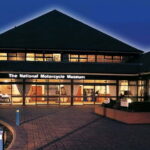
The National Motorcycle Museum is a one-roof day trip, open daily from 8:30 AM to 5:30 PM (last admission 4:30 PM), and it’s easy to reach from the M42 near Junction 6. You’ll walk through five display halls and find stories you can follow without needing a guide, which makes it a solid outing for hardcore riders, curious beginners, and families alike.
In This Review
- Key highlights to know before you go
- National Motorcycle Museum: Where Birmingham keeps the UK’s two-wheel story
- Planning your one-day visit: timing, entry windows, and getting there fast
- Five display halls from 1898 onward: what you’ll see in each stage
- Rare and iconic motorcycles up close: reading the stories behind the machines
- A family-friendly day that still works for riders: how to keep it fun
- Food, parking, and small comforts that keep the day from tiring you out
- Ticket price and value: is $22 worth a full day here?
- Should you book the National Motorcycle Museum ticket?
- FAQ
- Where is the National Motorcycle Museum located?
- What are the opening hours and last admission?
- How many motorcycles will I see?
- How many manufacturers are represented?
- How much is the ticket?
- Is there free parking and is the museum wheelchair accessible?
- Are there baby-changing facilities and somewhere to eat?
- How flexible is the ticket if my plans change?
Key highlights to know before you go
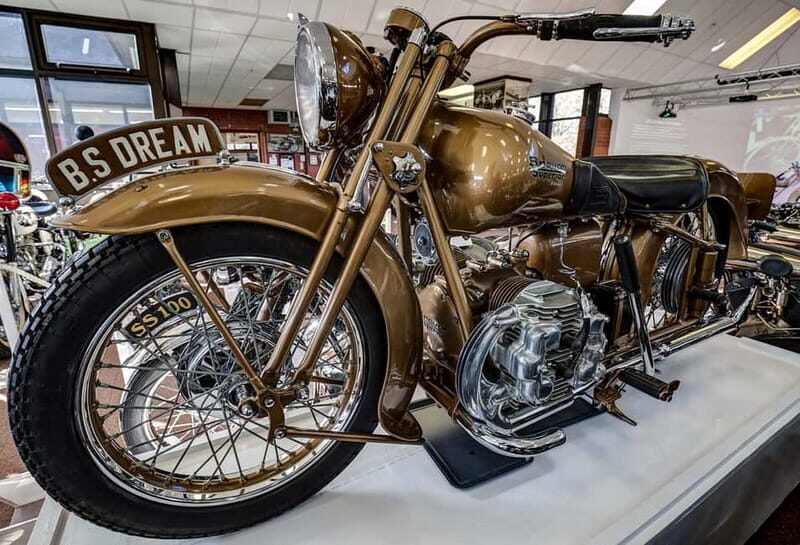
- Largest British motorcycle collection in the world, with over 1,000 bikes on display
- Five display halls covering British motorcycle evolution from 1898 onward
- 170 manufacturers represented, so you’re not stuck with one narrow timeline
- Up-close views of rare, iconic models, plus the stories behind speed, design, and film appearances
- Family-friendly spotting and easy-to-follow displays, including colourful models and timelines
- Sometimes attracts notable riders, like Henry Cole and Alan Millyard showing up during Dave Day on a recent visit
National Motorcycle Museum: Where Birmingham keeps the UK’s two-wheel story
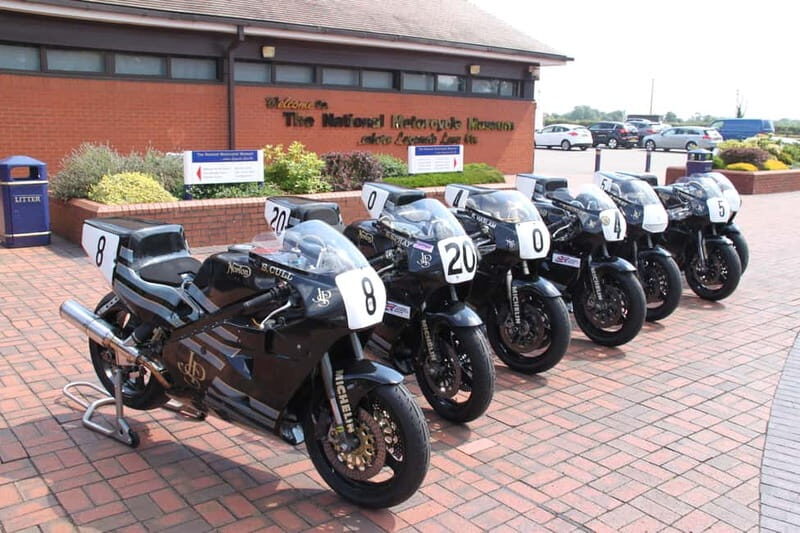
This museum is what happens when people take motorcycling seriously, then make it fun for everyone. You’re not just looking at machines. You’re seeing progress—how British engineering, design tastes, and racing ambition changed across more than a century.
I like that the museum gives you a clear backbone: it’s organized across five big halls, so your brain doesn’t have to guess where you are in the story. And you get both ends of the spectrum. One side makes you appreciate the early era (even bicycle-powered ideas), and the other side lands you in record racers and cutting-edge superbikes.
The museum also leans into storytelling in a way that helps non-experts. You’ll see bikes tied to real-world use—wartime utility, record attempts, and designs that mattered—plus some with extra cultural pull, like models that featured in films. That means you can enjoy it even if you don’t know every brand or engine type.
If you’re a rider, you’ll probably catch yourself doing the same thing I do in places like this: silently pointing out details. If you’re new to bikes, that’s fine too. You’ll still get something out of the big progression, the design changes you can see with your eyes, and the museum’s timelines that keep the context in place.
A few more Birmingham tours and experiences worth a look


Planning your one-day visit: timing, entry windows, and getting there fast
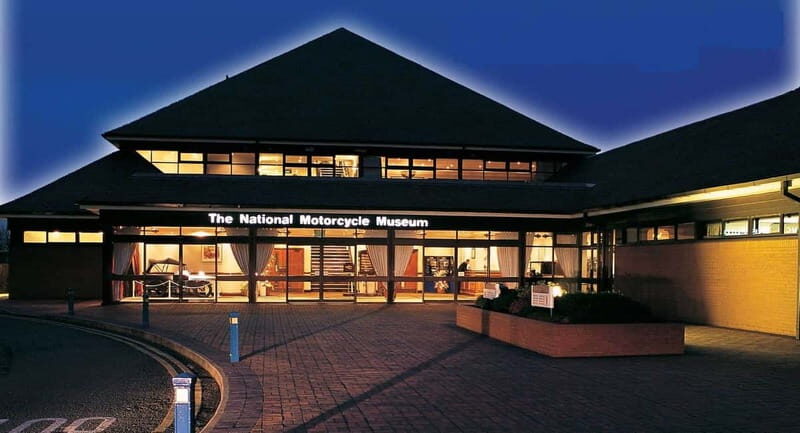
Plan on spending a full day. It’s listed as a one-day ticket, and with five halls, you’ll move at a comfortable walking pace without feeling rushed—assuming you don’t stop to re-read every label.
Opening hours are 8:30 AM to 5:30 PM, with last admission at 4:30 PM. If you arrive late, you’ll still have fun, but you’ll start skipping sections without meaning to. I’d aim to get in earlier so you can see both classic and modern displays without sprinting.
Getting there is straightforward. The museum sits on Coventry Road in Bickenhill (Solihull), just off Junction 6 of the M42. There’s free on-site parking, which matters in Birmingham traffic. If you’re using public transit, it’s also described as close to Birmingham International Airport and the train station, so it works as a day trip even if you don’t want to rent a car.
One small practical note: the museum is wheelchair accessible, and there are baby-changing facilities. If you’re traveling with kids or anyone who needs extra flexibility, you’ll likely appreciate that the building and experience aren’t designed as an obstacle course.
Five display halls from 1898 onward: what you’ll see in each stage
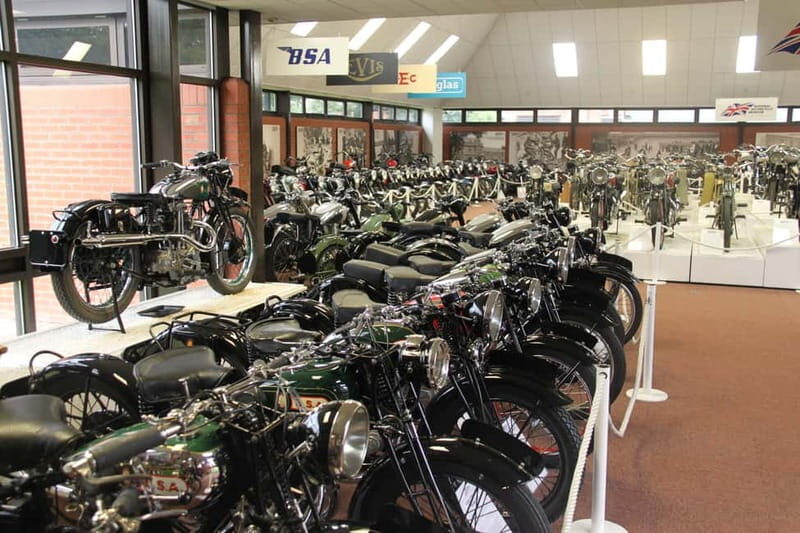
The National Motorcycle Museum is built to help you understand evolution, not just admire objects. The displays span British motorcycle engineering from 1898 to today, with five hall areas that keep you oriented.
Here’s how the experience usually feels as you move through the building:
Early era to first engineering leaps
You’ll encounter pioneers and early engineering concepts, including early bicycle-powered engines. This part is great for first-timers because it makes the later machines feel like a logical progression. You start noticing how ideas about power, control, and reliability formed step by step.
Wartime utility and practicality
The museum also includes bikes tied to serious real-world needs, including wartime utility bikes. It’s a reminder that motorcycling wasn’t only about speed and style. You’ll see machines designed for use, durability, and getting the job done.
Racing, record attempts, and the culture of speed
As you move forward, the mood shifts toward racers and record-breaking performance. You’re not guessing why performance matters—these displays show it. If you like the competitive side of motorcycling, this is where the museum tends to grab you.
Film appearances and iconic status
Some motorcycles come with stories that go beyond engineering, like models associated with films. Even if you don’t watch the same shows as other people, you’ll usually recognize that cultural thread once it’s explained on the display.
Modern superbikes and cutting-edge design
Finally, the museum brings you into contemporary territory, including modern superbikes. The change from classic to modern is striking. You’ll see how shapes, materials, and systems evolved—without needing heavy technical knowledge.
Even if you’re not trying to study, this structure helps you “read” the museum like a timeline. That’s the value: you end the day understanding what changed, not just what you saw.
Rare and iconic motorcycles up close: reading the stories behind the machines
What makes this museum feel special is that the bikes are treated like important artifacts, not props. You’ll browse over 1,000 motorcycles, including super rare and iconic models, and you’ll get the context that turns a display into a narrative.
The museum’s own framing focuses on what mattered over time. Some motorcycles are there because they broke speed records. Others because they became film stars or helped shape British motorcycling culture. Many represent key design shifts—how engineers answered practical questions about power delivery, handling, and usability.
I also like how the museum connects bikes to the people who built and rode them. The experience is about engineers, designers, and fearless riders who shaped the legacy of British motorcycling. That human angle helps you appreciate why certain machines mattered, even if you’re not comparing horsepower numbers.
One more detail you should expect: signage and information are there, but the layout can be a bit of a challenge. A previous visitor pointed out that some info sits at floor level, making it harder to read. My practical fix: wear your reading glasses if you use them, and don’t be shy about zooming in with your phone camera when you spot text you really want to understand.
If you want the most out of this part of the visit, slow down at each display group long enough to connect the bike to its story. The museum is at its best when you treat it like short chapters, not a photo wall.
A family-friendly day that still works for riders: how to keep it fun
This place works because it doesn’t only speak to die-hard enthusiasts. It’s designed for all ages, and you can tell. The displays use clear storytelling elements like timelines and accessible descriptions, so kids and adults can both find something meaningful.
For families, there’s an easy game: spotting the colourful, quirky models and collecting small facts as you go. That kind of low-pressure learning works better than asking kids to sit still and listen. If you’ve got younger visitors, this museum gives you something to do every few minutes.
For beginners, the timeline structure is your friend. Instead of throwing you into random bikes from different eras, it guides you through progression. You’ll likely leave with a sense of “what came next” and “why it changed,” even if you don’t know every technical term.
For riders, the value is in seeing how modern designs grew out of earlier problem-solving. You’ll probably find yourself comparing your own riding world—braking feel, handling geometry, how things look—to what you’re seeing on classic machines. It’s a “then and now” moment, with enough variety to keep your interest.
And since kids and adults don’t all read at the same speed, use this simple strategy: pick one “focus” per hall. For example, pick the early engineering displays in one hall, racing-style stories in another, and modern superbikes in the last one. You’ll feel like you finished something, not just walked and looked.






Food, parking, and small comforts that keep the day from tiring you out
A museum day goes better when logistics don’t drain you. The National Motorcycle Museum helps here.
There’s a cosy food foyer with hot meals and snacks, which is exactly what you want mid-visit. You won’t have to hunt for lunch nearby or cut your day short to go back out into traffic. It also gives you a natural reset point between halls, which matters when you’re walking through a big collection.
You also get free on-site parking, so if you’re driving in, you can focus on the visit rather than searching for a spot. That’s a genuine quality-of-life factor in a car-friendly day trip.
After you’ve had your fill, the gift shop is stocked with motorcycle-themed books, clothing, and souvenirs. If you enjoy reading about what you saw, the books are the best way to extend the day, especially if you want to identify models you didn’t fully learn in the moment.
If you’re traveling with specific needs, the museum notes full wheelchair access and baby-changing facilities. That kind of planning detail makes a difference when you’re trying to keep a day smooth for everyone.
Ticket price and value: is $22 worth a full day here?
At about $22 per person, the admission ticket looks like good value when you compare it to how long you’ll actually spend there. This isn’t a quick stop museum where you pop in for 30 minutes. With five halls and more than 1,000 motorcycles, you’re paying for a full day of browsing.
The collection is also very wide: 170 manufacturers and a spread from 1898 to today. That variety helps the ticket feel fair, because you’re not locked into one narrow style. Even if you came for classic bikes, you’ll still find reasons to care about later eras. If you came for modern superbikes, you’ll likely end up appreciating the early engineering foundations too.
The biggest value isn’t just the quantity. It’s that the museum connects machines to stories: speed records, film ties, wartime use, and the people behind the designs. That turns a viewing day into a learning day without forcing you into guided tours.
As for who it’s best for:
- If you love British motorcycles, it’s an obvious win.
- If you’re visiting Birmingham with a mix of interests, it’s one of the few attractions that can satisfy both tech-minded adults and curious families.
- If you’re brand-new to motorcycles, you’ll still get the sense of progression and why the bikes matter.
Should you book the National Motorcycle Museum ticket?
Book it if you want a full, low-stress day where you can move at your own pace. This museum is a strong choice when you care about British motorcycling beyond the basics, but it still won’t leave non-experts behind.
I’d especially recommend it if you have time for a day trip and you like attractions that are organized like a timeline. The five-hall layout makes it easier to see progress, and the museum’s focus on stories means you’re not just scanning parts and shapes.
One last decision tip: if reading small labels is tough for you, come prepared. Use your glasses if you need them, and expect that some text may be lower than you’d like. If you can handle that, you’ll get a lot out of the display info.
If you’re the type who enjoys variety—early engineering, wartime bikes, racers, and modern superbikes—this is the kind of museum day that earns its ticket price.
FAQ
Where is the National Motorcycle Museum located?
It’s on Coventry Road, Bickenhill, Solihull, Birmingham (postcode B92 0EJ), on-site at the National Motorcycle Museum.
What are the opening hours and last admission?
The museum is open daily from 8:30 AM to 5:30 PM, with last admission at 4:30 PM. It is closed on certain public holidays, so you should check the museum’s website before you go.
How many motorcycles will I see?
You can expect to browse over 1,000 motorcycles, from pioneer vehicles to modern superbikes.
How many manufacturers are represented?
The museum displays bikes from 170 manufacturers.
How much is the ticket?
The ticket price is listed at about $22 per person.
Is there free parking and is the museum wheelchair accessible?
Yes. There is free on-site parking, and the museum is wheelchair accessible.
Are there baby-changing facilities and somewhere to eat?
Yes. The museum has baby-changing facilities and a food foyer that serves hot meals and snacks.
How flexible is the ticket if my plans change?
You can reserve now and pay later, and you can cancel up to 24 hours in advance for a full refund.
If you want, tell me when you’re visiting Birmingham and whether you’re driving or using transit, and I’ll suggest a realistic timing plan for fitting all five halls into your day.