REVIEW · LIVERPOOL
Liverpool Heritage,History & Culture Walking Shore Excursion
Book on GetYourGuide →Operated by Liverpool Famous Walking Tours- Purple Tours · Bookable on GetYourGuide
Two hours in Liverpool hits big themes. This Liverpool heritage walking tour connects the city from the era of King John to the docks, with stops tied to the slave trade, maritime growth, and the Fab Four. I like that you get Royal Albert Dock landmarks and the Three Graces architecture in one smooth route, plus local stories that make famous places feel lived-in. One possible drawback: it’s a group walk in busy areas, with cobbles and uneven patches underfoot.
I also like the value angle here. For about $31 per person for a 2-hour shore excursion, you’re paying for a guided plan that strings together major sights you’d otherwise bounce between on your own. Just know that there’s no food or drink included, so you’ll want to plan around that.
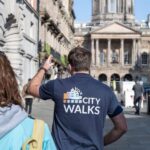
Meeting and matching with your guide is straightforward. You’ll disembark from your cruise, walk up the covered ramp into the white cruise welcome area, then look for a guide in purple holding a Liverpool Famous Walking Tours sign.
In This Review
- Key highlights to look for
- Where this tour really shines on limited shore time
- Getting started: cruise welcome area and the purple-guide meet
- Derby Square to Queen Victoria: seeing what’s no longer there
- The dry dock story and Liverpool’s changing selfie sign
- Royal Albert Dock: where maritime power becomes your map
- The Three Graces: architecture with meaning, not just selfies
- Mathew Street and Cavern Club area: walking the Beatles footsteps
- Town Hall and the Andrew Edwards Beatles Statue moment
- How the guide style improves the experience
- Pace, timing, and what to wear for cobbles
- Price and value: what $31 really buys you
- Who this tour suits best (and who might want another option)
- Should you book this Liverpool heritage shore excursion?
- FAQ
- How long is the Liverpool Heritage, History & Culture walking shore excursion?
- What is included in the tour price?
- Where do we meet the guide after getting off the cruise ship?
- Is the tour wheelchair accessible?
- Are there any food or drinks included?
- Do you stop at the Royal Albert Dock and the Three Graces?
- Can I cancel or pay later?
Key highlights to look for
- Local, story-first guiding that turns landmark facts into real-world context
- Royal Albert Dock and the way Titanic is woven into Liverpool’s maritime identity
- The Three Graces (Cunard, Port of Liverpool, and the Liver Building) plus Exchange Flags
- Mathew Street and Cavern Club area for Beatles-era atmosphere
- Photo moments with the changing-color Liverpool sign and the Beatles Statue by Andrew Edwards
Where this tour really shines on limited shore time
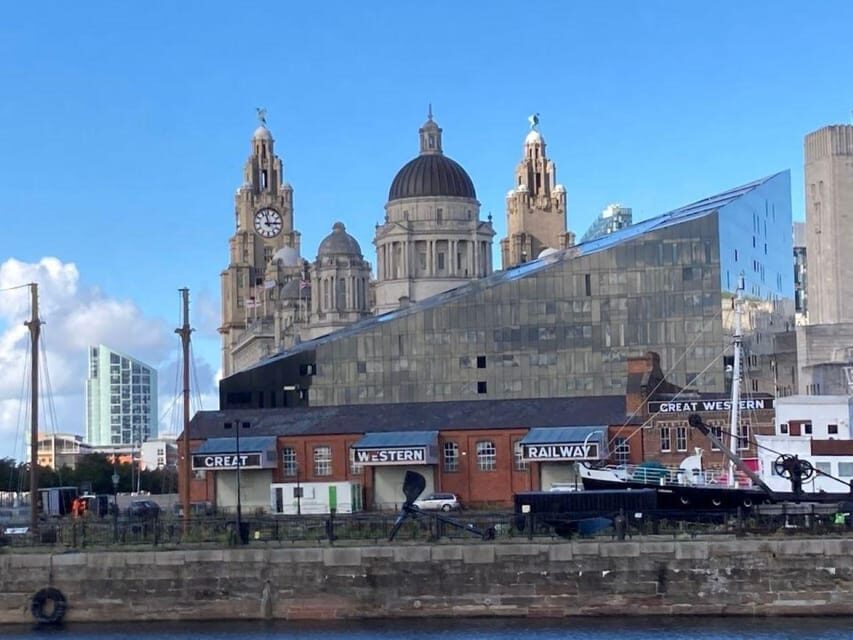
A shore excursion succeeds or fails on one question: do you actually see the important stuff without wasting time? This one is built for momentum. In about two hours, you move through Liverpool’s key themes—civic history, dockland power, and music culture—without getting stuck in a museum queue or hopping between far-flung neighborhoods.
What makes it work is the way the stops layer together. You don’t just point at buildings; you hear why they mattered. Maritime Liverpool isn’t treated like a side note. The docks, dry docks, and waterfront landmarks are used to explain how the city grew and what darker chapters were tied into that growth, including Liverpool’s role in the slave trade. That matters because it keeps the tour grounded in how a port city truly functions: trade, wealth, and human cost all tied up together.
And then you get the Beatles thread running through the same walking day. You’re not doing a random pop-culture detour. Mathew Street and the Cavern Club area are positioned as part of modern Liverpool identity—music turning local streets into world-famous destinations. If you like your sightseeing to have multiple layers, this tour hits that sweet spot.
You can also read our reviews of more walking tours in Liverpool
Getting started: cruise welcome area and the purple-guide meet
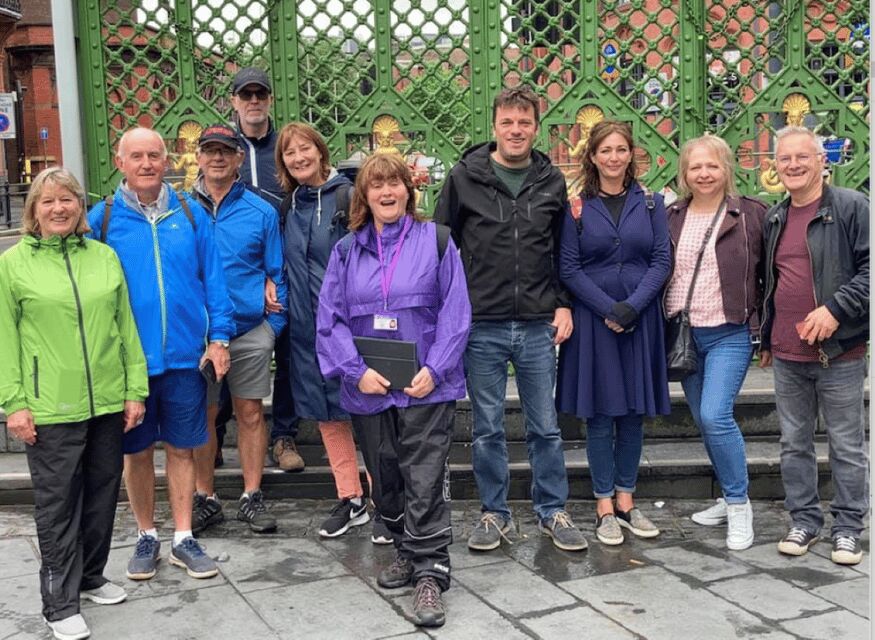
If you’re coming from a cruise ship, you’ll want to get your bearings quickly. The meeting point is inside the cruise welcome area: you disembark, then walk up the covered ramp into the white building. Your guide will be wearing purple and holding a welcome sign for Liverpool Famous Walking Tours.
That detail sounds small, but it helps more than you’d think. On cruise days, time disappears fast. Having a clear, visually distinctive meeting setup reduces the chance you end up wandering around outside while your group queues up.
You’re also told to expect an easy walking tour, with wheelchair access available. That’s good news for many visitors. Still, you’ll be moving through busy areas and there can be uneven surfaces like cobbles, so comfortable shoes help even if the pace is gentle.
Derby Square to Queen Victoria: seeing what’s no longer there
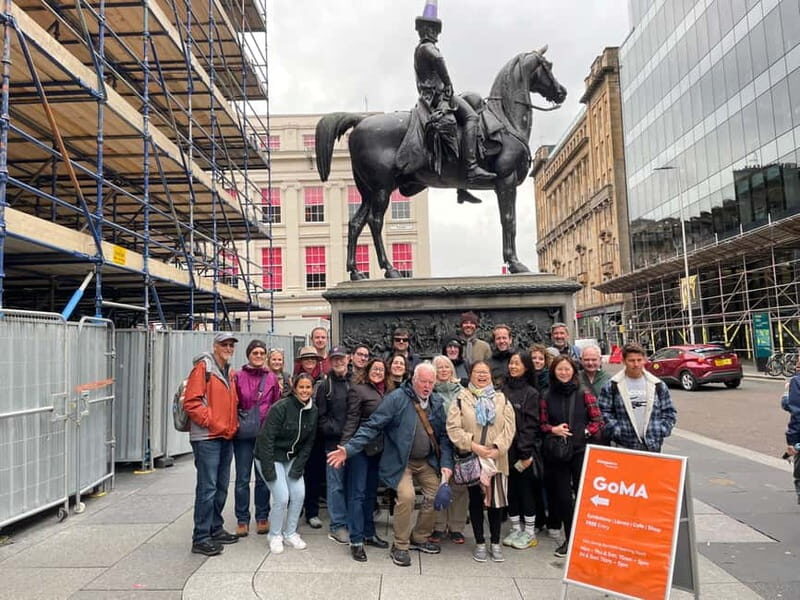
One of the first moments you’ll appreciate is how the tour treats space, not just buildings. At Derby Square, you’ll hear about Liverpool Castle, which once stood in that location but is now gone—replaced by an imposing monument to Queen Victoria.
This is a smart approach because it teaches you how cities evolve. Standing in one place, you’re offered two time periods at once: what used to occupy the ground beneath your feet, and what later generations chose to build there. It’s a quick history lesson, but it’s also practical. Once you understand the pattern—old power, new monuments—it gets easier to read other Liverpool landmarks as chapters, not random photo backdrops.
If you like walking tours where the guide connects the dots, you’ll probably enjoy this stop. It’s also a good entry point for your brain before you head toward the waterfront, where the story shifts from civic history to maritime business.
The dry dock story and Liverpool’s changing selfie sign
Next you shift toward the waterfront mood, and the tour does it with a very specific maritime cue: the site of Liverpool’s first dry dock. The explanation ties the dockland story directly to the city’s development, and you’ll see how maritime history shows up in the modern streetscape.
There’s also a fun photo element here: a large oversized LIVERPOOL selfie sign, with colors that change depending on the season or events. That’s not just for playful pictures. It’s also a quick reminder that Liverpool’s public space is active and current, not stuck in the past.
A practical note: if you’re the type who wants photos without feeling rushed, plan for a quick pause rather than a long photo session. You’re on a timed walking day with a group, so think of picture stops as quick captures, not leisurely photo shoots.
Royal Albert Dock: where maritime power becomes your map
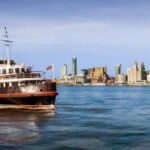
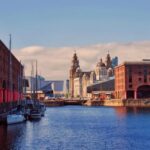
When you reach the Royal Albert Dock area, the tour’s maritime theme lands. You’ll learn how the Titanic story became an internal part of Liverpool’s maritime history, and you’ll hear how the docks contributed to the city’s growth.
This is a great stop for two reasons. First, it anchors the tour in the waterfront you can actually see. It’s one thing to read about shipping; it’s another to walk in the dock environment and have the guide translate what you’re looking at. Second, it shows how a global event can reshape local storytelling—Titanic becomes part of Liverpool’s public identity.
If you’re someone who likes context behind famous names, you’ll likely enjoy this section most. And if you’re more focused on photos, this is still a strong segment because dock architecture and water-adjacent views generally photograph well, especially in daylight.
You can also read our reviews of more historical tours in Liverpool






The Three Graces: architecture with meaning, not just selfies
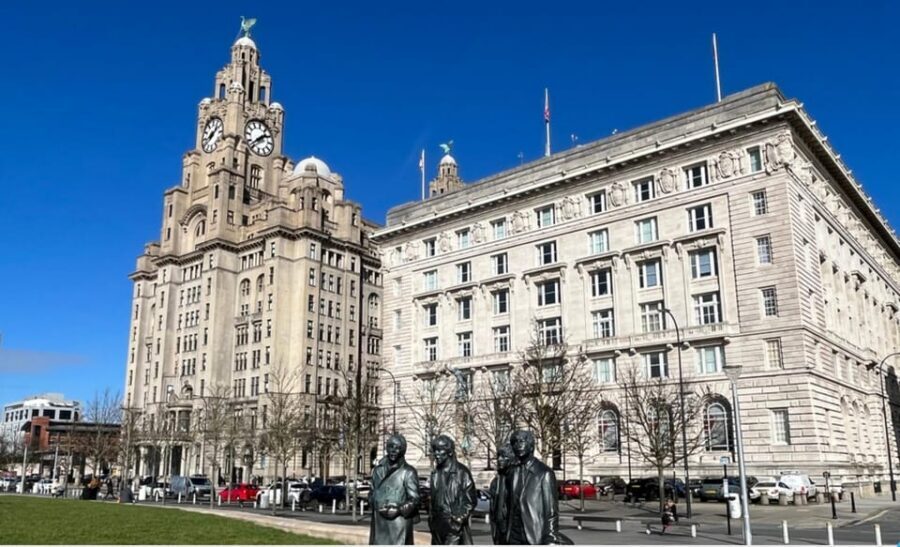
Now comes one of the tour’s best “wow” sequences. The guide takes you to the group of buildings collectively called the Three Graces—and you’re not only told what they are, you learn what they represent.
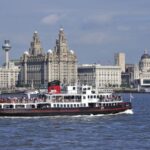
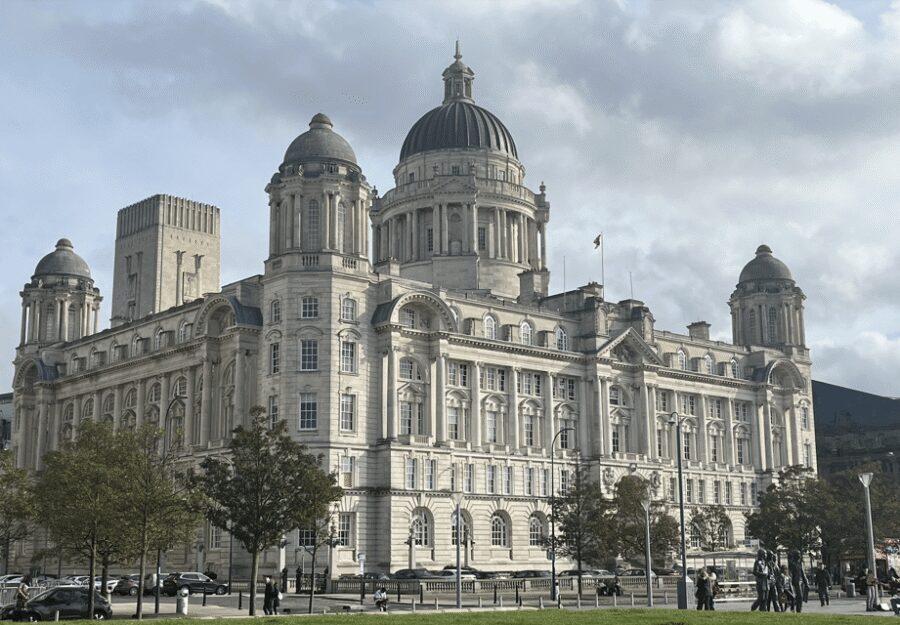
You’ll hear about the Grade II listed Cunard Building, the Grade II listed Port of Liverpool Building, and the iconic Liver Building. This matters because listed-building status isn’t just trivia; it’s a clue that these structures are part of a protected architectural story. You’re looking at buildings that the city treats as heritage, not disposable scenery.
Then you continue toward Exchange Flags, also Grade II listed, where the surrounding buildings create a courtyard facing the Town Hall. This gives you a natural “breather moment” in the architecture. The tour shifts from dockland wide views to the more enclosed feel of urban civic space, which helps your brain reset before the Beatles/music section.
If you’re traveling with someone who likes buildings and another who likes music, this portion is the bridge. You get skyline drama and civic design energy all in one corridor.
Mathew Street and Cavern Club area: walking the Beatles footsteps
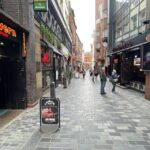
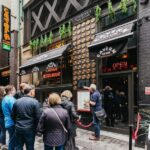
Once the dockland story finishes, the tour turns toward modern Liverpool identity at a pace that feels right. You walk along Mathew Street, where the vibe is famous for a reason: it’s tied to the Cavern Club and the broader legacy of the Beatles and other musical icons.
This is where the tour becomes more than a history walk. The guide’s stories help connect the atmosphere of the street to the people and culture associated with it. Even if you’re not a hardcore Beatles-only fan, Mathew Street works because it’s about how music becomes place-based. Streets can carry memory, and this one does.
You’ll also be in the right zone for that world-recognizable energy you see in photos and films. Expect a lively mix of visitors and locals moving through the same narrow streets, so keep an eye on where your group is and don’t fall behind for that perfect angle.
Town Hall and the Andrew Edwards Beatles Statue moment
The next stop brings you into formal civic architecture with a strong sense of continuity. You’ll see the current Grade I listed Town Hall, described as one of the finest surviving 18th-century town halls in England. You’ll also hear about the predecessors dating back to the 1500s—a reminder that Liverpool’s civic center has been taking shape for centuries.
That’s a nice contrast to the dock story. The waterfront explains commerce and power; the Town Hall explains governance and public life. Put together, they give you a fuller picture of how a major city organizes itself.
And then there’s a very practical, very tourist-friendly highlight: you’ll pass by an iconic Beatles Statue sculpted by Andrew Edwards, and you’ll have a chance to grab a selfie with it. If you only do one “I’m here” photo on your cruise day, this is the one.
How the guide style improves the experience
The people running the tour matter here. This is where I put my focus when I judge value, because a good guide can save you from a dry list of facts.
You’re with local Liverpool experienced guides, and the tour is built around personal stories that connect big themes—King John era references, maritime power, and music culture—into something easier to follow on foot. That storytelling approach is also why the tour can feel relevant even when you’ve only got a short time window.
One detail I appreciate: the tour can be adapted for visitors who need changes in pace. In at least one case, the guide helped a deaf guest by taking extra time for interpretation. That tells you the guides pay attention to how the group is experiencing the tour, not just what time they need to hit the next stop.
If you’re someone who likes questions, or you travel with anyone who needs a slower explanation now and then, this tour’s guide approach is a real plus.
Pace, timing, and what to wear for cobbles
This is an easy walking tour by design, and wheelchair accessibility is listed. But don’t assume it’s a smooth sidewalk the whole way. The tour notes that there can be uneven surfaces like cobbles, especially in older parts of the city and around historic buildings.
So I’d plan for:
- Comfortable shoes with grip
- Light layers (coastal weather shifts can catch you off guard)
- A phone battery charged for photo stops like the Liverpool sign and Beatles Statue
- A little patience in busy areas, where foot traffic can slow the group
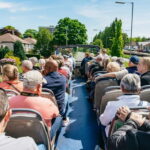
Also, because it’s a group walk, you’ll be sharing space with other people. That’s part of the Liverpool experience—town energy in motion. Just stay close to your guide and let the group’s pace set your rhythm.
Price and value: what $31 really buys you
At $31 per person for a 2-hour shore excursion, the value comes down to what you’re getting for the time.
You’re paying for:
- A guided route that hits multiple “big names” (Royal Albert Dock, Three Graces, Town Hall, Mathew Street area)
- Local storytelling that connects those landmarks to themes like maritime growth and the slave trade
- Photo-friendly stops, including the changing Liverpool selfie sign and the Beatles Statue by Andrew Edwards
- A consistent group pace and easy structure for limited time in port
What you’re not getting is any included meal or drink. So your money is going toward the walking experience, not a packaged lunch. If you’re planning to eat after the tour, it’s smart to think ahead and not treat this as a combined sightseeing-and-meal plan.
Also, the free cancellation and reserve/pay-later options listed by the provider are practical if your ship timing could shift. It reduces the stress of locking in too early.
Who this tour suits best (and who might want another option)
This walking tour is a strong match if you:
- Want a high-signal Liverpool day with major landmarks and a guided narrative
- Like local guides who connect architecture to real stories
- Want Beatles-and-maritime in one walk, rather than choosing one theme only
- Have limited time from a cruise stop and want a plan that fits into it
It may not be ideal if you:
- Need a fully flat, low-mobility route with no cobbles (the tour does note uneven surfaces)
- Prefer long, slow museum-style pacing instead of a structured walking rhythm
- Want food included in the tour package
If you’re traveling with a stroller, the tour says locations are accessible for strollers/wheelchairs, but you’ll still be in group conditions and may encounter cobbles. That doesn’t mean it’s impossible—it just means you should be ready for a slightly tougher surface under wheels.
Should you book this Liverpool heritage shore excursion?
I’d book it if you want a thoughtful, time-efficient walk that mixes maritime history with the city’s music identity—without feeling like you’re doing two unrelated tours. The route hits recognizable places like Royal Albert Dock, the Three Graces, and Mathew Street, and the guide stories are built to explain why these sites matter.
I’d think twice if your priority is a car-free, fully smooth walking experience or if you want an included meal. But for most cruise-day visitors who want clear value and a guided storyline through central Liverpool, this one is a solid pick.
FAQ
How long is the Liverpool Heritage, History & Culture walking shore excursion?
It lasts about 2 hours.
What is included in the tour price?
Included are local Liverpool experienced guides and an easy walking tour.
Where do we meet the guide after getting off the cruise ship?
You meet in the cruise welcome area. Disembark from the ship and walk up the covered ramp into the white building. The guide wears purple and holds a Liverpool Famous Walking Tours welcome sign.
Is the tour wheelchair accessible?
Yes, it is listed as wheelchair accessible. Locations are accessible for wheelchairs and strollers, but there may be uneven surfaces like cobbles, and you will be walking as part of a group.
Are there any food or drinks included?
No. Food and drink are not included.
Do you stop at the Royal Albert Dock and the Three Graces?
Yes. The tour includes the Royal Albert Dock area and the Three Graces: the Cunard Building, Port of Liverpool Building, and the Liver Building.
Can I cancel or pay later?
Free cancellation is available up to 24 hours in advance for a full refund, and there is a reserve now & pay later option so you can book without paying right away.