REVIEW · LONDON
London: British Museum: Ancient Daemons and Art Private Tour
Book on GetYourGuide →Operated by My London Guide · Bookable on GetYourGuide
Ghosts and artifacts play nicely here. This British Museum private tour turns major masterpieces into stories about ancient magic and medieval superstition. I especially love the way the guide connects Rosetta Stone to the bigger moment when languages became readable, and how the Parthenon Marbles get explained through changing ideas of beauty.
The only real heads-up: it involves moderate walking and it is not suitable for mobility impairments or wheelchair users, so you’ll want to plan accordingly. Still, the private size and express entry mean you spend more time looking and less time lining up.
In This Review
- Key highlights worth knowing
- Ghostly Daemons and Art at the British Museum
- A 2-Hour Private Tour That Keeps You Moving (But Not Rushed)
- Edward VII’s Entrance and the Express Security Advantage
- Rosetta Stone: More Than a Famous Name
- Parthenon Marbles: Beauty That Changes With Time
- Egyptian Mummies: Life, Death, and the Stories We Tell
- Medieval Comic Books and the Idea of Alternative Narratives
- The Big Civilizations Thread: From Greece to India to England
- What the Tour Feels Like: Storytelling That Connects the Dots
- Price and Value: Paying Per Group, Not Per Person
- Practical Rules: What to Bring, What Not to Bring, and Photo Limits
- Who Should Book This Tour (and Who Should Skip It)
- Should You Book the London British Museum Ancient Daemons and Art Tour?
- FAQ
- Where do we meet for the tour?
- How long is the tour?
- Is there fast-track or skip-the-line entry?
- Can I take photos, and is flash allowed?
- Is this tour wheelchair accessible or suitable for mobility impairments?
- What should I bring and what can’t I bring inside?
Key highlights worth knowing
- Fast-track entry via Edward VII’s Entrance to help you get inside quickly
- Rosetta Stone explained as a turning point for deciphering hieroglyphs and meaning
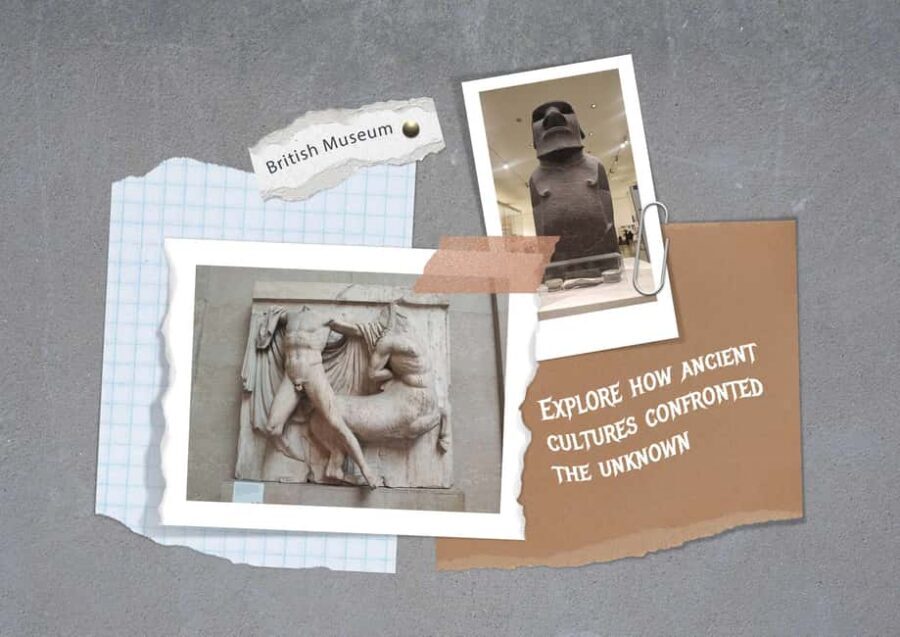
- Parthenon Marbles linked to evolving standards of beauty
- Egyptian mummies used for life-and-death symbolism, not just display facts
- Medieval comic books about Jesus framed in a wider story of rumor, belief, and folklore
Ghostly Daemons and Art at the British Museum
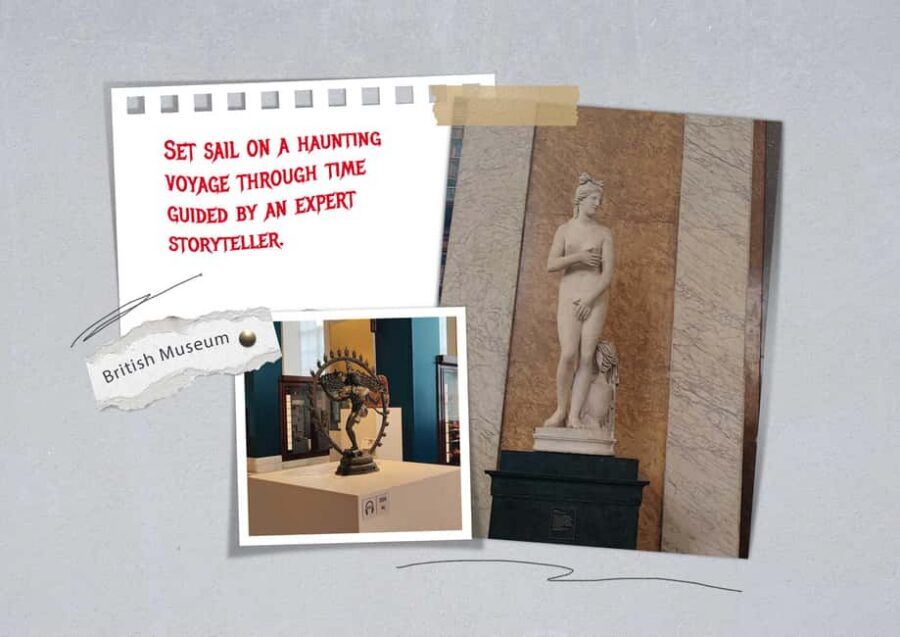
If the British Museum feels like a giant warehouse of wonders, this tour is how you make it feel like a guided story. The theme is front and center: ancient daemons, mythology, and medieval superstitions. That matters because it changes how you look at objects. Instead of treating artifacts like isolated trophies, you start seeing them as part of how people explained the world—through gods, omens, fear, and hope.
You’ll also get an art-focused lens. This is not just a facts lecture. It’s about interpretation: why an image mattered to its maker, and why later societies kept revisiting the same ideas. And if you’re the type who likes a spooky angle without losing the art and history, you’ll probably enjoy the pacing.
You can also read our reviews of more private tours in London


A 2-Hour Private Tour That Keeps You Moving (But Not Rushed)
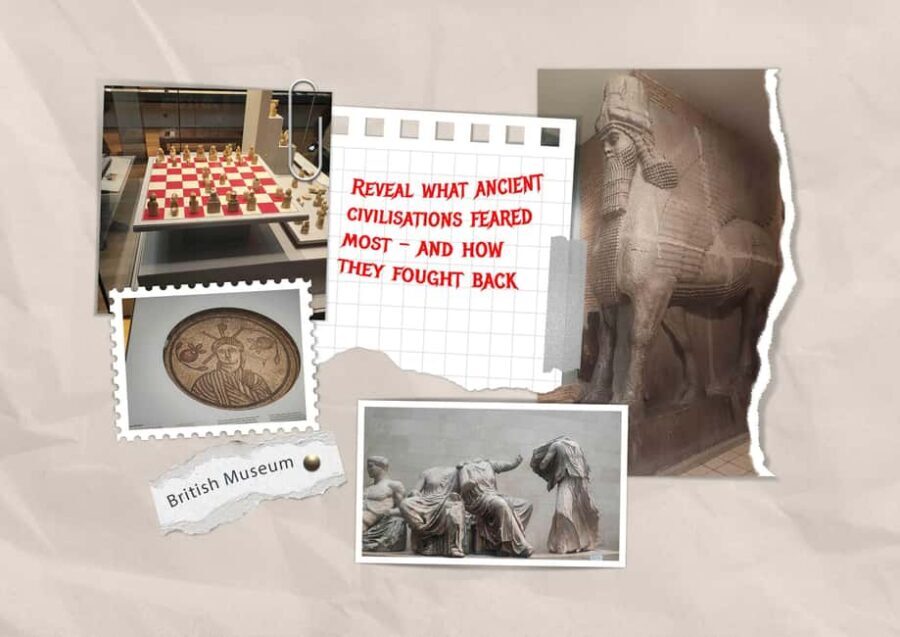
This is a private group tour running about 2 hours. The price is $96 per group up to 8, which is a big part of the value equation. In practice, that means you’re not stuck in a crowd where you can’t see, can’t hear, and can’t ask questions.
The structure also helps you manage the British Museum’s scale. Instead of trying to cover everything, you get a curated route built around major highlights. The trade-off is obvious: you won’t see every room. You’re choosing a theme and sticking to it, which is great if you want clarity.
You’ll also want to expect a moderate walking pace. The tour is designed for people who can handle moving through exhibition spaces. And since it’s not suited to mobility impairments or wheelchair users, plan your museum time with that in mind.
Edward VII’s Entrance and the Express Security Advantage
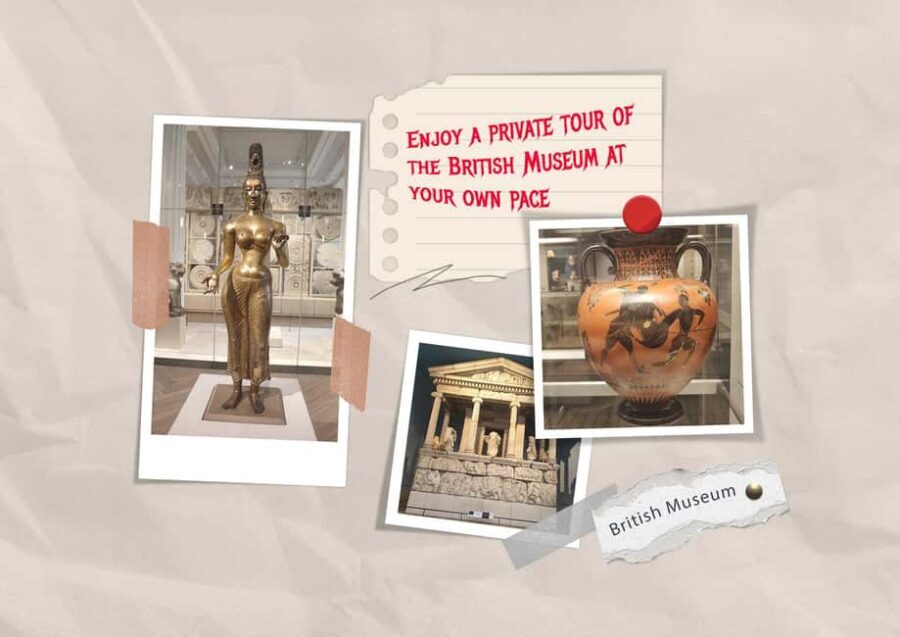
Meeting point is the group entrance to the British Museum (Edward VII’s Entrance). Your guide will be holding a sign that says My London Guide.
Once you’re in, the tour includes fast track entry and skip-the-line through express security. That can be a real quality-of-life upgrade in London, where museum lines can swallow your morning. More importantly, it sets the tone: you’re not stressed, you’re already in looking mode.
One small note from an earlier experience: there was an issue when someone entered the museum, and the guide handled it. That’s not something you can plan for, but it does suggest the guide is used to keeping things smooth when things go sideways.
Rosetta Stone: More Than a Famous Name
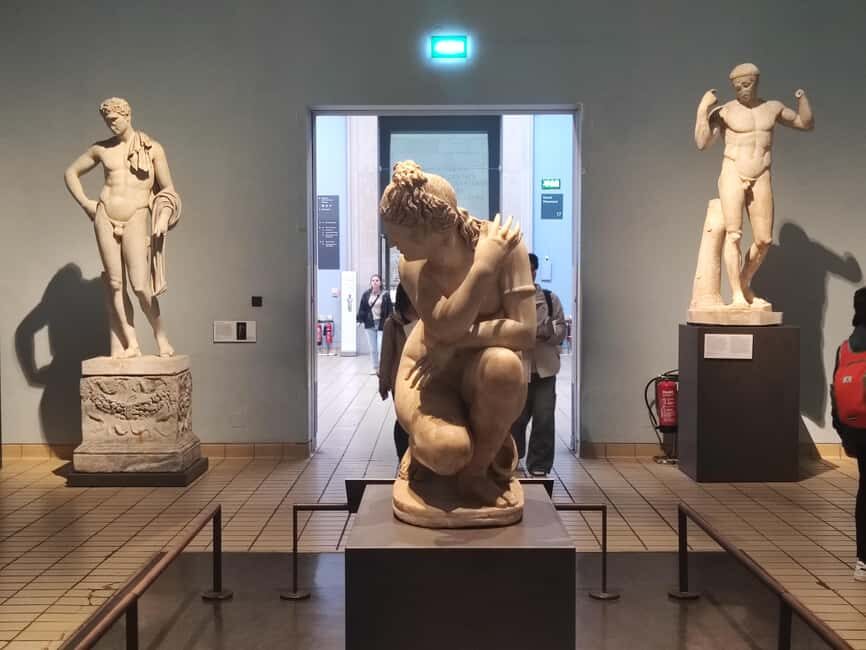
The Rosetta Stone stop is one of the smartest choices for this type of tour. It’s instantly recognizable, but the value here is in the framing. You’re not just told that hieroglyphs were deciphered. You’re shown how that moment changed what people could read and therefore what they could understand.
This matters because hieroglyphs are not just letters. They’re a window into the Egyptian worldview—religion, power, daily life, and myth. When you connect that to the broader theme of ancient belief systems and later storytelling, it clicks fast. The story of reading the past becomes part of the story of how past people influenced later cultures.
If you care about how knowledge spreads—how a single breakthrough changes history—this is likely one of the stops that makes the whole tour feel worth it.
Parthenon Marbles: Beauty That Changes With Time
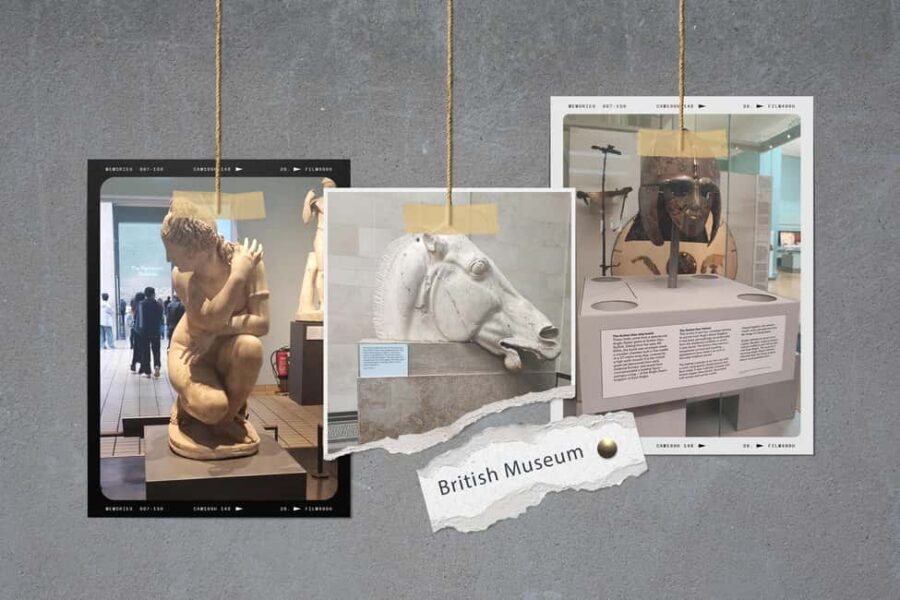
From Egypt and language, the tour shifts to Greek art through the Parthenon Marbles. What I like about putting these here is the contrast. Egyptian objects can be intensely symbolic and ceremonial. Greek art often gets described in terms of proportion, form, and ideals of beauty. This tour uses that idea to show how standards of beauty keep evolving.
And since the theme is mythology and belief, the tour’s likely angle is not just “here’s what it looks like.” It’s “here’s why people invested in these images.” Greek myth and Greek art were tightly linked. Stories about the gods didn’t just entertain; they explained order, nature, and human limits.
This stop is also a good checkpoint for your expectations. If you want art history that doesn’t get stuck in academic jargon, this kind of framing tends to work well.
You can also read our reviews of more museum experiences in London




Egyptian Mummies: Life, Death, and the Stories We Tell
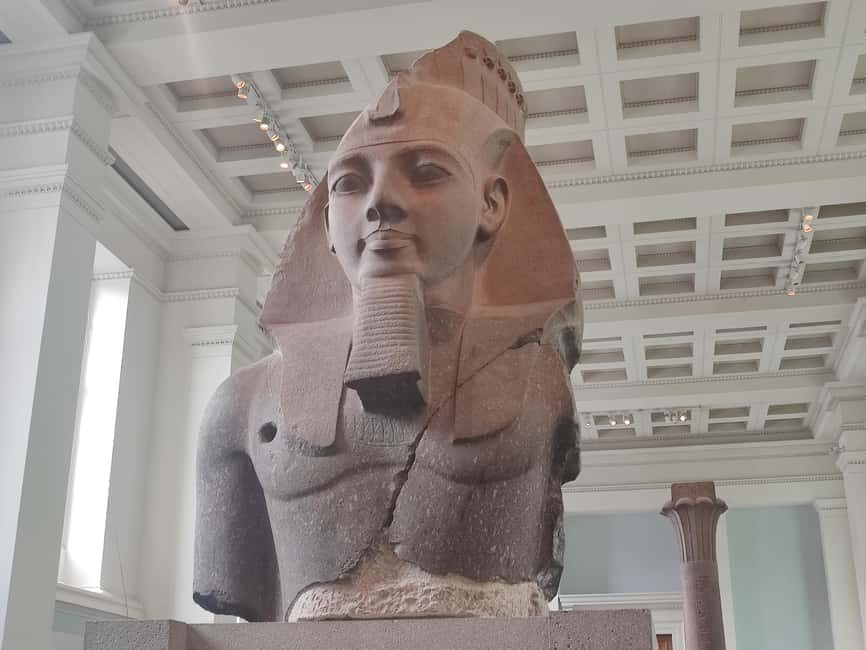
The Egyptian mummies section turns the volume down from spooky fun to something more human. Death rituals in ancient Egypt weren’t only about fear; they were about continuity. They gave structure to the idea that life didn’t end in the same way people thought it did.
In a tour themed around daemons and superstition, the mummies fit naturally. They connect to the broader question: what do people do when the unknown scares them? They build explanations, rituals, and objects meant to help.
This is one of the best “watch your feelings change” stops. At first, you might think: cold. Then the explanations tend to make it feel personal. You start seeing why these objects were made and kept, not just displayed.
Medieval Comic Books and the Idea of Alternative Narratives
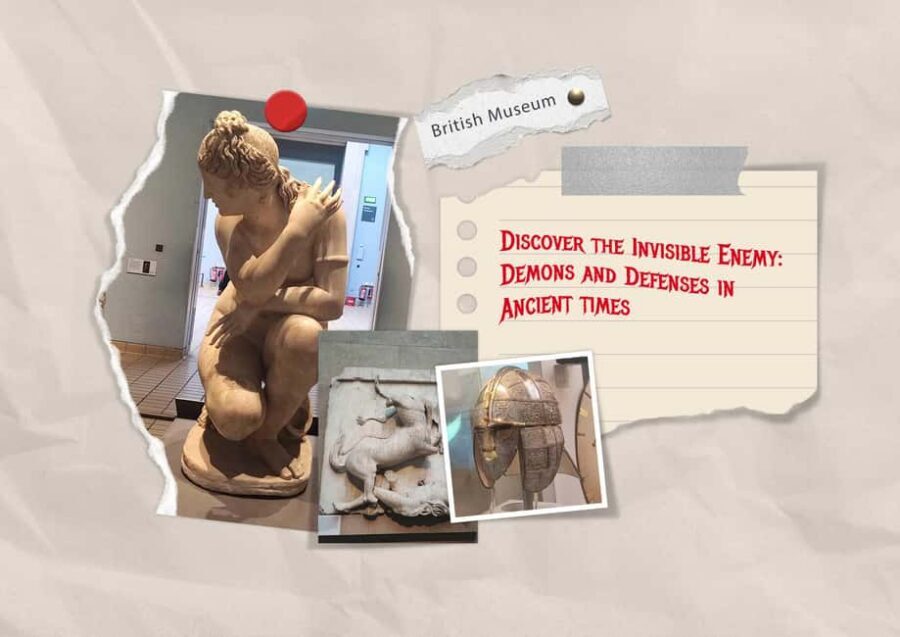
One highlight that sounds wildly specific is the stop on medieval comic books connected to the childhood of Jesus Christ. That’s a big deal for a couple reasons.
First, it reminds you that religious stories were not static. They changed shape over time, depending on culture, literacy, and what people needed to believe. Second, it fits the tour theme: medieval belief often included supernatural logic, rumor, moral lessons, and folk interpretations alongside official doctrine.
This is also where the guide’s storytelling style can make or break your experience. In one review, the guide Richard was described as incredibly insightful, with entertaining stories and unexpected connections between ancient times and today. If you’re someone who loves those surprising links—how today’s ideas of myth, rumor, and meaning have older roots—this stop is likely a highlight.
Just keep your expectations balanced. Comic-style representations of religious stories aren’t going to give you a single definitive “answer” about history. Instead, they’re useful for understanding how people thought and retold.
The Big Civilizations Thread: From Greece to India to England
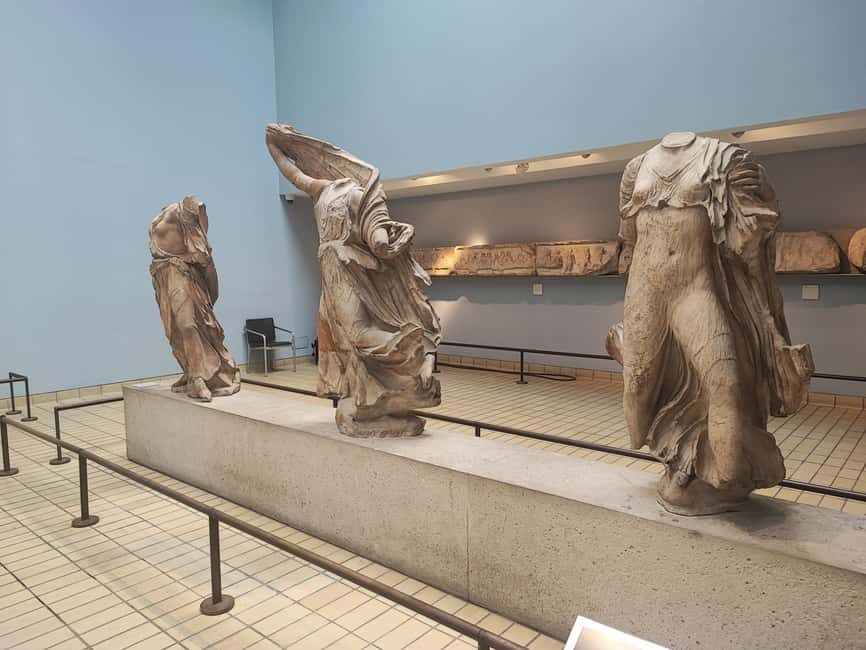
The tour doesn’t stay in one culture box. It’s built around a chain of civilizations and what each one contributed—sometimes in obvious ways, sometimes with a more story-driven angle.
You’ll be guided through ideas connected to:
- Ancient Greece: philosophy, democracy, theatre, and how art ideals still echo today
- Ancient Egypt: hieroglyphs, pyramids, and even medical knowledge
- Mesopotamia: the wheel, siege engines, and farming foundations
- India: yoga, rebirth, and spiritual enlightenment
- England: Stonehenge and the roots of the English language
Even if not every single artifact matches every bullet exactly in what you see, the thread helps you build mental connections fast. That’s a big advantage in a museum as large as this one. Your brain needs handles. This tour gives you handles, so you’re not just collecting names.
What the Tour Feels Like: Storytelling That Connects the Dots
This tour is guided by an art specialist storyteller, and the emphasis is on meaning: ancient magic, mythology, and medieval superstitions. That tells you the voice of the experience. Expect lively narrative, object-based explanations, and links between ancient belief systems and later ways of interpreting the world.
A private format helps here. You can ask where your interest is strongest—art, religion, language, or the supernatural mindset—and the guide can steer. In one review, the guide resolved an entry issue quickly, which hints at calm problem-solving and attention to the group.
The best part of this style is that you come away with a kind of “museum fluency.” You’ll start noticing symbols and themes in other rooms too, even after the tour ends.
Price and Value: Paying Per Group, Not Per Person
At $96 per group up to 8, this tour can be great value if you’re traveling with friends or family. Museums are expensive in London when you’re buying entry, transport, and guide time separately. Here, the cost is geared around group size, not solo ticket pricing.
You’re also getting specific add-ons baked in:
- Fast track entry and express security
- A private, live English guide
- Time-focused highlights rather than a random museum wander
Is it the best choice if you want total freedom to roam? No. This is a designed tour with a theme and selected objects. But if you want a high-quality route with interpretation, it’s a strong deal.
Practical Rules: What to Bring, What Not to Bring, and Photo Limits
The basics are simple, and I’d follow them closely.
Bring:
- Comfortable shoes (you’ll walk)
- Camera (allowed)
- Water
Not allowed:
- Backpacks and large bags inside the museum
Photo rules:
- Flash photography is not allowed
- Photography is allowed without flash
Also note: food and drinks aren’t permitted inside the exhibition halls. That’s normal museum etiquette, but it matters because you can’t just stop for snacks during your route.
If you want smooth photos, keep your camera ready and plan to shoot without flash. You’ll avoid awkward interruptions when you’re in the middle of a guided explanation.
Who Should Book This Tour (and Who Should Skip It)
You’ll probably love this tour if:
- You like myth, superstition, and how stories shape art
- You want a guided route through major highlights without a full-day commitment
- You’re traveling with a small group and want privacy plus fast entry
You might skip it if:
- You need wheelchair access or have mobility limitations. This tour isn’t suitable for wheelchair users and isn’t for people with mobility impairments.
- You want to see lots of unrelated exhibits. This tour is focused, not panoramic.
It’s also a good option for first-timers to the British Museum who still want the museum to feel human. Instead of feeling lost in scale, you’ll learn how to connect the objects you see to the big ideas behind them.
Should You Book the London British Museum Ancient Daemons and Art Tour?
If your ideal museum day includes strong storytelling and a theme that links objects across time, I’d book it. The highlights are major, the private format keeps things comfortable, and the express entry saves energy. The $96 per group up to 8 pricing can be a smart move if you’re not traveling solo.
My one caution is practical: make sure you’re comfortable with moderate walking and that the restrictions on wheelchairs and mobility impairments won’t be an issue for your group. If that’s a fit, this is a fun way to see the British Museum with your brain switched on, not just your camera.
FAQ
Where do we meet for the tour?
You meet at the group entrance to the British Museum (Edward VII’s Entrance). The guide will be holding a sign that says My London Guide.
How long is the tour?
The tour lasts about 2 hours.
Is there fast-track or skip-the-line entry?
Yes. It includes fast track entry and you can skip the express security check.
Can I take photos, and is flash allowed?
Yes, photography is allowed without flash. Flash photography is not allowed.
Is this tour wheelchair accessible or suitable for mobility impairments?
No. It is not suitable for people with mobility impairments or wheelchair users.
What should I bring and what can’t I bring inside?
Bring comfortable shoes, a camera, and water. Backpacks and large bags are not allowed inside, and food and drinks aren’t permitted in the exhibition halls.