REVIEW · LONDON
London: British Museum Tour with Archaeologist Guide
Book on GetYourGuide →Operated by Spirit of Discovery Tours · Bookable on GetYourGuide
A museum can feel like a maze. This one turns into a guided time-line, powered by an archaeologist and focused on the British Museum’s biggest stories. I especially love how Rossa connects each artifact to the people who made it, and how the tour keeps the pace tight so you don’t drown in crowds. One thing to consider: the group leaves promptly at 9:45am, so late arrivals can be a problem.
If you’re short on time, this tour is a practical fix. You’ll hit major highlights like the Rosetta Stone, the Parthenon Marbles, and the Lewis Chessmen, then finish with a clearer sense of how ancient worlds connect. It’s not a “read every label” day; it’s a guided, selective route that makes you see far more than you would alone.
In This Review
- Key things that make this tour worth your time
- Why an archaeologist guide beats the self-guided museum shuffle
- Russell Square meetup: start smart and be ready at 9:45am
- Skip-the-line entry inside the British Museum
- How the 2.5 hours are paced so you don’t get overwhelmed
- Rosetta Stone and ancient Egypt: how words, power, and art connect
- Assyrian palaces and Greek masterpieces: reading empires in stone
- Vikings, chess, and the Lewis Chessmen: history you can hold in your mind
- Moai and Aztec crowns: the museum’s global scope (without the chaos)
- Sutton Hoo and King Raedwald: the treasure hoard that reshaped the Dark Ages
- What you’ll actually see: the tour highlights list that matters
- Value check: is $58 per person a fair deal in London?
- Who should book this British Museum archaeologist tour?
- Should you book it or keep it self-guided?
- FAQ
- How long is the British Museum tour?
- Where do I meet the guide?
- What time do we need to leave?
- What’s included in the price?
- How do you avoid lines?
- Is the tour wheelchair accessible?
- What should I bring, and what can’t I bring?
Key things that make this tour worth your time
- Archaeologist-led storytelling that explains who made the objects and why they mattered
- Skip-the-line entry via a separate entrance, which matters in a busy museum
- A route built around big anchors like Egypt, Greece, the Vikings, and Sutton Hoo
- Rossa’s strong speaking voice helps when galleries get noisy
- A tour that aims to prevent overload by focusing on key rooms and shared themes
- A guide who leaves you with recommendations for what to see next on your own
Why an archaeologist guide beats the self-guided museum shuffle
The British Museum is huge. On your own, you’ll wander, you’ll be impressed, and you’ll still miss the “why” behind what you’re seeing.
On this tour, the “why” comes first. An archaeologist guide brings the artifacts to life with context: what the object was for, how it was discovered, and what questions historians still argue about. That turns the museum from a list of things into a chain of human decisions.
I also like that the tour isn’t trying to cover everything. It picks a handful of major exhibits and then explains them so they actually stick. Reviews mention the pacing felt right, and I agree with the logic: two and a half hours is just enough time to build understanding, not enough time to memorize the whole museum.
One possible drawback is that you’re not meant to drift. This is a timed tour, and the group needs to move, especially around entrances and popular galleries.
You can also read our reviews of more guided tours in London



Russell Square meetup: start smart and be ready at 9:45am
You meet at the entrance of Russell Square Station. Your guide will be holding a tablet showing Spirit of Discovery, so it should be easy to spot once you’re outside.
Here’s the key rule: you leave promptly at 9:45am to protect your entry slot. That means you should aim to arrive a bit early, not right on the minute. If you’re running late, you’ll need to call so they can direct you to the group.
Also plan your gear. The tour doesn’t want luggage or large bags, and it doesn’t allow weapons or sharp objects. Bring what you need, and keep it simple.
Skip-the-line entry inside the British Museum
The biggest practical win is the skip-the-line access. Instead of spending your time fighting for the right queue, you get a separate entrance meant for the group.
That one detail changes the mood of the day. You walk in with momentum, and you start your tour in time to actually enjoy what you’re about to see, not just survive your way through crowds.
Once inside, you’ll be guided through a focused set of galleries. Think of it like a guided route through the museum’s most story-heavy rooms, not a sprint through random corners.
How the 2.5 hours are paced so you don’t get overwhelmed
Two and a half hours sounds short until you’re in the British Museum. Then it suddenly makes sense.
This tour is designed to avoid that classic problem: seeing ten things and feeling like you learned nothing because you were constantly trying to catch up. The guide points you toward the major exhibits, explains the themes, and keeps you moving at a pace that lets you look and listen without constant stress.
Another practical plus: the guide typically chooses a mix of the museum’s headline items and additional favorites. That balance is why the tour works well even if you’ve seen photos online. You’re not just looking at the “famous” objects—you’re also getting context that makes them feel human and historical, not just impressive.
You’ll also be able to ask questions along the way. Several reviews praise how the guide answered people’s curiosities, and in a noisy museum, that kind of Q&A helps you leave with more than a blur of facts.
Rosetta Stone and ancient Egypt: how words, power, and art connect
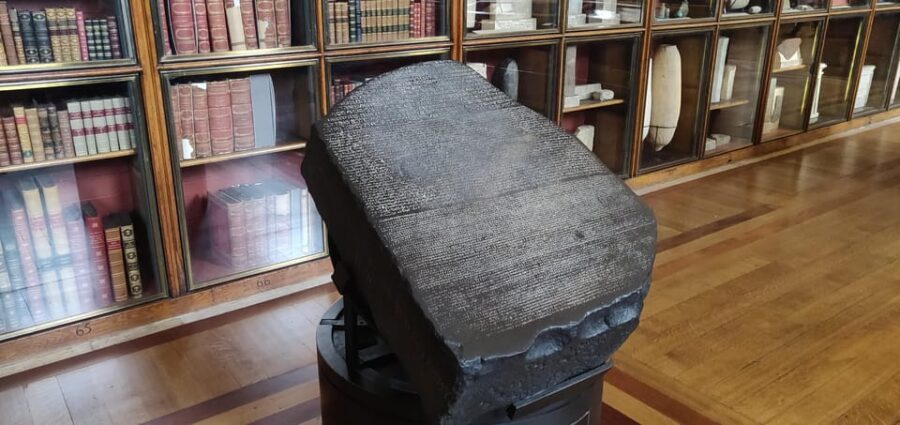
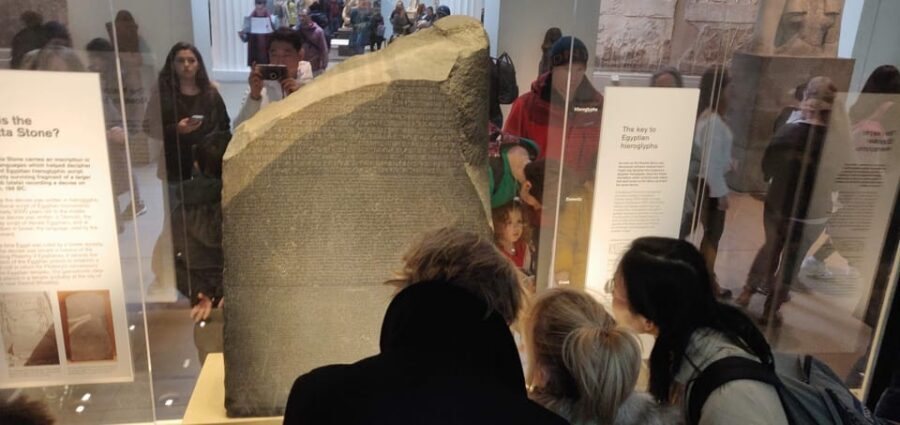
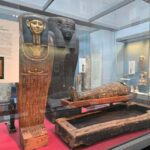
Egypt is one of the most effective places to start, and the tour does it on purpose. You’ll stand before the Rosetta Stone, the famous key to Egyptian hieroglyphs.
What makes this stop more than a photo moment is the explanation you get about how the stone helped unlock reading of hieroglyphs. The object isn’t just ancient—its discovery and interpretation shaped modern understanding of Egypt. You see how a single artifact can redirect scholarship.
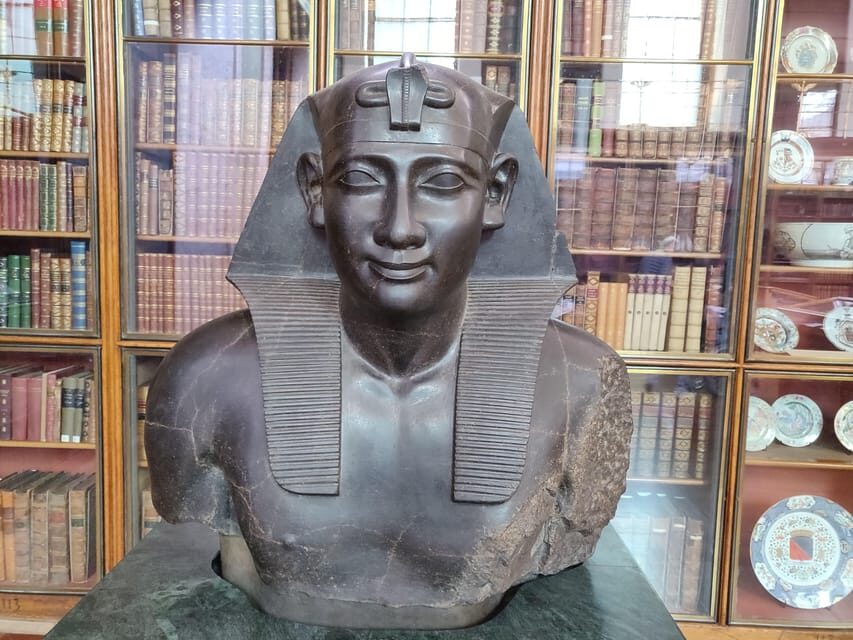
From there, you’ll move through other Egypt-centered highlights, including the colossal statue of Pharaoh Ramses II. Seeing Ramses at a museum scale is one thing; understanding the role of royal imagery and monument-building is another.
Even if Egypt isn’t your favorite period, the tour frames it clearly: people used symbols, language, and monumental art to project authority. Once you grasp that idea, the exhibits start talking to each other.
You can also read our reviews of more museum experiences in London





Assyrian palaces and Greek masterpieces: reading empires in stone
The tour shifts from Egypt toward the broader story of empires—how rulers built legitimacy through architecture, art, and conquest.
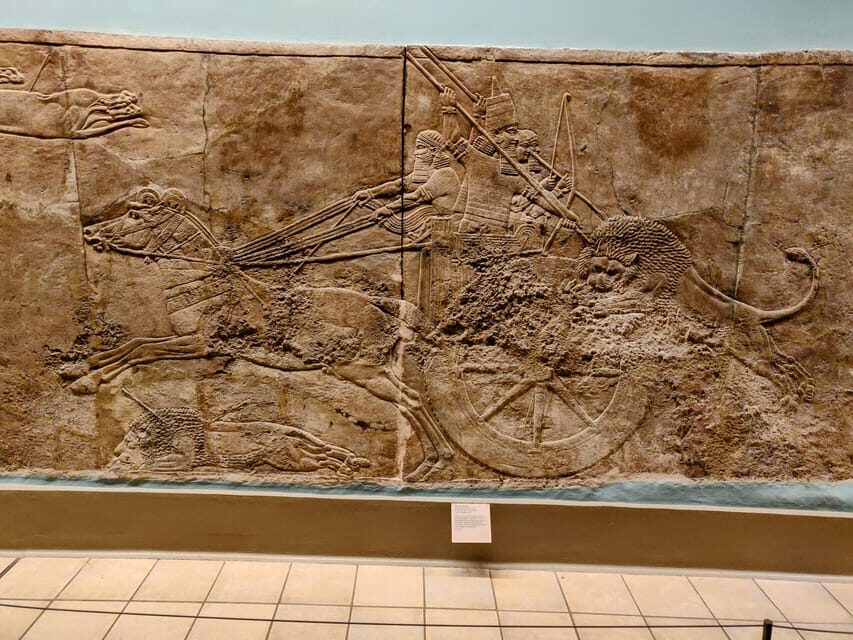
You’ll encounter references to the Assyrian Empire, including scenes connected to the towering palaces of Assyria. These are the kinds of rooms where a guide truly helps. Without help, you might notice impressive scale and carved detail. With help, you understand how those elements worked as political messaging.
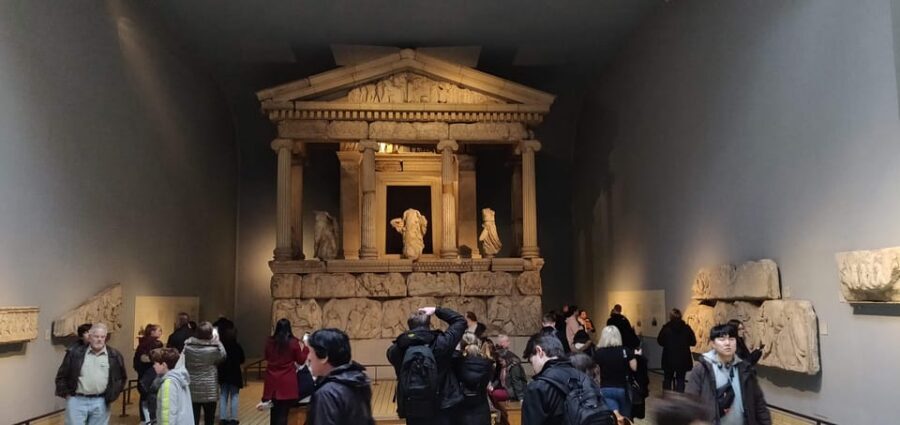
Then comes Greece, and specifically the Parthenon Marbles. These are arguably the museum’s most internationally famous sculptures, and the tour treats them as more than a classic highlight.
You’ll learn why they matter, what you’re looking at in terms of style and subject, and how Greek art expressed civic identity. The key value here is perspective: you stop treating each monument as a standalone “masterpiece” and start seeing it as a product of a society with beliefs, festivals, and power.
Vikings, chess, and the Lewis Chessmen: history you can hold in your mind
Now you get to a fun twist: the Vikings. You’ll see the Lewis Chessmen, among the best-known relics from the Viking Age.
The standout thing with chess pieces is how quickly they become relatable. A guide can connect craftsmanship, cultural travel, and the practical reality of daily life. It turns “Viking” from a word on a timeline into something human and specific.
And because it’s an archaeologist-led tour, the discussion tends to focus on how the objects survive, how they were discovered, and what scholars infer from material evidence. That’s where the tour feels different from a standard highlights walk.
If you like stories with real objects—objects that can make you picture hands, workshops, and trade—this part delivers.
Moai and Aztec crowns: the museum’s global scope (without the chaos)
The British Museum’s strength is that it doesn’t treat history as one-country storytelling. This tour reflects that.
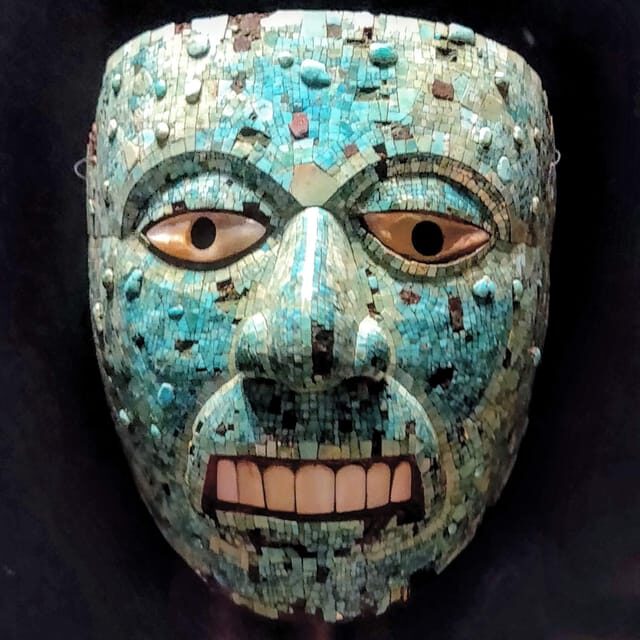
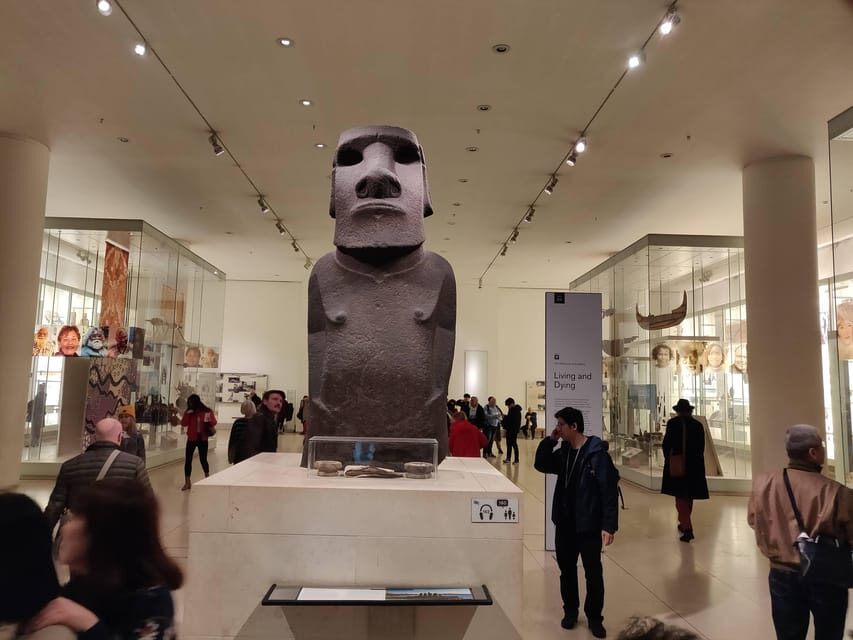
You’ll get a look at Moai statues from Easter Island and the museum’s Aztec Empire crown jewels. These aren’t random add-ons. The guide uses them to show how different societies expressed authority, identity, and religious meaning through crafted objects.
Here’s the value for you: you start noticing patterns across cultures. When you see how rulers and communities used symbols, art, and ritual objects, you stop thinking in isolated “ancient cultures” boxes. The exhibits become a comparison game—but in a useful way.
This is also where the guide’s role matters for crowd navigation. Global collections can be hard to manage on your own because you’re chasing galleries across a giant building. On the tour, you get a planned route that keeps the story moving.
Sutton Hoo and King Raedwald: the treasure hoard that reshaped the Dark Ages
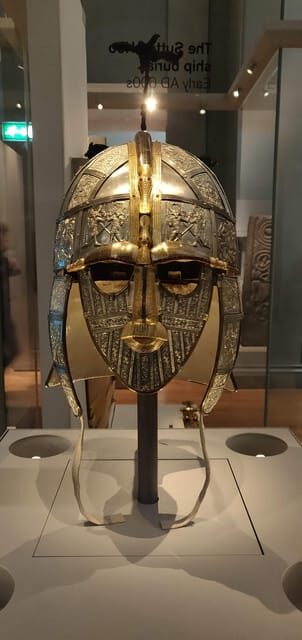
The tour closes with one of the most compelling archaeology stories in the British Museum: the Sutton Hoo hoard, linked to the mysterious King Raedwald.
The Sutton Hoo material is special because it feels like an unexpected window. You get a rare glimpse into an elite world where burial practice, craftsmanship, and political power all show up in the same place.
This is where your understanding clicks. Up to this point, you’ve learned about civilizations across centuries—Egyptian power, imperial art, Greek civic identity, Viking life, and more. Then Sutton Hoo connects that broader pattern to a world from the so-called Dark Ages, where the evidence is scarce but the objects are unforgettable.
Even if you don’t normally care about early medieval history, this stop can win you over because it’s dramatic without being gimmicky. You’re looking at material proof of status, skill, and belief.
What you’ll actually see: the tour highlights list that matters
This tour is built around a set of anchor exhibits you can count on. Based on what you’re led past, expect to spend real time with:
- Rosetta Stone (Egyptian hieroglyphs and the breakthrough it enabled)
- Pharaoh Ramses II (colossal royal sculpture)
- Assyrian material connected to the palaces of the Assyrian Empire
- Parthenon Marbles (Greek masterpieces with broader meaning)
- Lewis Chessmen (Viking Age artifacts tied to chess)
- Moai statues (Easter Island)
- Aztec Empire crown jewels
- Sutton Hoo hoard and King Raedwald (Dark Ages-era treasure)
If you’re trying to hit the museum’s best “story objects” in a limited time, this list is exactly the kind you want.
Value check: is $58 per person a fair deal in London?
Let’s talk money in a real way. $58 for a 2.5-hour archaeologist-led tour in London is not cheap, but it can be good value—if you care about context and you hate museum decision fatigue.
Here’s what you get for the price:
- Museum entry included
- A guided route through major exhibits
- A professional archaeologist guide
- Skip-the-line access through a separate entrance
If you were to visit the British Museum on your own, you’d still pay entry and you’d still face crowds, confusing navigation, and a wall of text labels. This tour pays for your time, your listening time, and your selection problem.
Also, the reviews you provided repeatedly flag that the guide’s storytelling makes the visit more meaningful. One reason that matters: the museum is so large that even a “best highlights” self-plan often turns into a rushed checklist. A guided route helps you actually understand what you’re seeing before you move on.
So I’d frame it like this: this is worth it if you want more meaning per minute. If you’re happy reading labels and wandering slowly, you might not need the guide. But if you’re short on time, want structure, and like explanations that connect objects to human stories, it’s a solid purchase.
Who should book this British Museum archaeologist tour?
This is a good fit if you:
- Have limited time and want a focused route
- Prefer learning from a guide rather than only reading
- Want major highlights plus added context
- Like archaeology, ancient civilizations, and the “how do we know” side of history
- Want a museum visit that still works for families (one review notes kids age 12 and 14 enjoyed it)
It may be less ideal if you:
- Need lots of personal quiet time and don’t want a group pace
- Have a very flexible schedule and can’t commit to prompt timing
- Plan to bring large bags or heavy luggage (the tour restricts luggage/large bags)
Should you book it or keep it self-guided?
I’d book this tour if you want the British Museum to make sense quickly. The combination of archaeologist-led guidance, skip-the-line entry, and a route through the museum’s most story-rich objects is exactly the right blend for a short visit.
If you’re the type who enjoys museum wandering at your own speed, you can still have a great day alone. But if you’d rather walk in with a plan and leave with real context, this is one of the smarter ways to spend $58 in London.
FAQ
How long is the British Museum tour?
The tour lasts 2.5 hours.
Where do I meet the guide?
You meet at the entrance of Russell Square Station. The guide will be holding a tablet showing Spirit of Discovery.
What time do we need to leave?
You need to leave promptly at 9:45am to make your museum entry slot.
What’s included in the price?
Entry to the British Museum, the British Museum tour, and an archaeologist guide are included.
How do you avoid lines?
The tour includes skip-the-line entry through a separate entrance.
Is the tour wheelchair accessible?
Yes, the tour is wheelchair accessible.
What should I bring, and what can’t I bring?
Bring comfortable shoes and water. Weapons or sharp objects aren’t allowed, and luggage or large bags aren’t allowed.