REVIEW · LONDON
London: National Gallery + Guided Tour + Priority Entry
Book on GetYourGuide →Operated by Strabo · Bookable on GetYourGuide
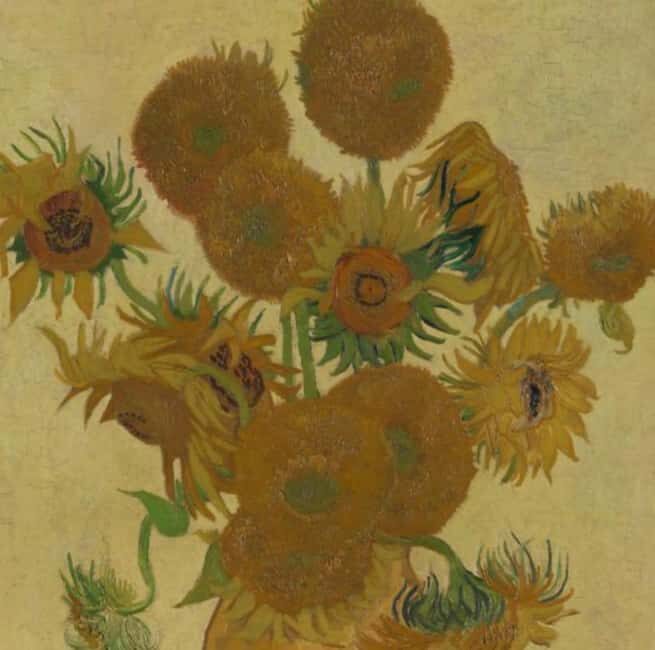
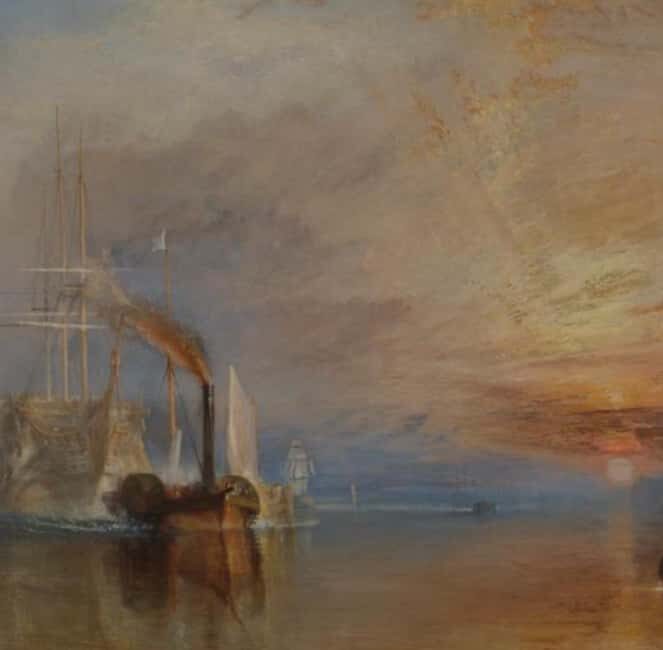
A museum tour that starts on purpose. This National Gallery experience is built around skip-the-line entry and a guide-led walk that helps you actually see key works, like Van Gogh’s Sunflowers and Turner’s The Fighting Temeraire, without getting lost in the crowd or the floors. I also love the way the route pairs big-name artists with the why behind the painting, so you’re not just looking, you’re understanding.
The only catch is time: you’re in and out in about 80 minutes, so you won’t cover the entire museum. If you want to linger in every room, you’ll still need a longer visit on your own afterward.
In This Review
- Key things I’d bet on
- Where it starts: Trafalgar Square and your easy meeting point
- Priority entry and the 80-minute sweet spot
- The National Gallery route: 800 years in one guided walk
- From Sunflowers to The Fighting Temeraire: paintings you can feel
- Renaissance power: Leonardo, Raphael, Titian, and Velázquez
- Portraits and political undertones: Holbein and van Eyck
- How your guide changes the whole museum experience
- Who this tour fits best (and who might want a different plan)
- Price and value: is $26 worth it?
- Practical tips to make the most of your 1.5 hours
- Should you book this National Gallery guided tour?
- FAQ
- How long is the National Gallery guided tour?
- Where do we meet?
- Is skip-the-line entry included?
- What is included in the tour price?
- What isn’t included?
- What languages is the live guide?
- Is the tour wheelchair accessible?
- Is there free cancellation?
- Can I reserve now and pay later?
- Who is the experience provider?
Key things I’d bet on
- Priority entry that saves your morning so you spend time looking, not queuing
- A focused highlights route across centuries, not a random walk through rooms
- Guides who talk like teachers (Dylan, Strabo, Nelli, and Sarah show up in real experiences)
- Paintings you can name afterward from Van Gogh and Turner to Holbein and van Eyck
- Small-group energy is possible, including departures where you’re nearly alone
Where it starts: Trafalgar Square and your easy meeting point
Your tour kicks off in Trafalgar Square, right under Nelson’s Column. The meeting point is between the four bronze lions, under the column: specifically, between the two lions facing the National Gallery.
This matters more than it sounds. Trafalgar Square can feel like a moving map of bus stops, photo ops, and people in all directions. Getting the meeting point right means you start calm, not sprinting in the first five minutes. Wear shoes that don’t mind a bit of standing; even with priority entry, you’ll likely spend some time waiting for the guide and then moving together.
If you’re doing this as part of a day in central London, it’s a convenient anchor. You can plan coffee nearby, then walk straight into one of the world’s best Western art collections.
You can also read our reviews of more guided tours in London



Priority entry and the 80-minute sweet spot
This is a guided tour of about 1.5 hours, with skip-the-line access. That combo is the heart of the value.
Here’s what you’re buying, practically:
- Less queueing, so you keep your momentum.
- A guided route, so you don’t waste 45 minutes figuring out where to go first.
- A set of stops, chosen to connect the dots across periods and artists.
At 80 minutes, it’s not a “see everything” plan. It’s a “see the right things and learn how to look” plan. If you’ve only got a short London window, this structure is smart. If you’re a true art obsessive, you’ll probably use the tour as your starting map, then return later to explore at your own pace.
Also, don’t ignore the fact that the tour guide speaks English and Hindi. That can make the explanations clearer and less stressful if you want more nuance than quick museum label reading.
The National Gallery route: 800 years in one guided walk
The National Gallery is massive in terms of art. A key skill here is learning how to move through it. The tour solves that with a curated sequence that links styles, themes, and technique.
The experience is framed as a journey through roughly 800 years of Western art—so you’ll see works across major movements and understand how artists influenced each other. The guide’s job is to point out what to notice: composition, subject matter, historical context, and technique.
What you get is a kind of art translation. Instead of the museum feeling like paintings stacked in rooms, it becomes a story you can follow.
And yes, the paintings themselves are the main event. This is one of those rare collections where the masterpieces feel close enough to study. Even if you’re not an expert, you can tell you’re in the right place fast.
From Sunflowers to The Fighting Temeraire: paintings you can feel
One of the most satisfying parts of the tour is how it lands emotion and drama in front of you, then explains the choices behind it.
You’ll have a chance to see Van Gogh’s Sunflowers, the kind of painting that practically glows. The guide helps you look at what’s doing the heavy lifting: color, brushwork, and the sense of intention in every square inch.
Then you move to Turner’s The Fighting Temeraire, a farewell scene wrapped in action. Turner’s work often gets described as atmospheric, but on a guided route you get more than mood. You start to notice how the painting builds spectacle and meaning at the same time—how the scene feels both immediate and symbolic.
This is one of the reasons I like guided highlights here: it’s easy to stand in front of famous art and feel like you’re just staring. A good guide makes the staring more productive.
Renaissance power: Leonardo, Raphael, Titian, and Velázquez
The tour doesn’t treat the Renaissance like a checklist. It treats it like a turning point.
You’ll look at works associated with Leonardo da Vinci and see what makes his approach different—especially the craft behind what looks effortless. The tour also highlights genius in the way artists trained their eye and their hand: how they arranged figures, used light, and built believable space.
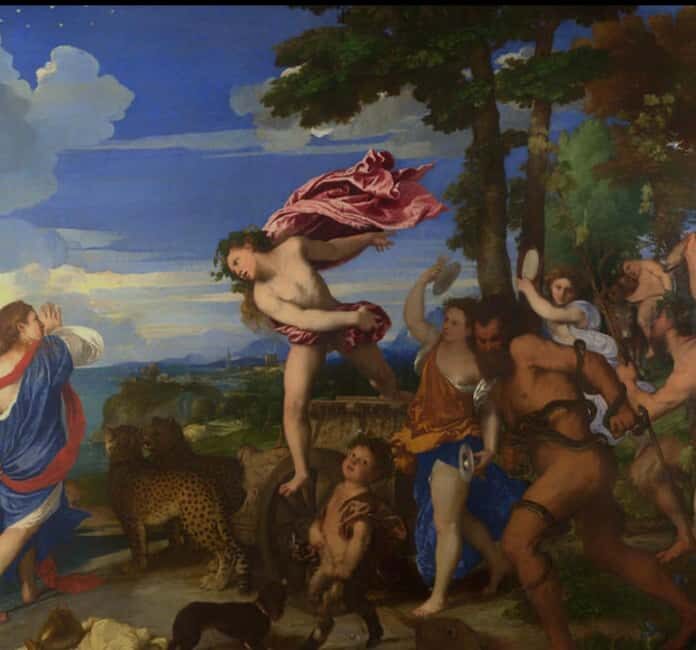
You’ll also encounter Raphael, Titian, and Velázquez through major works such as:
- The Virgin of the Rocks
- Bacchus and Ariadne
- The Rokeby Venus
Even if those titles mean little to you at first, the guide’s explanations help them click into place. You learn what the subject is doing and why the period produced this kind of painting. This section is also where the tour connects technique to history, like showing how ideas spread and evolved rather than appearing out of nowhere.
If you love the moment when art history stops being names on a timeline and becomes a living chain of influence, this part will feel satisfying.
You can also read our reviews of more museum experiences in London




Portraits and political undertones: Holbein and van Eyck
Not all masterpieces in the National Gallery are about big religious scenes or mythological stories. Some are about people—what power looks like, what status looks like, and what a face can communicate.
The tour includes:
- Holbein’s The Ambassadors
- Jan van Eyck’s Arnolfini Portrait
These works are great because they reward slow looking. The guide helps you notice details you might otherwise miss: symbolism, composition choices, and the way portraits functioned as more than just likeness.
Holbein’s ambassadors are especially useful if you’re the type of person who likes to know what’s going on under the surface. The painting isn’t just two men in an interior; it’s a statement. van Eyck’s portrait similarly rewards careful attention, and it’s the kind of work that makes you rethink how much effort goes into accuracy and meaning.
This section is also where a discussion style can shine. Some guides on these tours encourage a back-and-forth feel rather than a lecture. That can turn a portrait into a conversation about how people were seen—and how they wanted to be seen.
How your guide changes the whole museum experience
The guide isn’t an add-on. In this kind of museum, a guide becomes the tool that helps you turn visual noise into clear focus.
From real experiences, the standout pattern is how guides shape attention. People talk about Dylan and Strabo bringing paintings to life with stories, technique-focused explanations, and pacing that doesn’t feel rushed. Others mention Nelli or Sarah pointing out details that they had never noticed on their own.
A few examples of what that looks like in practice:
- You’re guided through a logical path, so the gallery feels like a connected lesson rather than a maze.
- The guide leaves room for questions and real reactions, not just rehearsed facts.
- You learn to notice technique—how artists built effects with paint, not just what the scene shows.
Strabo, for instance, is described as tailoring the tour to interests and pacing it perfectly for a group, with answers that kept the conversation moving. Dylan is repeatedly praised for selecting specific paintings and explaining them clearly, even in cases where the group was extremely small. Nelli is praised for the route itself, including how it helps you understand the gallery’s scale and what to look for at each stop. Sarah also gets credit for interesting ideas that make you see familiar works differently.
One more thing: this tour isn’t all monologue. Several experiences mention a discussion-style approach. If you learn better by talking through what you’re seeing, that matters.
Who this tour fits best (and who might want a different plan)
This tour is ideal if you:
- Have limited time in London.
- Want to see major works without spending your entire day figuring out a route.
- Like your museum visits explained in human terms, not just label reading.
- Enjoy technique and art history, but don’t want it to feel like homework.
It’s also a strong pick if you’re returning for another museum day later. Consider this tour your orientation. Then you can come back and target your favorite artists or rooms.
If you’re the type who needs to read every label and sit for long periods, you might feel the 80-minute limit. That’s not a deal-breaker. It just means you should treat this as a guided highlight path, then plan extra time independently afterward.
Price and value: is $26 worth it?
For an 80-minute guided visit with skip-the-line access, $26 per person is a strong value—especially if your alternative is buying a basic entry and spending your energy on navigation.
You’re paying for three things:
- Priority entry, so you start faster.
- A guided route, so you don’t wander.
- Interpretation, which is the part most people underestimate. A great explanation can make you see five paintings in a different way, not just one.
The guides often turn the tour into something close to a private lesson when group size is tiny. Even when it isn’t private, the pacing tends to keep you in the conversation rather than herded like a line item.
Food and drinks aren’t included, so plan to grab a snack nearby. But that’s normal for London attractions and doesn’t reduce the value of what you get inside.
Practical tips to make the most of your 1.5 hours
I’d go in with a game plan so you leave satisfied, not frustrated.
- Look up nothing. Seriously. Let the guide’s sequence set your attention.
- When you hear a name like Leonardo da Vinci, Raphael, or Velázquez, ask yourself what the painting is doing—light, structure, expression, or symbolism.
- Plan to stand close when the guide points out details. If you hang back, you’ll lose the small stuff that makes these works feel alive.
- Bring curiosity about technique. Many explanations focus on how artists built effects, not only what they painted.
And if you’re feeling overwhelmed by museum size, this tour is designed to fix that feeling. You get a path. You get a purpose. You get out with a clearer sense of what the National Gallery is saying.
Should you book this National Gallery guided tour?
Book it if you want the fastest path to seeing major Western masterpieces with context and a guide who can explain what to notice.
Don’t book it only if you need a slow, all-day museum experience and you’re determined to go room-by-room with no structure. For most people, the skip-the-line entry plus an 80-minute guided highlights route is exactly the right London bargain: efficient, focused, and way more rewarding than doing it on autopilot.
If you’re unsure, think of it like this: you’re buying a skilled flashlight for the biggest gallery rooms. Once you know what you’re looking at, the rest of the museum becomes easier to enjoy.
FAQ
How long is the National Gallery guided tour?
The tour lasts about 80 minutes, including a guided visit of around 1.5 hours.
Where do we meet?
Meet in Trafalgar Square between the two bronze lions underneath Nelson’s Column, facing the National Gallery.
Is skip-the-line entry included?
Yes. Skip the line is included.
What is included in the tour price?
Included are the guided tour, access to see paintings by artists such as Leonardo da Vinci, van Gogh, Hogarth, and more, plus skip-the-line entry.
What isn’t included?
Hotel pickup and drop-off are not included, and food and drinks are not included.
What languages is the live guide?
The tour offers a live guide in English and Hindi.
Is the tour wheelchair accessible?
Yes, it is wheelchair accessible.
Is there free cancellation?
Yes. Free cancellation is available up to 24 hours in advance for a full refund.
Can I reserve now and pay later?
Yes. Reserve now & pay later is available.
Who is the experience provider?
The provider is Strabo.