REVIEW · LIVERPOOL
Steps In Time: Liverpool Walking Tour
Book on GetYourGuide →Operated by Steps In Time: Liverpool Walking Tour · Bookable on GetYourGuide
Liverpool hits differently when you walk it. This tour strings together Albert Dock and quieter streets like the Georgian Quarter, with real stories behind the sights. You get a guided route built for orientation fast, and I like that it covers more than the usual “docks only” loop. One thing to plan for: it is a long walking session with some steeper bits, so comfortable shoes matter.
I especially enjoyed how the guide links places you can see right now to bigger events that shaped Liverpool, from the maritime world to the WWII Liverpool Blitz. It is also a smart pick if you care about architecture, because the tour keeps pausing for context at major landmarks, not just passing them. The main drawback is simple: there is no rushing, and it is not made for very young kids, since it is not suitable for children under 7.
In This Review
- Key Highlights to Know Before You Go
- Starting at Pier Head: Getting Your Bearings the Fast Way
- Albert Dock and the Titanic Thread You Can Actually Follow
- St George’s Hall and Queen Victoria Monument: City Power, in Stone
- Metropolitan Cathedral and the University-Abercromby Area: Where Stories Get Complicated
- The Georgian Quarter and Picture-Perfect Streets That Contrast the Port
- Hope Street, Falkner Street, and Blitz Sites: Walking Through Resilience
- Liverpool Cathedral: A Big Finish Before Chinatown
- Chinatown – Liverpool: The Practical End Point That Feels Like a Treat
- Price and Logistics: Is $18 Good Value?
- Who This Tour Fits Best
- Should You Book Steps In Time: Liverpool Walking Tour?
- FAQ
- How long is the Steps In Time: Liverpool Walking Tour?
- What does the tour cost?
- Where do I meet the guide, and where does the tour end?
- Is the tour in English?
- Is it wheelchair accessible?
- What is included in the tour, and what is not?
- Is it suitable for children?
Key Highlights to Know Before You Go
- Meet at Pier Head with a yellow umbrella so you can find Joe quickly and start on time
- Albert Dock + Titanic connections make the waterfront feel purposeful, not just scenic
- St George’s Hall and Queen Victoria Monument anchor the city’s civic story in impressive stone
- Georgian Quarter streets give you picture-perfect contrast to the industrial port imagery
- Hope Street and Falkner Street connect everyday streets to the bigger city narrative
- Finish in Chinatown for a practical end point and a great last taste of Liverpool
Starting at Pier Head: Getting Your Bearings the Fast Way
The tour begins at Pier Head, the kind of spot that instantly tells you you’re in a port city. From there, you move through landmark after landmark, but what makes it work is the pacing: you’re walking long enough to feel like you’re learning a layout, yet you stop often enough to understand what you’re seeing.
I like that it ends in Chinatown – Liverpool. When a walking tour stops mid-route, you’re left guessing how to get food or keep exploring. Finishing downtown gives you a clean handoff: you can keep going on foot, grab a snack, or just regroup without a second travel plan.
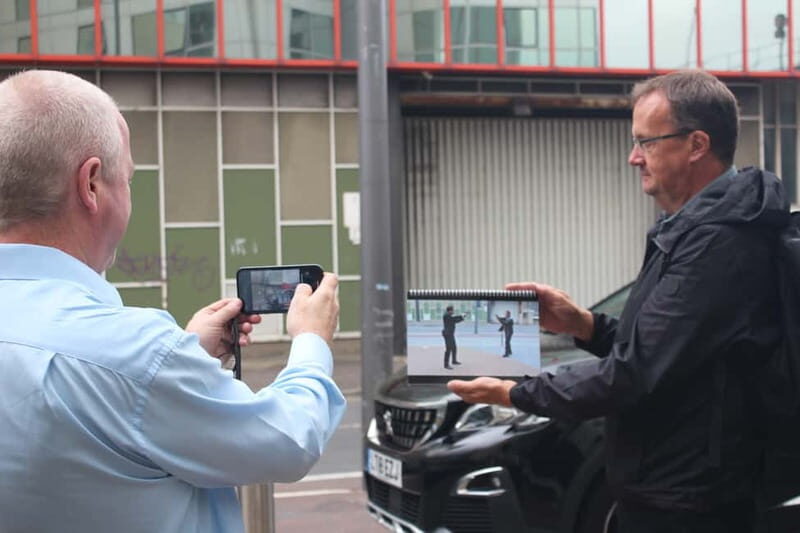
Also, the guide is Joe. In the reviews, his approach comes through clearly: friendly, prepared, and willing to adjust for weather and the pace of the group. Even if you’re traveling solo, it sounds like he aims to keep you comfortable and oriented, not shuffled along.
You can also read our reviews of more walking tours in Liverpool



Albert Dock and the Titanic Thread You Can Actually Follow
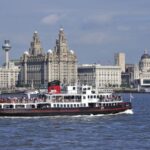
The waterfront stop is Royal Albert Dock Liverpool, right after you get going. This is where the tour turns the dock area from a postcard into a story you can walk through. You’ll learn about Liverpool’s maritime history and its connection to the Titanic—exactly the kind of link that makes famous names feel local.
The value here is not just knowing what happened. It is understanding the “why” behind why the waterfront mattered—trade, shipbuilding, global movement, and the city’s role in that system. That context helps everything else on the tour click into place, including the way Liverpool talks about industry as part of its identity.
One practical note: docks and riverside areas can mean uneven ground and lots of foot traffic nearby. Give yourself a little extra space on the sidewalks and take your time at the edges where people linger for photos.
St George’s Hall and Queen Victoria Monument: City Power, in Stone
Next up is Queen Victoria Monument and then St George’s Hall Liverpool. St George’s Hall is the kind of building that makes you look up without trying. The tour treats it as more than a pretty facade, explaining its significance in Liverpool’s story.
What I like about this portion is that it sets a civic tone. A lot of Liverpool tours lean heavily into the docks or the music. Here, you get a reminder that Liverpool also built institutions—courts, public life, and architecture meant to signal permanence.
If you’re the type who enjoys neoclassical details, you’ll get a lot to look at during the stops. And if you’re not, the guide’s job is still clear: you’ll leave with a simpler mental map of where Liverpool’s “formal” identity shows up.
Metropolitan Cathedral and the University-Abercromby Area: Where Stories Get Complicated
The tour continues toward the Liverpool Metropolitan Cathedral and then moves through the Abercromby Square area, where you’ll also hear about the University of Liverpool and the city’s links to slavery and the American civil war. That may be heavy material, but it is presented in a way that ties big historical forces to real places you’re walking past.
I appreciate that Liverpool’s story isn’t painted as only one thing. You do not just learn about maritime achievement and wartime resilience. You also get the uncomfortable threads—how Liverpool connected to global slavery and how its history overlaps with broader Atlantic events.
This part of the walk matters because it changes how you read the city. After you’ve heard these connections, the architecture and civic landmarks feel like they belong to a whole system of people, power, and consequence—not just “old buildings.”
Practical consideration: this area includes walking and stopping, and some sections can involve steps or steeper gradients. Reviews mention that the guide keeps the pace comfortable for older guests, but you should still expect a solid 150 minutes of movement.
The Georgian Quarter and Picture-Perfect Streets That Contrast the Port
One of the standout stops is the Georgian Quarter, where you’ll see elegant streets that look like they’ve been arranged for a magazine shoot. It’s a contrast to the dock imagery, and that contrast is the point. Liverpool didn’t grow in a single style; it evolved with different wealth sources and social needs.
This is also where the tour’s structure pays off. When you understand the civic landmarks and maritime context, the Georgian streets make more sense. You start to see how class, commerce, and city planning shaped what you see today.
Tip for getting the most out of this section: slow down during the photo stops. The best views here come from noticing street lines, building proportions, and the little details the guide points out.



Hope Street, Falkner Street, and Blitz Sites: Walking Through Resilience
As you work through the central streets—Hope Street and Falkner Street—you’ll also visit sites connected to the Liverpool Blitz. The Blitz portion is where the tour feels especially meaningful. You’re not just hearing names of events; you’re seeing where the war’s impact landed in the city fabric.
The learning value is in the balance between loss and resilience. Liverpool has rebuilt and redefined itself again and again, and the tour gives you a sense of how that resilience shows up in real streets, not just in museum panels.
If you’re sensitive to WWII topics, you might want to prepare mentally. This is history with consequences, and it can land harder than the Titanic talk. Still, it’s the kind of context that turns a city walk into something you’ll remember.
Liverpool Cathedral: A Big Finish Before Chinatown
The tour also includes Liverpool Cathedral (also described as the Liverpool Anglican Cathedral). This stop gives you a visual reset after the street-level history. Cathedrals tend to make you straighten up, and the guide uses that to frame the city’s cultural and architectural identity.
It’s a good moment to slow down, regroup, and take in wider views. Even if your main goal is city orientation, a landmark this large helps you anchor where you are geographically when you head out on your own later.
Chinatown – Liverpool: The Practical End Point That Feels Like a Treat
The tour ends in China Town – Liverpool, and that matters more than it sounds. You finish near a place where you can eat, browse, and keep the energy going without having to transport yourself back across town.
This is also where the tour’s coverage feels complete. You’ve walked through docks, Georgian streets, cathedrals, and WWII sites. Closing with a living community helps Liverpool feel current, not stuck in the past.
Price and Logistics: Is $18 Good Value?
At $18 per person for 150 minutes, this is strong value if your goal is orientation plus storytelling. You’re paying for a guide’s time, their route planning, and the added context they bring to each site. Since the tour is built around major landmarks and outdoor stops, you’re not paying entry fees for individual attractions.
What’s not included is also important: there is no entry to exhibitions and places. In plain terms, you’re walking and learning from the outside, plus any stops that do not require ticketed entry. If you want inside-the-building time for museums or ticketed exhibits, you’ll need a separate plan.
Logistics basics you’ll want to know:
- The meeting point is Pier Head, and you should look for the guide with a yellow umbrella
- The tour runs in English
- It is wheelchair accessible (though because the route includes a lot of walking and may involve steps/gradients, it’s smart to ask about specifics if you use a chair)
- It is not suitable for children under 7
Who This Tour Fits Best
This tour is ideal if you want two things at once: a mental map and meaning behind the landmarks. It is especially good for first-time visitors who feel overwhelmed by Liverpool’s size and want an organized way to see the city’s major chapters.
It also makes sense if you like architecture and urban design, because the route balances civic grandeur, church scale, and the softer streets of the Georgian Quarter.
If you hate walking tours that feel like a sprint, you’ll likely appreciate Joe’s style. Reviews highlight his patient approach and his willingness to adjust speed and comfort for older guests, plus readiness in bad weather (including umbrella help).
Should You Book Steps In Time: Liverpool Walking Tour?
If you’re trying to decide between a quick highlights walk and a structured route that actually explains Liverpool, I’d lean yes. For $18 you get a 150-minute guided experience that covers docks, Georgian streets, cathedrals, WWII sites, and a Chinatown finish—without needing ticketed entry.
Book it if:
- You want to get oriented fast and understand what connects the places
- You care about history that includes both pride and harder parts
- You like walking routes with frequent story stops rather than long stretches with no context
Skip it (or message first) if:
- Your group includes very young kids (under 7 isn’t suitable)
- You have mobility limits and need extra clarity on the route’s steep parts and steps
If you do book, bring comfortable shoes, keep your camera handy for the Georgian streets, and show up ready to walk and listen. With Joe leading the way, this is the kind of tour that leaves you feeling like Liverpool is finally in focus.
FAQ
How long is the Steps In Time: Liverpool Walking Tour?
It lasts 150 minutes.
What does the tour cost?
The price is listed as $18 per person.
Where do I meet the guide, and where does the tour end?
You start at Pier Head and finish in China Town – Liverpool. Look for the guide with a yellow umbrella.
Is the tour in English?
Yes, the tour guide provides the experience in English.
Is it wheelchair accessible?
Yes, the activity is listed as wheelchair accessible. If you need specific adjustments, accessibility arrangements are available upon request.
What is included in the tour, and what is not?
Included: the guided walking tour plus stops/coverage such as Albert Dock, Titanic connections, St George’s Hall, the University of Liverpool & Abercromby Square, Liverpool Blitz sites, Hope Street & Falkner Street, Metropolitan Cathedral, Liverpool Anglican Cathedral, and Chinatown culture. Not included: entry to exhibitions and places.
Is it suitable for children?
It is not suitable for children under 7 years.