REVIEW · LONDON
London: British Museum: Ancient Greek Treasures Private Tour
Book on GetYourGuide →Operated by My London Guide · Bookable on GetYourGuide
A 2-hour sprint through ancient beauty. This private British Museum tour ties together big ideas about art and shows you the objects behind them, with a special emphasis on Ancient Greece and its standards of beauty.
I love how private (up to a small group) keeps the pace sane, and how fast-track entry helps you start seeing things quickly instead of wrestling the security line. I also like that the guide isn’t doing generic museum recaps; you get a clear focus on standout works like the Parthenon marbles and the Greek sculptures, plus the famous Rosetta Stone detour.
One thing to think about: it’s only about 2 hours, with moderate walking, so you won’t see everything in the museum. Also, it’s not suitable for wheelchair users, so plan accordingly.
In This Review
- Key points to know before you go
- Entering the British Museum through Edward VII’s Entrance
- Private means better pacing (and less museum chaos)
- The Greek focus: Parthenon marbles and caryatid ideals
- Parthenon: beauty as a design system
- Caryatid: when architecture turns into people
- Greek vases: art that traveled with everyday life
- The Rosetta Stone moment: lost languages in one room
- Egyptian mummies: life, death, and the human body
- Medieval illustrated Jesus stories: a surprising genre in the galleries
- How the tour connects multiple civilizations without losing focus
- Rules that actually affect your day at the museum
- Price and value: when $128 makes sense
- Who this tour suits best
- The bottom line: should you book this British Museum private tour?
- FAQ
- How long is the British Museum Ancient Greek Treasures private tour?
- How big is the private group?
- Where do we meet for the tour?
- Does the tour include fast-track entry?
- Is photography allowed?
- Are food and drinks allowed during the tour?
- Is the tour wheelchair accessible?
Key points to know before you go
- Small group focus: Private tour for your party, designed for a real conversation, not a herd.
- Fast-track entry: Skip the line through express security, so you spend more time looking.
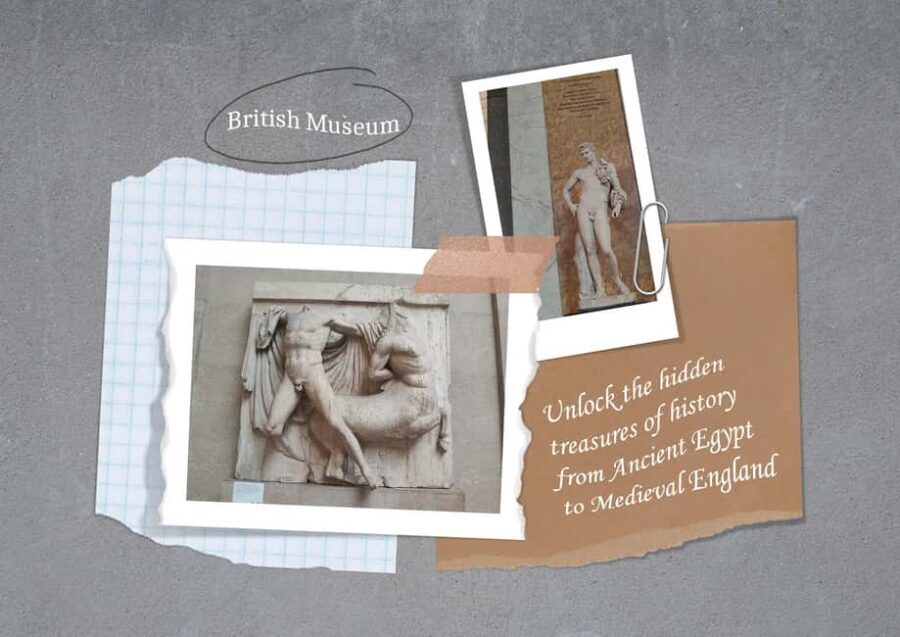
- Greek art as the main thread: Parthenon, caryatid, Greek vases, and beauty ideals.
- Real “aha” moments: Rosetta Stone and the breakthrough with lost language systems.
- Big themes, concrete objects: Egypt’s mummies, plus medieval illustrated Jesus stories.
- Photo-friendly rules: You can take photos without flash, but no touching or selfie sticks.
Entering the British Museum through Edward VII’s Entrance
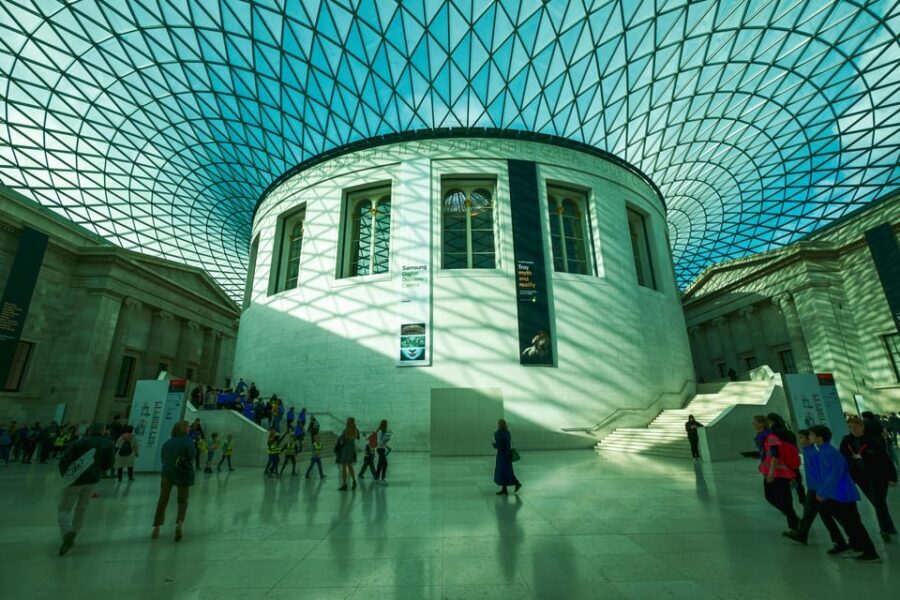
Your first win is where you meet and how you get in. You’ll gather at the group entrance to the British Museum (Edward VII’s Entrance), and your guide will be holding a sign that says My London Guide. That makes the start easy, especially in a museum that’s famous for crowds and confusing foot traffic.
From there, you’ll use the express security check and get fast track entry. In real life, that matters. The British Museum is one of those places where “I’ll just arrive and figure it out” can turn into a long wait. Here, the tour is set up to get you past the bottleneck and into the galleries with momentum.
Expect a moderate amount of walking, and bring the right bag strategy. Large bags and backpacks aren’t allowed inside, and food and drinks aren’t permitted in the exhibition halls. If you show up with a daypack, I’d plan to keep it minimal and easy.
You can also read our reviews of more private tours in London



Private means better pacing (and less museum chaos)
This is a private group tour reserved exclusively for your party. The price is listed per group up to 8, but the included details specify a private reservation for up to 6 guests—either way, the point is the same. You’re not pushed into a big group where you can’t ask questions.
That small size is what makes the tour feel like a guided art lesson rather than a checklist. You can stop when something catches your eye—like a carved face, a vase painting, or the way a figure is posed—and ask why it looks the way it does.
The guide is also set up as a professional storyteller, and the reviews back up the “clear explanations + enthusiasm” side. Names that come up include Richard, who gets praised for being great and for sharing information in a way that actually sticks.
The tour runs for about 2 hours. That’s a practical sweet spot: long enough to see multiple major highlights, short enough that you’re not exhausted by the end.
The Greek focus: Parthenon marbles and caryatid ideals
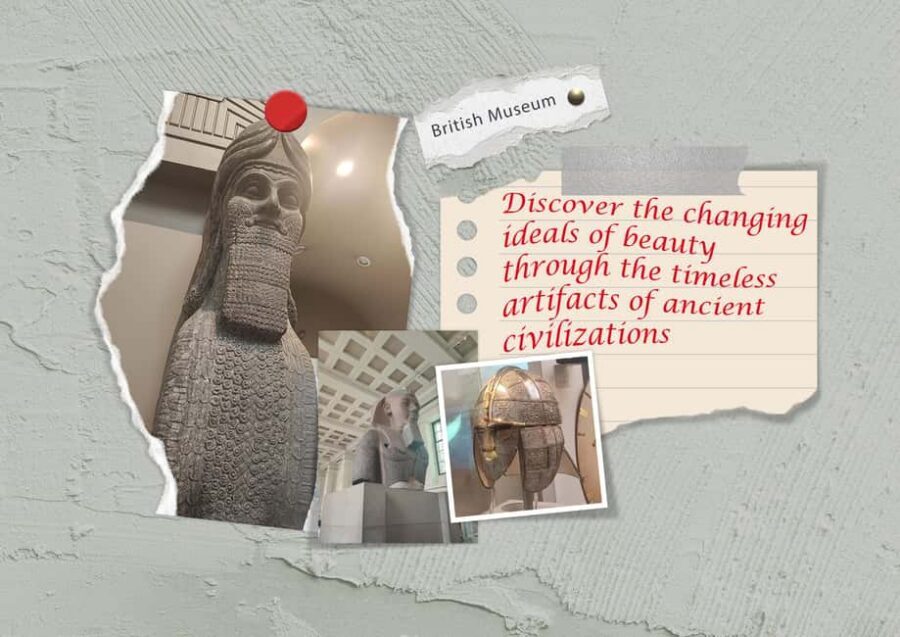
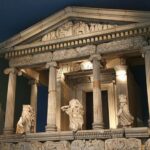
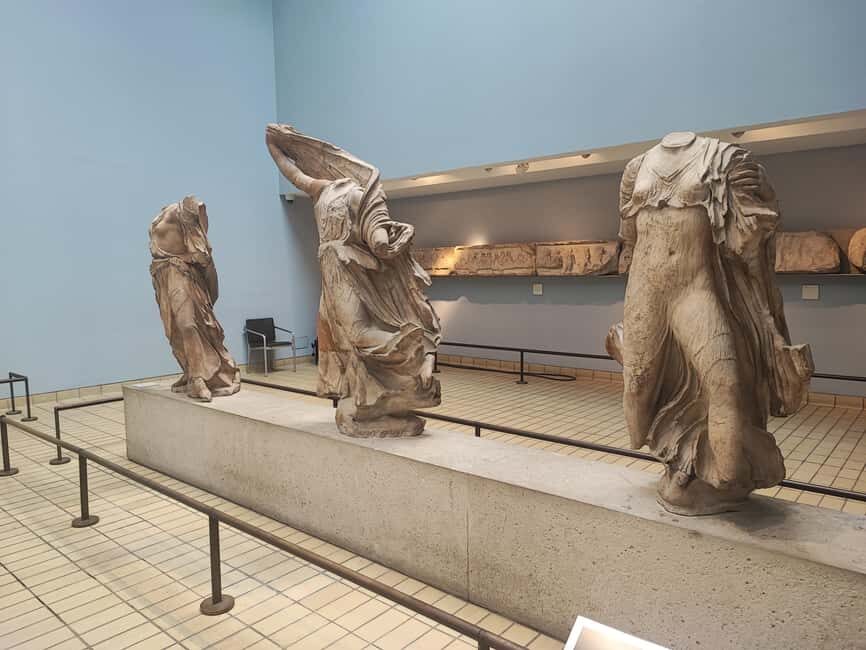
The star attraction of this tour is the Greek section—and not as a vague “Ancient Greece” sweep. You’ll focus on specific anchors: the Parthenon, a caryatid, and Greek vases, all tied to the idea of beauty across time.
Let’s talk about why this matters. Greek art is often described with big words—proportion, ideal form, harmony. But when you stand in front of the real objects, you start seeing how those concepts are built into the details: posture, balance, expression, and the way figures relate to space. That’s the difference between reading about ideals and actually seeing how they were translated into stone and painted clay.
Parthenon: beauty as a design system
When the tour centers on the Parthenon marbles, it’s not just about identifying the sculptures. It’s about seeing how Greek artists expressed beauty as an achievable goal. You’ll get the story of how ideas of beauty evolved over millennia and how ancient Greece helped set the tone for later art thinking.
If you’re an art beginner, this is a good setup. You won’t need to be an expert to follow the logic. You’ll get guided attention on what to look for and how to connect it to the larger “beauty” theme.
Caryatid: when architecture turns into people
A caryatid is one of those objects that feels like it has a personality. It’s part of a building’s support system, but it’s also a sculpted human figure—so it raises questions about proportion, expression, and how the Greeks treated human form as something worthy of sacred structure.
During this kind of stop, you’ll likely get help spotting the subtle choices artists made. That’s where a guide earns their fee: turning a static sculpture into a reasoning trail.
You can also read our reviews of more museum experiences in London




Greek vases: art that traveled with everyday life
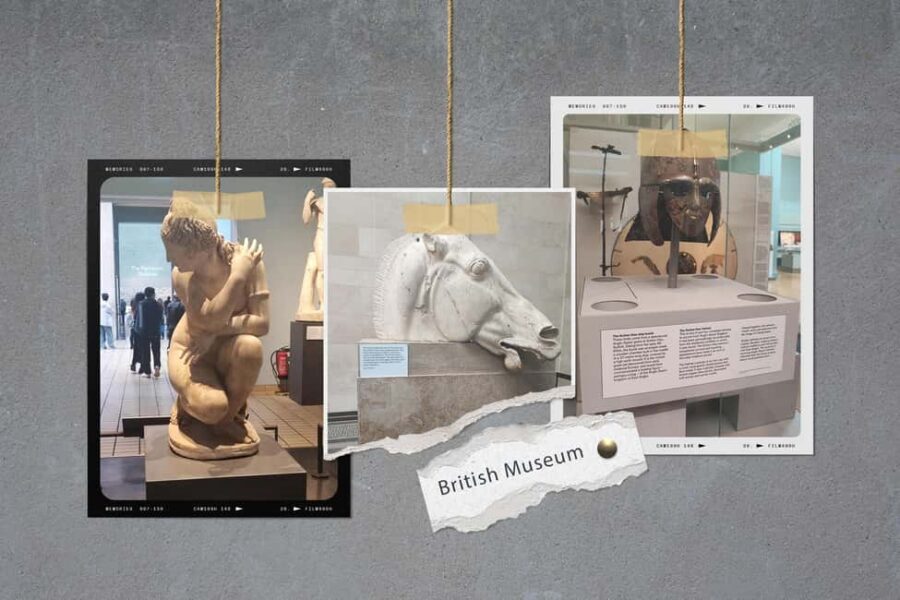
Greek vases aren’t only pretty; they’re also surprisingly human. The tour includes Greek vases and the idea of beauty that shows up in how figures are drawn and scenes are staged.
You can use this stop to train your eye. If you’ve ever looked at pottery and thought, I can’t tell what’s going on, the guide helps. You’ll be able to focus on composition and style, not just decoration.
The Rosetta Stone moment: lost languages in one room
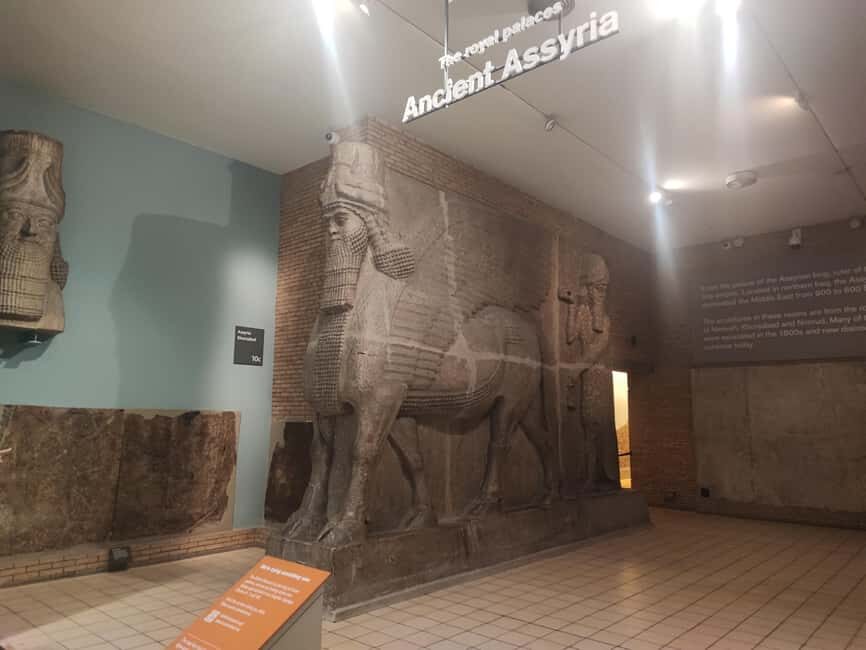
One of the big highlights is the Rosetta Stone. The tour frames it as the artifact that helped unlock hieroglyphs—meaning it gave scholars the leverage they needed to connect scripts and meaning.
Here’s why I think this stop is valuable even if you’ve already heard the basics. The museum isn’t just a place where you read labels. It’s a place where you watch how knowledge is built. With a guide, the Rosetta Stone becomes more than a famous block of stone. It becomes an example of how one object can change what people can read and understand.
If you like puzzles—language, history, systems—you’ll probably feel a real payoff here. And because this is a private tour, you can spend the time you want on that “how did we crack this?” question.
Egyptian mummies: life, death, and the human body
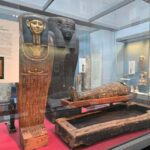
The tour also takes you to Egyptian mummies, with a theme of the dance of life and death. That phrasing matters because it points you toward interpretation, not just shock value.
A mummy in a museum can feel distant until you understand what it represented to the people who made it. In this tour’s setup, you’ll be guided toward the meaning behind the ritual and the way the body was treated as part of a bigger story about existence beyond everyday life.
You don’t need to be into Egyptology to benefit. You just need a frame—and a guide gives you one. It’s the difference between staring at a display and connecting it to cultural ideas about death and continuity.
Medieval illustrated Jesus stories: a surprising genre in the galleries
Yes, the British Museum can cover more than one world at once. This tour includes a stop on medieval comic books about Jesus Christ, with a particular theme described as the secret childhood of Jesus.
That’s a fascinating angle because it treats religious storytelling as art, and art as something that evolves with the era. You get a chance to see how medieval artists and writers presented episodes that aren’t always front and center in modern retellings.
If you like cultural history—how stories get shaped and illustrated—this stop can be one of the most memorable. It also helps balance the older civilizations with something more “storytelling as visual media,” even if the term comic books is used in a broad, descriptive way.
How the tour connects multiple civilizations without losing focus
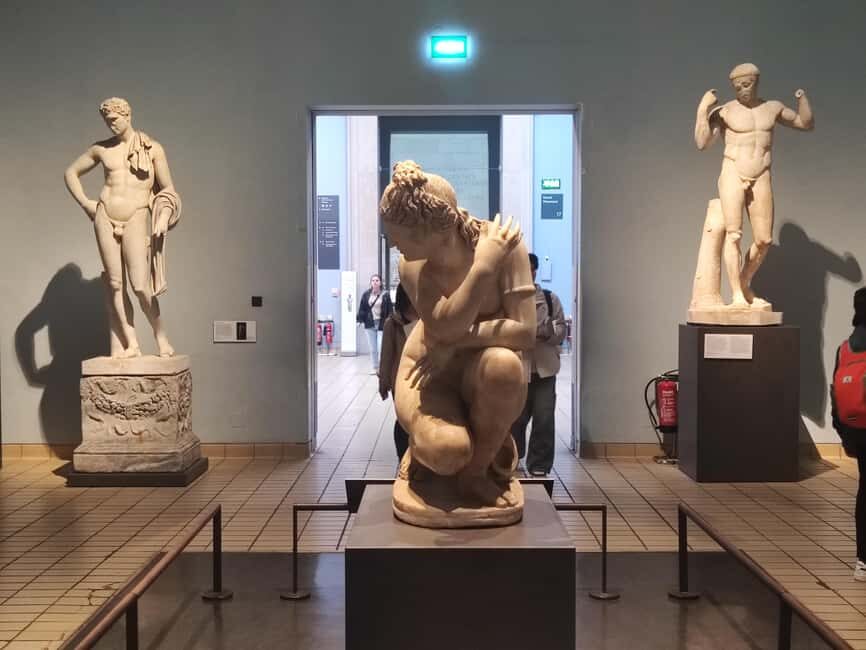
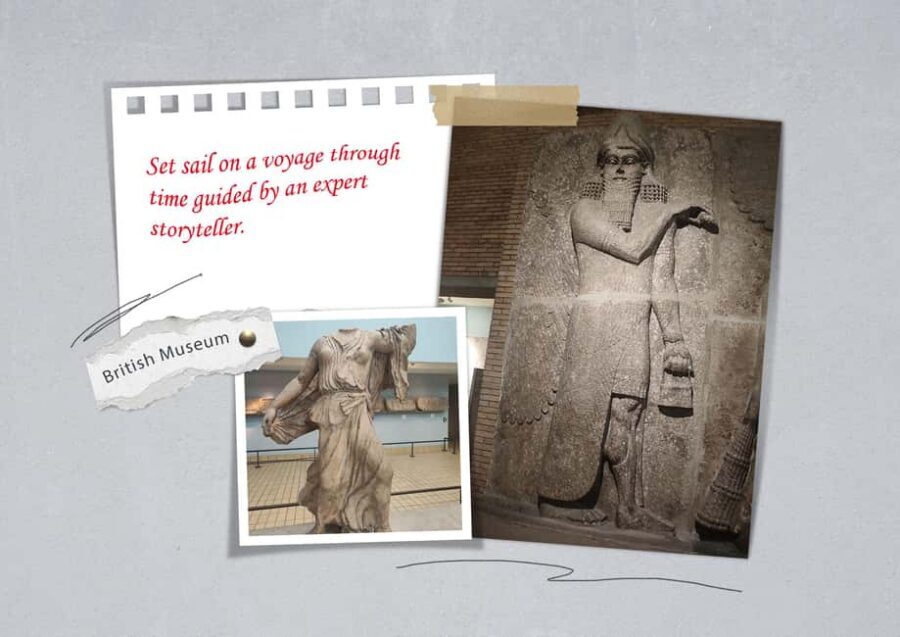
The tour description mentions other civilizations too—Mesopotamia, India, and England—plus the broader arc of philosophy and democracy from Greece, medical and monumental achievements from Egypt, and the big historical shifts connected to Jesus.
But the key detail is this: the Greek section is the center of gravity. So you don’t feel like you’re rushing through five continents in two hours. Instead, the tour uses those other references as supporting context—bigger themes that help you understand what Greece contributed, and why its ideas of beauty and form kept getting referenced later.
I like this approach for one simple reason: it keeps you anchored. You can leave with an actual mental map, not just a list of impressive objects.
Rules that actually affect your day at the museum
These tours run smoothly when you follow the museum’s boundaries. Here’s what you should know so you’re not stuck asking staff questions mid-tour:
- No flash photography. Photos are allowed without flash.
- No selfie sticks.
- No touching the exhibits.
- No weapons or sharp objects.
- Pets aren’t allowed (assistance dogs are fine).
- No alcohol and drugs, and no explosive substances.
- Large bags and backpacks aren’t allowed inside.
This tour also includes a friendly, professional environment, which helps when everyone is trying to see the same things. A guide can also manage the flow so you don’t get bumped or lost between rooms.
One more practical tip: if you’re the kind of person who loves a phone screen moment, set yourself a rule in advance. Take photos, yes. But spend most of your time looking with your own eyes first.
Price and value: when $128 makes sense
The price is listed at $128 per group up to 8. For a private tour, that’s usually where value lives or dies: you want to feel you’re paying for something you can’t get by doing it alone.
Here, the value comes from a few concrete things:
- Fast-track entry via express security check saves time.
- A live guide (professional storyteller) adds meaning to objects that are easy to skim past on your own.
- A tight theme focused on Ancient Greece, especially Parthenon-related sculpture and beauty ideals, so you don’t wander aimlessly.
- Private group size keeps the experience personal and question-friendly.
If you’re traveling solo or as a couple, you may still find it worth it if you care about art interpretation more than just checking boxes. If your group has mixed interests, the tour’s structure is flexible enough to keep people engaged because it mixes beauty, language history, Egypt, and medieval storytelling into one coherent arc.
Who this tour suits best
This is a great fit if you:
- Want Ancient Greece as the main thread and don’t want a generic tour.
- Like art explanations tied to real objects—especially sculpture and Greek vase imagery.
- Enjoy history with a human angle: mummies, lost languages, and illustrated religious storytelling.
- Prefer a private, small-group pace instead of sprinting through galleries on your own.
It’s less ideal if you:
- Need wheelchair access, since it’s listed as not suitable for wheelchair users.
- Want to see every major department of the museum. Two hours is focused by design.
- Plan to snack inside. Food and drinks aren’t permitted in the exhibition halls.
The bottom line: should you book this British Museum private tour?
I’d book this tour if you want a guided, theme-driven visit that turns big ideas into visible details—especially Greek beauty through the Parthenon marbles, caryatid, and Greek vases. The guide focus matters here, and the praise around Richard for clarity and enthusiasm is exactly what you hope for in an art-heavy museum stop.
I’d skip it if your top goal is breadth—seeing as much as possible across every civilization in the building—or if mobility constraints matter. Otherwise, this is one of those purchases that can make a famous museum feel readable and fun again, even when you’re short on time.
FAQ
How long is the British Museum Ancient Greek Treasures private tour?
The tour lasts about 2 hours.
How big is the private group?
It’s a private tour reserved for your group, with the included details stating up to 6 guests. The summary also mentions pricing for a group up to 8.
Where do we meet for the tour?
Meet at the group entrance to the British Museum (Edward VII’s Entrance). Your guide will be holding a sign that says My London Guide.
Does the tour include fast-track entry?
Yes. It includes fast track entry to the British Museum and skip the line through express security check.
Is photography allowed?
Yes, photography is allowed without flash.
Are food and drinks allowed during the tour?
No. Food and drinks are not permitted inside the exhibition halls.
Is the tour wheelchair accessible?
No. It’s listed as not suitable for wheelchair users.