REVIEW · BELFAST
Political Wall Murals and Peacewall
Book on GetYourGuide →Operated by Taxi Day Tours Belfast · Bookable on GetYourGuide
Belfast’s murals hit harder up close. I love the personal guide storytelling and the way the route turns street art into real context, not just images. I also love the photo stops that make it easy to capture details you’d miss on your own. One drawback: this is a heavy topic, so it may feel like too much if you want a light, carefree sightseeing day.
You’ll roll through the key West Belfast areas with a local voice guiding you, then reach the Peacewall—a place that still divides communities and still matters. You get a chance to sign your name there, plus plenty of time to stop for photos.
Guides like Paul, Joe (including Joe Presley), Henry, and Kevin are repeatedly praised for clear, balanced explanations and the right mix of seriousness and humane humor. With a strong rating (4.9 across 247 reviews), this tour is built for people who want to understand Belfast’s past without getting lost in slogans.
In This Review
- Key Points Before You Go
- Belfast Murals and Peacewall: Why This Tour Matters
- Meeting Your Guide in Central Belfast and Getting Comfortable Fast
- The Murals Route: Catholic and Protestant Street Art on the Falls Road and Shankill
- What Your Guide Shares About Teenage Life During the Troubles
- The Peacewall, No Man’s Land, and Why People Still Mark the Lines
- Photos, Questions, and How to Get the Most From the Stops
- Price and Value: What $162 for Up to Two People Buys You
- Who This Tour Fits Best (and Who Should Think Twice)
- Should You Book This Belfast Political Murals and Peacewall Tour?
- FAQ
- How long is the Political Wall Murals and Peacewall tour?
- Where does the tour start?
- How much does it cost?
- Is this a private tour?
- What language is the guide?
- Will I have time to take photos and sign the Peacewall?
- What should I bring?
- Is the tour wheelchair accessible?
Key Points Before You Go
- A private tour with hotel pickup in central Belfast, so you don’t waste time hunting meeting points
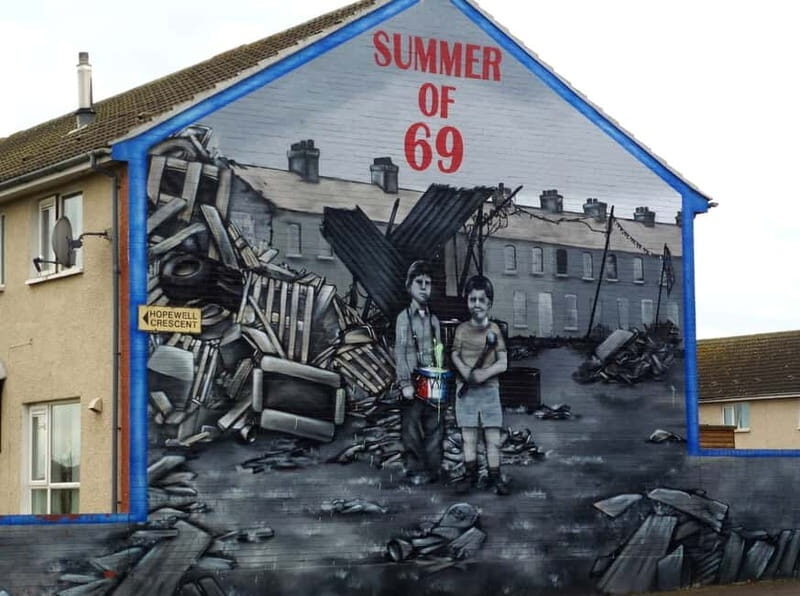
- Catholic and Protestant murals along the Falls Road and Shankill, close together, packed with meaning
- Peacewall time plus a chance to sign your name, with lots of photo opportunities
- Teen-life stories from your guide, the kind that make The Troubles feel personal instead of abstract
- Guides handle tough history with balance and humor, which keeps the experience readable
- Comfort-focused transport, with 91% of reviewers giving it a perfect score
Belfast Murals and Peacewall: Why This Tour Matters
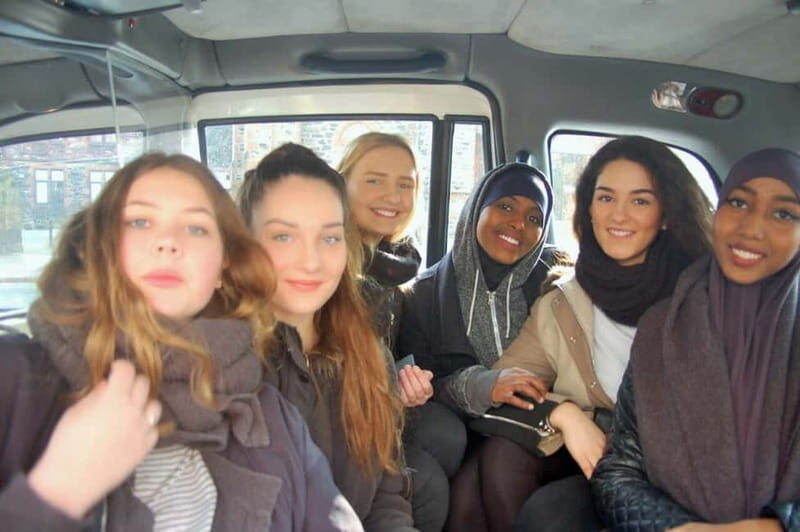
Belfast is famous for many things, but these murals and that wall are different. They don’t just decorate buildings. They explain identity, memory, and fear in painted form—often right where people still live and work.
This is a short tour (1.5 hours), but it’s designed to give you the spine of the story. Your guide talks about what life was like as a teenager in Belfast during the troubled decades, and that perspective changes everything. Instead of memorizing dates, you start noticing how daily life, community loyalty, and fear shaped choices.
The Peacewall is the emotional center. It’s been dividing communities for over 45 years, and the fact that it’s still there is the message. You’re not visiting a museum display behind glass. You’re standing near a line that people had to live around—then the guide helps you understand why the murals and the wall are connected.
This isn’t a fantasy history tour. Expect sobering moments. You’ll also see why some locals speak about Belfast’s turn toward a brighter future without pretending the past disappeared.
You can also read our reviews of more tours and experiences in Belfast.

Meeting Your Guide in Central Belfast and Getting Comfortable Fast
The practical win here is simple: hotel pickup in the city center. You meet your guide at an agreed location, and they have your name and booking details. That cuts down on the usual travel stress, especially if you arrive in Belfast with jet lag or rain.
The transport gets real credit too. The tour uses highly rated transport, with 91% of reviewers scoring it a perfect mark. That matters because the experience depends on conversation and sight stops. If the ride is uncomfortable or slow, the whole day drags. If it’s easy and warm, you stay focused on what you’re learning.
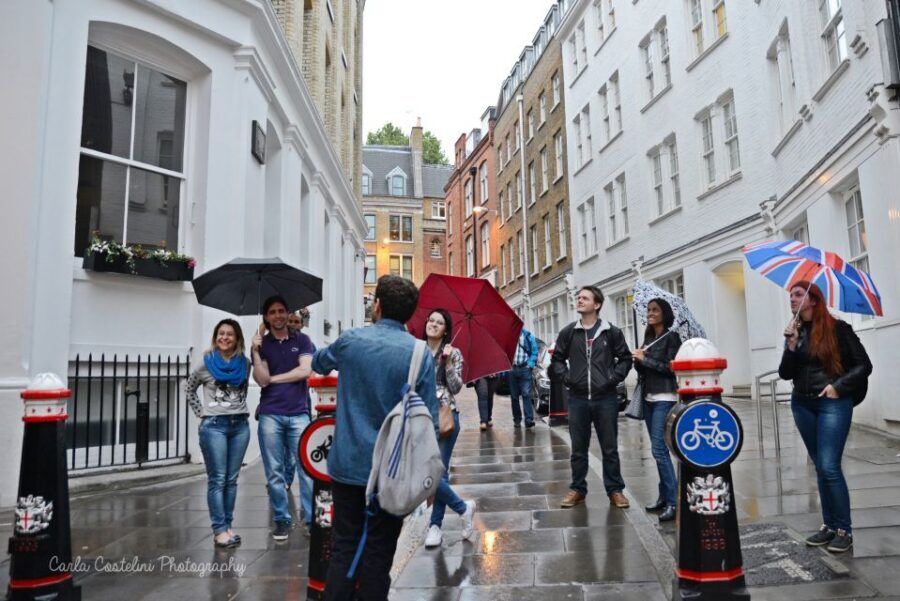
Also, Belfast weather can switch fast. One review mentioned a guide showing up ready with an umbrella, which is exactly the kind of local preparedness that makes these short tours work.
Because it’s a private group, you’re not forced into a one-size-fits-all script. If you ask questions—politics, everyday life, why specific murals look the way they do—you’re more likely to get direct answers.
The Murals Route: Catholic and Protestant Street Art on the Falls Road and Shankill
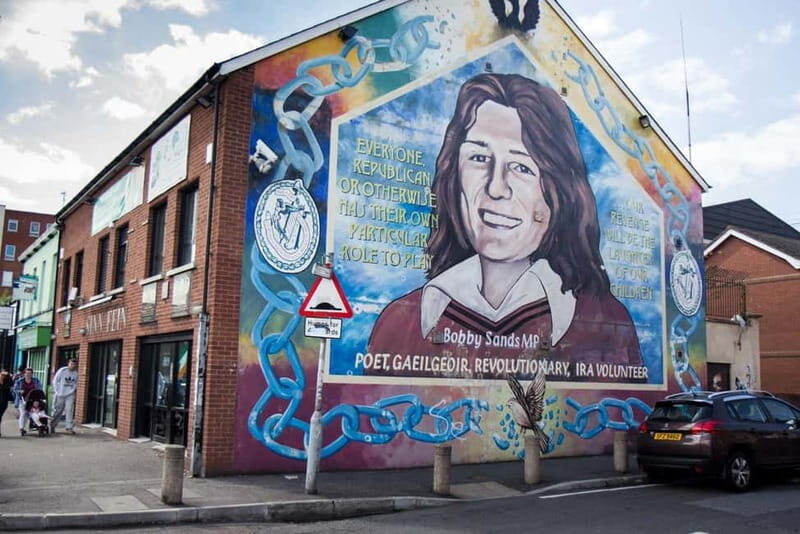
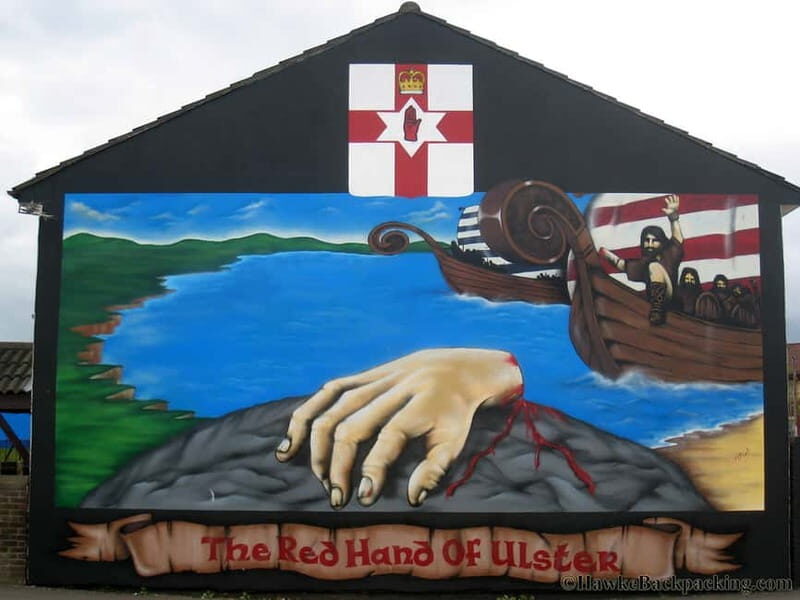
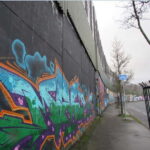
The big visual draw is the mural route, especially around the intersection area between the Falls Road and the Shankill. This is where the story feels concentrated. In just yards, you can see how communities interpret the same conflict through different symbols, colors, and messages.
What I like about this approach is that the murals are never treated as tourist wallpaper. Your guide explains what you’re looking at and why it matters. You get help decoding the picture: who or what is being referenced, what it signals to locals, and what it would have meant during the height of the Troubles.
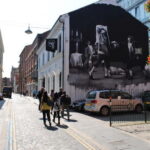
You’ll also see murals beyond the obvious poster-sized walls. One review pointed out that there are more murals on gable ends of houses than people expect. That’s the kind of detail that rewards doing this with a guide. On your own, you might photograph it. With a guide, you understand why it’s there.
For photography, the route works because you’re not rushing. You’ll have plenty of chances to stop and take photos at multiple murals. Bring your camera (or phone with a steady grip), and plan on taking a lot of shots—you’ll want close-ups and wider context views.
The murals can be intense. But that intensity is the point. They’re how people kept history visible, even when official narratives were contested.
What Your Guide Shares About Teenage Life During the Troubles
Here’s the difference between a generic history lesson and this tour: you’re hearing it through a personal, human lens. The guide focuses on what life was like as a teenager during Belfast’s troubled past. That doesn’t mean you’ll get gossip. It means you’ll get reality: how people felt, what they expected, and how the conflict shaped ordinary days.
Guides such as Joe Presley and Paul are repeatedly praised for being able to talk about a turbulent period with clarity and an appropriate sense of humor. That combo is rare. The humor doesn’t soften the facts. It just helps you stay present long enough to understand them.
Another strong theme from the guides: balanced accounts. One guide (described as fair and balanced) explained the troubles in a way that helped people see more than one side. Others were described as giving both sides of the story and keeping their presentation even-keeled. That’s not about being vague. It’s about avoiding easy blame-and-shame shortcuts.
This is also where the tour becomes emotionally real. One review described the experience as profound. Another said it was sobering but also hopeful. That’s a useful warning and a useful promise. You’re likely to feel something. You’ll also leave with a clearer sense of why the city is working toward a different future.
If you’re the kind of person who hates heavy topics or tries to skip anything political, this might be harder than a typical city walk. If you’re willing to listen, it’s one of the most meaningful ways to understand Belfast quickly.
The Peacewall, No Man’s Land, and Why People Still Mark the Lines
The Peacewall is the stop that turns learning into standing still. You’ll have time to see it, take photos, and sign your name. That last bit might sound small, but it’s powerful. It’s a ritual of recognition. You’re not just looking at a barrier; you’re participating in a moment that reminds you this is a living boundary in a living city.
Your guide also explains why the wall exists and what it has meant over decades. Since the peacewall has divided communities for over 45 years, it’s not something people treat like a temporary roadside exhibit. It’s part of the city’s rhythm.
Some versions of the route also include No Man’s Land and a memorial to non-combatants killed in the conflict. If those stops happen during your tour, treat them like the emotional punctuation at the end of a sentence. They help you connect murals and walls to the people who were affected most—people who weren’t combatants, but were still caught in the outcome.
This is where your guide’s balance matters. You don’t want a lecture that only spirals into anger. You want context that respects the seriousness while helping you understand why reconciliation is difficult and why progress still happens.
Plan to be quiet for a moment at least once. If you’re taking photos, do it thoughtfully. The Peacewall and nearby memorial spaces aren’t meant for frantic snapping. A few good images, then time to absorb, goes a long way.
Photos, Questions, and How to Get the Most From the Stops
This tour is built around visibility: you see the murals, you see the wall, and you take photos along the way. But the real value is what you learn while you’re stopping.
Go in with a simple plan for questions. Ask things like:
- What detail in this mural is the most important to a local viewer?
- Why is this part of Belfast split the way it is?
- What changed over time, and what stayed the same?
You’ll be glad you asked. Reviews repeatedly mention guides answering questions patiently, even when people asked a lot. That’s not luck. It’s how the best tours are run: your guide keeps the conversation moving without making you feel rushed.
Also, wear comfortable shoes. Even though it’s not framed as a long walking tour, you’ll still be stopping for photos and getting positioned for views. Weather can matter too, so bring weather-appropriate clothing. Belfast can be unpredictable, and a small comfort issue is the difference between a great tour and a grumpy one.
For photos, remember to shoot in two modes: close-ups for the symbols and wider frames that show the setting. Many murals look better when you can see the building context, not just the paint.
If you’re coming with preconceptions, you’ll benefit from leaving them at the door. A balanced explanation is easier to absorb when you aren’t trying to prove a point.
Price and Value: What $162 for Up to Two People Buys You
At $162 per group up to 2, you’re buying a private guide experience rather than a generic group bus tour. That can be excellent value if you’re traveling as a couple, or if you want a quiet, high-attention visit for just your small party.
Here’s how I think about the math: if you’re two people, that’s $81 each for 1.5 hours of local-guided context, city-center pickup, and a structured route to the murals and Peacewall. If you’re solo, it’s still one fixed price for the group, so you’re effectively paying more per person—but you’re getting the benefits of a private setting.
You’re also getting time efficiency. Belfast’s political mural story can feel confusing if you’re hopping stops alone. A guide helps you interpret what you’re seeing as you see it, so you’re not spending extra hours trying to connect the dots.
The tradeoff is that 1.5 hours is still 1.5 hours. This is enough time to hit major points and understand the basics, but it won’t replace a longer, slower exploration if you want to wander on your own after you learn the context. Think of it as a smart orientation plus a powerful emotional anchor.
Value here also includes transport quality. With 91% of reviewers scoring transport a perfect score, you’re less likely to waste money on a ride that slows everything down.
Who This Tour Fits Best (and Who Should Think Twice)
This works best for people who want real understanding, not just photos. If you’re the type who asks why something is here, who wants a balanced explanation, and who appreciates personal stories, you’ll likely love it. The tour format suits couples, friends, and small groups who want a local voice and the freedom to ask follow-up questions.
It’s also a good fit if you want to visit early in your Belfast trip. Once you understand the murals and the Peacewall, your later walking around the city becomes easier. You start noticing details instead of just passing them.
One caution: the subject matter is not gentle. Some reviews suggest it isn’t ideal for younger children. If you’re traveling with kids, consider their ability to handle heavy history and emotional content before booking.
On the practical side, it’s wheelchair accessible, which is a big plus for visitors who need that comfort and planning certainty.
If you want only entertainment and minimal politics, you might find this tour heavy. If you want context, clarity, and a route designed around meaning, this is one of the strongest experiences in Belfast.
Should You Book This Belfast Political Murals and Peacewall Tour?
I think you should book if your goal is to understand Belfast fast and honestly. The combination of Catholic and Protestant murals, the Peacewall moment, and a guide who can explain the story in plain language is hard to beat in a short time.
Book it especially if you like local perspectives. Guides named across the experience—Paul, Joe Presley, Henry, Kevin, and others—are praised for personal anecdotes, patience with questions, and keeping the tone balanced. That matters because this history can get distorted when you only rely on outsiders’ soundbites.
Skip it if you need a purely light itinerary or if you’re easily overwhelmed by political conflict and memorial spaces. You don’t have to force it. Belfast has plenty of other experiences. But if this is the kind of learning you value, this tour is built for exactly that.
FAQ
How long is the Political Wall Murals and Peacewall tour?
It runs for 1.5 hours.
Where does the tour start?
You get hotel pickup in the city center, and your guide meets you at the agreed location.
How much does it cost?
The price is $162 per group up to 2.
Is this a private tour?
Yes, it’s a private group experience.
What language is the guide?
The live tour guide is English.
Will I have time to take photos and sign the Peacewall?
Yes. There are plenty of opportunities for photos along the way, and you’ll have a chance to sign your name on the Peacewall.
What should I bring?
Bring comfortable shoes and weather-appropriate clothing.
Is the tour wheelchair accessible?
Yes, the tour is wheelchair accessible.